

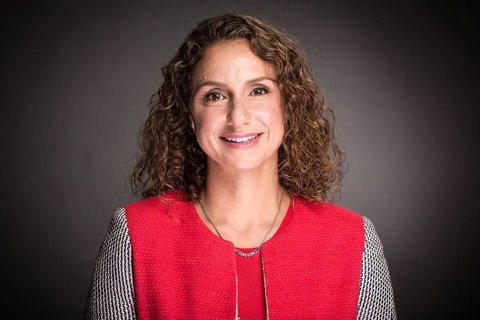
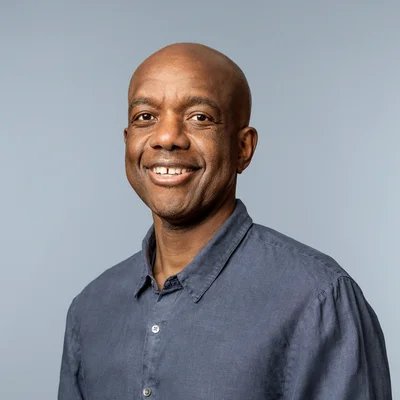

Recorded at Davos, Lila Ibrahim and James Manyika describe how Google takes research into use: river flood forecasts went from a pilot in Bangladesh to 150 countries home to more than two billion people, the quantum team made what they call its first useful computation, and GNoME took known stable crystals from about 40,000 to more than 400,000.
AlphaFold and flood and hurricane forecasts are in use, not only in papers
Manyika says one mark of Google's research culture is going from research to use. His examples are AlphaFold, now used by 3.5 million researchers in more than 190 countries, and riverine flood forecasting: forecasts more than six days ahead are known to save lives, the team built a model about two and a half years ago, tried it in Bangladesh, and now covers 150 countries where more than two billion people live. Ibrahim says they work with the US National Hurricane Center, can give 50 possible tracks 15 days ahead, and tracked Hurricane Melissa. The record before held Weather Lab's 50 cyclone tracks and the WeatherNext Cyclones paper in Nature, with no entry on flood forecasting.
Quantum made its first useful computation; Manyika expects applications in about five years
Manyika says quantum computing is moving faster than most people think: the Willow chip showed below-threshold error correction, error rates falling as qubits are added, and last year's Quantum Echoes result, a Nature cover, was in his words the first useful computation, working out the spin dynamics of molecules, with collaborators at Berkeley validating it in the lab with NMR data. He expects useful applications in about five years, which is his judgment. Ibrahim says GNoME took known stable crystals from about 40,000 to more than 400,000 now being tested in research and in labs, and ties it to better batteries and superconductors; she also says it is still early.
Set the direction, not the method, and fold research into Gemini once it is ready
Ibrahim says Google DeepMind models itself on Bell Labs, the Apollo programme and Pixar: set an ambitious research agenda without saying how to do it, put a bioethicist next to a computer scientist and a neuroscientist, and judge when to keep exploring and when to pause or double down. Her example is learning science: after years of research, Hassabis judged Gemini good enough and the work went into Gemini's learning features. Manyika says co-scientist, built by Google DeepMind and Google Research, will go into Google Labs for wider use.
The figures are the executives' own, and GNoME's are counted differently from the paper
The AlphaFold user count, the flood forecasts' reach and the quantum results are the two executives' own accounts, and the show gives no figure for forecast accuracy. The GNoME figures are counted differently from the 2023 paper on the record, which reports 2.2 million candidate structures, 380,000 of them added to the most stable set; 'about 40,000 to more than 400,000' is Ibrahim's framing, and she does not say how many have been made in a lab. Manyika says Project Suncatcher's next milestone is TPUs in space doing a few training runs in 2027, a target with a date.