

AI FOR SCIENCE · INTERVIEWS
Interviews
Long-form conversations with the founders and researchers shaping AI for Science, tracked for research direction, operating numbers, product choices and unresolved boundaries. Each page isolates what the conversation actually adds, then follows the evidence that comes after.
29 interviews
Sarah Teichmann · Human Cell Atlas · KFF's The Business of Health with Chip Kahn
Human Cell Atlas co-founder Sarah Teichmann: the single-cell reference is near a first draft, and drug development uses it first for targets and safety
Teichmann says the Human Cell Atlas is close to finishing a first draft of its reference map of the body, built from single-cell data on cells taken out of tissue. Where she expects it to count first in drug development is in showing which cells a target is expressed in and where a drug could cause harm; going from an AI prediction to the lab, she says, is a back and forth across several kinds of experiment, not one prediction and one test.
“Before we had kind of a Google at the level of cities and towns and villages, now we have a Google Street Maps at the level of individual houses.” — Sarah Teichmann
7 claims Company-reported 4 · Guest's judgment 2 · Not yet closed 1
Alex Kontorovich · Ankur Moitra · Steven Brunton · Rutgers, MIT, University of Washington · Lex Fridman Podcast #503
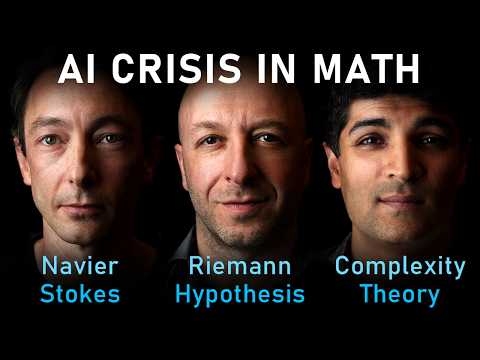
Three mathematicians read OpenAI's 722 manuscripts: the quasi-Riemann proof chains known tools, and fluid engineering has not changed
Three mathematicians whose fields these results land in each read their own: Kontorovich says the quasi-Riemann statement was already in Mathlib, so he is fully confident the proof is right, and its moves are all known tools of analytic number theory; Moitra says the Unique Games proofs are 'not very readable', with no new idea easy to point to; Brunton says the Navier-Stokes result holds in a regime that is not physical, and engineering fluid computation has not changed.
“The Lean statement was already in the library, was already in Mathlib, so the fact that they have a sorry-free proof gives me 100% confidence that the proof is right.” — Alex Kontorovich
9 claims Guest's judgment 6 · Industry context 3
After the interview 2 later results
Jonathan Frankle · Databricks · The Frontier with Brendan Foody (Mercor)
Frankle: enterprise AI is stuck on how to measure it, not on how smart the model is
Frankle says that since Claude Sonnet 3.5 models have been smart enough for many complex enterprise tasks; what is stuck is saying exactly what the task is and knowing whether it was done well. His conclusion is that the cost of building evaluations has to fall by orders of magnitude before enterprises can rely on agents.
“empiricism is principled.” — Jonathan Frankle
12 claims Company-reported 6 · Guest's judgment 3 · Industry context 1 · Target 1 · Not yet closed 1
Alex Rives · Biohub · The Cognitive Revolution
Biohub's Alex Rives: virtual cells lack measurement first, models second
Rives says the models called virtual cells today do not yet count as models that can simulate a cell. Getting there needs progress on three things at once, the model, data at scale and new tools to measure, and measurement is the most basic; what he thinks is reachable in about five years is a model that predicts the spread of next states from a cell's state and an intervention.
“The models that are being called virtual cells today, I just don't think they meet that definition of a model that could actually simulate the cell in a meaningful way.” — Alex Rives
13 claims Guest's judgment 6 · Not yet closed 2 · Company-reported 2 · Target 2 · Current system 1
Sheng Wang · University of Washington · Silicon Valley 101
Sheng Wang: frontier models can write the biomedical code, but design only about 30% of an experiment
A University of Washington professor who builds AI for biomedicine says frontier models have improved through coding and long tasks, not biomedical knowledge; they refuse biomedical work more often, so his group runs much of it on Kimi K3 and Muse Spark; and of designing an experiment a lab can actually run, a model does about 30%.
11 claims Guest's judgment 5 · Industry context 3 · Current system 2 · Not yet closed 1
After the interview 1 later result
Greg Brockman · OpenAI · No Priors (Sarah Guo and Elad Gil)
OpenAI's Greg Brockman: maths worked because the data was there, biology's data is an open question, and drug discovery comes first
Brockman says AI succeeded in maths not mainly because proofs can be checked but because maths has lots of data; whether biology has the data, or can get it, he says 'is not yet resolved'. If OpenAI could pick one science to transform completely, he says, it would be drug discovery.
“And there's always been this question of is AI actually able to come with new knowledge? And at this point, it's just impossible to deny, right?” — Greg Brockman
13 claims Guest's judgment 6 · Company-reported 4 · Not yet closed 2 · Industry context 1
After the interview 1 later result
Ian Quigley · Leash Bio · Latent Space (AI for Science podcast)
Leash Bio's CEO: how to make a model learn chemistry rather than who made the molecule
Quigley says that on medicinal-chemistry data a model can look predictive while having learned only who made the molecule and a 'nickname' for the protein. Leash tries to close those shortcuts with large DNA-encoded-library (DEL) screens, pocket mutants and controls, then turns the measured results into environments where language-model agents practise structure-activity (SAR) reasoning.
“If the models can identify the chemist by looking at the molecule alone, then maybe the models can infer chemist intent.” — Ian Quigley
18 claims Company-reported 12 · Guest's judgment 3 · Industry context 1 · Not yet closed 1 · Target 1
After the interview 2 later results
David Silver · Lasse Espeholt · Ineffable Intelligence · Training Data (Sequoia Capital)
Ineffable's two founders: no human data and no pre-training, first build an agent that learns for itself in simulated worlds
Silver says Ineffable is betting on no human data and no pre-training: an agent that learns from its own experience in simulated worlds, starting from knowing nothing and aiming to discover things beyond what humans know. He accepts that this costs some performance now in exchange for a higher ceiling.
“a system that can just keep learning and discovering knowledge forever.” — David Silver
12 claims Target 4 · Company-reported 4 · Guest's judgment 2 · Industry context 1 · Not yet closed 1
Liam Fedus · Ekin Dogus Cubuk · Periodic Labs · Latent Space
Periodic Labs takes its tools to chipmakers first; superconductors wait on synthesis and testing
Fedus says Periodic's focus right now is the semiconductor industry: engineers and researchers placed on site, deploying inside partners' secure environments and training models on their data. Cubuk says the hard part of finding superconductors is synthesis, not ideas, and the measurement that decides whether a sample superconducts has no high-throughput method, at about an hour each.
“Full autonomy is a non-goal.” — Liam Fedus
12 claims Company-reported 6 · Not yet closed 2 · Guest's judgment 2 · Target 1 · Current automation 1
Alex Aliper · Insilico Medicine · MedTech World Asia 2026 (MedTech World)
Insilico's president: 12 to 18 months from zero to a preclinical candidate on average, and the lead drug is in Phase 3
Aliper says Insilico's platform brings 'zero to preclinical candidate' down to 12 to 18 months on average at orders of magnitude lower cost; it has nominated 33 candidates, 13 programmes have reached or been cleared for human trials, and the lead lung-fibrosis drug rentosertib is in Phase 3, which he calls the first AI-discovered drug to get there.
“Claims that say that we can cure all diseases in like 5 years, unless we change the regulatory path, it's just not realistic.” — Alex Aliper
9 claims Company-reported 6 · Guest's judgment 2 · Target 1
Jonathan Gorard · Lanyon AI · Theories of Everything (Curt Jaimungal)
Lanyon AI's CEO: AI took off in code and maths because they have verifiers, physics has none, so he is building a language for AI to reason about science in
Gorard says AI took off in code and mathematics because both have verifiers a machine can run, compilers and Lean, while physics, chemistry and biology have no matching verification pipeline. His company, Lanyon AI, is building a language for AI to reason about science in, to make physics 'executable' the way code is.
“We want to make physics executable in the same way that software is executable and that now increasingly mathematics is executable.” — Jonathan Gorard
11 claims Company-reported 5 · Target 2 · Guest's judgment 2 · Industry context 1 · Not yet closed 1
Brian Alexander · Valo Health · Beyond Biotech (Labiotech.eu), episode 217
Valo's CEO: clinical development eats AI's gains, so start target choice from human data and hand off to pharma at the clinic
Alexander says AI's productivity gains are washed out in clinical development, where stronger comparators and harder endpoints make trials bigger and longer. Valo's answer is to find patient subgroups and targets in tens of millions of patient records and genetic data, do the preclinical part well, and hand programmes to pharma at the clinic.
“AI is having productivity benefits, but it's getting washed out by the other kind of trends in clinical development.” — Brian Alexander
9 claims Company-reported 5 · Guest's judgment 1 · Industry context 1 · Target 1 · Not yet closed 1
Pushmeet Kohli · Jeremy Ratcliff · Google DeepMind · Google DeepMind: The Podcast
Watermarking AI-designed proteins: it can show where a sequence came from, not whether it is safe
DeepMind says an AI-designed protein can carry an invisible watermark and still work in the lab, and that the tool is meant to help DNA synthesis companies tell AI-designed sequences from natural ones.
“you can make something that in sequence space is very different than something that's present in that pathogen database but might fold into the thing that is of concern.” — Jeremy Ratcliff
7 claims Company-reported 3 · Not yet closed 2 · Industry context 1 · Target 1
Liam Fedus · Periodic Labs · The Frontier with Brendan Foody (Mercor)
At Periodic's scale, the lab needs AI to read its own data
Fedus says science at machine-learning scale needs AI: Periodic's first small lab produced more data than its scientists could read, before the larger lab was even online. He is also clear about today's scope: serious alloy and polymer work will need new labs.
“One thing that was really surprising to us in the construction of our small lab to begin was just how quickly we became intelligence bottlenecked.” — Liam Fedus
9 claims Company-reported 2 · Target 2 · Guest's judgment 2 · Current system 1 · Current automation 1 · Not yet closed 1
Alex Higginbottom · Zenithon · Scaling Europe
Zenithon's founder: make simulation a million times faster first, then close the gap to experiment
Higginbottom says Zenithon builds world models for extreme physics: the first value is speed, with fusion simulations that take 10 hours to several days returned in milliseconds with the same results, and the second step is training on experimental data to close the gap between simulation and reality.
“Zenithon is a frontier AI lab building world models for physics.” — Alex Higginbottom
8 claims Company-reported 4 · Target 1 · Not yet closed 1 · Guest's judgment 1 · Industry context 1
After the interview 1 later result · 1 dated claim overdue
Tom Masterson · Deep Genomics · Between Two COO's
Deep Genomics' COO: the PCSK9 result is a retrospective test, and the edge is data designed for training
Masterson says Deep Genomics' siRNA model, given PCSK9, a target it had never seen, picked nine of about 3,500 candidates and one of them is an approved drug; but he calls it a retrospective study himself, and concedes the problem can be brute-forced by screening ten times as many molecules.
“we wanna design test molecules that are intentionally toxic so that the model learns what toxic looks like.” — Tom Masterson
9 claims Company-reported 5 · Target 1 · Not yet closed 1 · Guest's judgment 1 · Industry context 1
Chris Fussell · Lila Sciences · Accelerate Science Now, episode 6
Lila's operations president: science output will be measured like a factory's, by floor area, and materials will be the public's first sign
Fussell says Lila is building many tens of thousands of square feet of labs controlled by AI models because 'the universe is the ultimate verifier', and that output could one day be gauged like a factory's, from a lab's floor area, configuration and the model's power. A former SEAL officer, he says he is not a scientist.
“We believe that the world, the universe, is the ultimate verifier.” — Chris Fussell
7 claims Guest's judgment 4 · Target 3
Liam Fedus · Ekin Dogus Cubuk · Periodic Labs · The Generalist
Periodic Labs: training an AI scientist on experimental traces, not just papers
Periodic's founders say they train on the whole experiment trace (hypothesis, prediction, execution, result) rather than on published papers, and that they no longer depend on better frontier models.
“Rather than knowing the state of science, it knows how to do science.” — Liam Fedus
10 claims Company-reported 3 · Not yet closed 2 · Target 2 · Current system 1 · Current automation 1 · Industry context 1
Leonardo de Moura · Lean FRO · Machine Learning Street Talk
Once AI writes the proofs, Lean's checker becomes the thing to attack
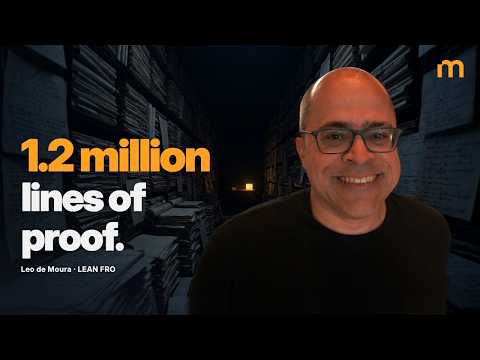
De Moura says a false proof claiming to settle the Collatz conjecture passed both Lean's official kernel and the external kernel nanoda, through a different bug in each, and his team believes an AI built it. His conclusion: checkers must be several, open and eventually proved correct, and a proof only certifies the statement people wrote.
“We strongly believe it was built by AI.” — Leonardo de Moura
8 claims Company-reported 3 · Industry context 2 · Current system 1 · Guest's judgment 1 · Not yet closed 1
After the interview 3 later results
Andrew Beam · Lila Sciences · Ray Summit 2026 (Anyscale)
Lila's CTO: only about 5% of science is cheap to verify, so build a big verifier
Lila's CTO says reinforcement learning needs more verifiable domains to keep scaling; science is the largest one, but only about 5% of it is cheap to verify, so Lila is building an AI science factory that uses real experiments as the verifier.
“how do we start to tackle domains when verification is hard?” — Andrew Beam
10 claims Company-reported 5 · Guest's judgment 2 · Current automation 1 · Target 1 · Not yet closed 1
After the interview 1 later result
Tyler Titsworth · Priunsh Syen · Lila Sciences · Ray Summit 2026 (Anyscale)
Lila's AI platform: make the supported path so easy nobody wants another
Lila's platform team says what slows scientists down on GPUs is friction, not compute, so they maintain one supported path: submission, security, quotas and observability are done by the platform and researchers edit only the part they care about.
8 claims Current system 4 · Current automation 1 · Company-reported 1 · Target 1 · Guest's judgment 1
Yuan Cao · Unreasonable Labs · Silicon Valley 101
Concept abstraction may be the last mile of AGI
A former DeepMind scientist who co-founded Unreasonable Labs argues that AI4S is limited today by physical verification and in the long run by concept formation, which he calls the last mile of AGI.
10 claims Guest's judgment 5 · Industry context 3 · Company-reported 1 · Not yet closed 1
After the interview 3 later results
Andrew Beam · Rafael Gómez-Bombarelli · Lila Sciences · Latent Space
Lila: making the lab the verifier for reinforcement learning
Lila says it trains one general science-reasoning model with real experiments as the reinforcement-learning verifier, and its CTO insists it is neither an automation company nor a biotech.
“science, running the scientific method and using nature and experiments as verifier is like the ultimate version of that.” — Andy Beam
11 claims Company-reported 6 · Current system 1 · Current automation 1 · Target 1 · Industry context 1 · Not yet closed 1
After the interview 2 later results
Joseph Krause · Radical AI · Latent Space
Real materials discovery must cross manufacturing and qualification
Radical says its loop already runs from proposing an alloy to early property tests; what it has not closed is manufacturing, qualification and real deployment.
“We're not compute constrained in the materials industry. We're experiment constrained.” — Joseph Krause
8 claims Current system 2 · Company-reported 2 · Current automation 1 · Target 1 · Industry context 1 · Not yet closed 1
After the interview 2 later results · 2 dated claims overdue
Logan Kilpatrick · Google DeepMind · Training Data (Sequoia Capital)
Kilpatrick: the next narrow superintelligence will come where results can be checked, and science is one candidate
Kilpatrick says coding already feels like a narrow superintelligence and the next ones will come where results are easy to verify: mathematics, finance and possibly science; and that Omni is a single model called a 'world model' for how much it understands about the world, not because it is one in the older sense.
“things that have better verifiability obviously are the ones where you'll see the gains happen more quickly.” — Logan Kilpatrick
6 claims Guest's judgment 4 · Company-reported 1 · Current system 1
After the interview 2 later results
Joy Jiao · Yunyun Wang · OpenAI · The OpenAI Podcast, episode 16
OpenAI's life-sciences route: dedicated models, scientific workflows and trusted access
OpenAI's life-sciences team says it is building a dedicated biochemistry model series starting from early discovery, and will open more capability only to verified professional users.
“we made a non zero amount of protein, that was actually quite surprising.” — Joy Jiao
7 claims Company-reported 3 · Current system 1 · Target 1 · Industry context 1 · Not yet closed 1
After the interview 3 later results
Aron Walsh · CuspAI · AI for Science conference, The Alan Turing Institute (Royal Society, London)
Aron Walsh: from solving equations to agents that search for materials
Walsh says materials design is moving from 'a million calculations through a funnel' to agents that call tools while they search; his own steps were machine learning in place of solving quantum-mechanical equations, generative models that work backwards from a target property to a crystal, then reinforcement learning, with a warning that the models cheat.
“once you start to do machine learning it's very difficult to go back to quantum mechanics to be honest.” — Aron Walsh
12 claims Current system 3 · Industry context 2 · Guest's judgment 2 · Company-reported 2 · Target 1 · Current automation 1 · Not yet closed 1
After the interview 3 later results
Jonah Cool · Eric Kauderer-Abrams · Anthropic · Anthropic (YouTube)
Anthropic's life-sciences route: connect the tools first, then reach the lab
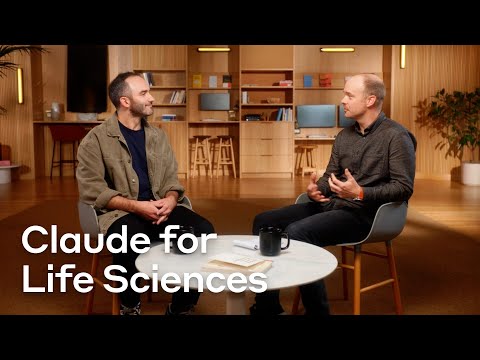
Two Anthropic leads say Claude should be a research assistant across the whole workflow: first connect to the tools scientists use daily, then reach experiment execution, then learn from lab data.
“At some point we're going to saturate learning from human experts. The answer is to get the data from the lab.” — Eric Kauderer-Abrams
7 claims Company-reported 3 · Target 2 · Industry context 1 · Not yet closed 1
After the interview 3 later results
Artem Mishchenko · University of Manchester · MACSMIN 2024 (Mathematics and Computer Science for Materials Innovation), University of Liverpool
Mishchenko: flat-band materials cannot be picked by a threshold, so his group sorts them into families with a neural network and clustering
A flat-band material is one where the electron's energy hardly changes with its 'crystal momentum', and many high-temperature superconductors have one. His group uses a convolutional neural network to pick flat-band materials out of a database's band-structure images, then clusters them by structural or band-image similarity into families a person can check one by one.
“you want to have this flat band and then on top of that flat band the interactions will happen and that will drive some new physics.” — Artem Mishchenko
12 claims Industry context 3 · Guest's judgment 3 · Current system 3 · Not yet closed 3
After the interview 1 later result











Dated claims, checked on the day
When a guest puts a date on a claim, the page records the last day of the window they gave, and the claim is checked against the public record on that day: met, partly met, or passed with nothing public.
12 dated claims · 4 checked · 8 waiting
- Waiting
Andrew Beam · Lila Sciences
Whether a one-trillion-parameter model is released, with its training compute.
Said: through the end of this year - Waiting
Andrew Beam · Lila Sciences
Whether the 100,000 sq ft facility opens on time, and which experiments it runs.
Said: at the beginning of 2027 - Waiting
Liam Fedus · Ekin Dogus Cubuk · Periodic Labs
Whether the roughly 1,000-a-day target is met, with a quality measure.
Said: a one-year goal, 'we'll get there soon' - Waiting
David Silver · Lasse Espeholt · Ineffable Intelligence
Said: 'within a year' - Waiting
Alex Rives · Biohub
Whether first drafts of cell atlases of health and disease appear within one to two years.
Said: 'first drafts of that within the next one or two years' - Waiting
David Silver · Lasse Espeholt · Ineffable Intelligence
Whether within three years there is the 'true superintelligence' he defines.
Said: 'three years' - Waiting
Liam Fedus · Periodic Labs
Said: 'easily dozens' in five years - Waiting
Alex Rives · Biohub
Said: 'the next five years, let's say' - Target date passed
Alex Higginbottom · Zenithon
Higginbottom said on 2026-09-30 that the first world model, with several confinement types in one model, would come 'next week'; by 11 October no dated release was found in search, the round's coverage or the investors' pages, and the last line the record holds is still the round coverage's new models every quarter. Zenithon's own site returned 403 to both fetch paths and was not read. - Target date passed
Joseph Krause · Radical AI
Krause said the custom synthesis tool should be automated by summer 2026; nothing in the record says synthesis no longer needs a metallurgy PhD. Radical's one automation post since (with Makino, 2026-08-26) covers sample preparation after synthesis, an EDM fixture that cuts five samples at once, not synthesis itself. - Target date passed
Joseph Krause · Radical AI
Whether throughput reaches 100 a day, or any higher figure, with the testing depth stated.
Krause expected 100 alloys a day across the lab around June to July 2026; the last range this record holds is still the interview's 8 to 20 a day, and nothing public confirms 100. - Still open
Artem Mishchenko · University of Manchester
Whether language-model descriptions of clusters reach a point a materials physicist can check.
The abstract of the June 2025 follow-up preprint does not mention language-model descriptions of clusters; this check was not an exhaustive search and found nobody showing it, his group or another.