中文

AI FOR SCIENCE · INTERVIEWS

Valo's CEO: clinical development eats AI's gains, so start target choice from human data and hand off to pharma at the clinic

Beyond Biotech (Labiotech.eu), episode 217 · 36:16 · Open on YouTube ↗
Guest
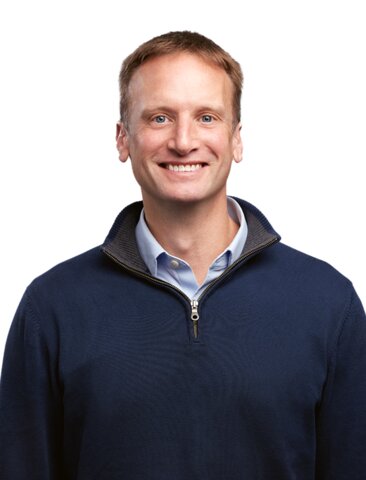
Brian AlexanderChief Executive Officer, Valo HealthProfile, roles and records →
Company
Valo Health
Source
Beyond Biotech (Labiotech.eu), episode 217 ↗Published · 36:16
Core signal

Alexander says AI's productivity gains are washed out in clinical development, where stronger comparators and harder endpoints make trials bigger and longer. Valo's answer is to find patient subgroups and targets in tens of millions of patient records and genetic data, do the preclinical part well, and hand programmes to pharma at the clinic.

What this adds

The press releases gave the deal sizes and the record count. The interview adds the business model (hand off at the clinic and keep part of the portfolio; its own programmes are new chemistry on known targets), who picks programmes in the Novo deal, and a checkable target: clinical success from 10% to 20%, which he concedes would take about 50 Phase 2 and 3 programmes to prove.

Current boundary

No programme from the platform has a clinical result; the one clinical readout Valo has reported (OPL-0401, December 2024) missed its endpoints, and Valo says it did not use the platform. 'Targets recapitulated in preclinical systems' comes with no data; the interview gives 20 million patient records where the releases say more than 17 million.

01

What they said

  1. AI's gains are washed out in clinical development

    His account: AI can speed chemistry cycles and get FDA paperwork done in a couple of months, but end to end the bottleneck is clinical development. Standards of care are better than 20 or 30 years ago, so the relative signals sought are smaller and trials bigger and longer; endpoints moved from lipid lowering to major adverse cardiac events on top of maximal statins. Endpoints years long and larger trials wash out what was saved upstream.

    “AI is having productivity benefits, but it's getting washed out by the other kind of trends in clinical development.”Brian Alexander
  2. Disease labels are the wrong starting point; patient subgroups are the right one

    He says many diseases were classified by what could be observed at the time: Parkinson's disease comes from James Parkinson's description of six patients in 1817. Now patients can be seen ten years before diagnosis, each one's 20 years and thousands of data points embedded in one space to find subgroups with different courses and comorbidities, then knowledge graphs and causal inference such as Mendelian randomisation rank targets. He wants to go further: a patient-centred clinical genomic foundation model that applies no disease label first.

  3. On the chemistry side, speed depends on whether the target is known

    The chemistry platform is agnostic to structure and learns from biochemical assay readouts. He says the speeds reported publicly are often for known targets and similar chemistry; new chemistry on a new target still takes time, starting with an assay that reads out target engagement. Clinical safety is the hardest to predict, because few molecules have gone into the clinic with safety data; potency is one of about 30 requirements in a target product profile.

  4. An external R&D engine for pharma, handing off at the clinic

    He says Valo is good at human causal biology and predictive chemistry, not clinical development, which is expensive, so it creates value early: with partners such as Novo Nordisk and Merck KGaA it goes from target finding into development, hands off at the clinic and keeps a fractional share of the portfolio. Its own programmes are mostly new chemistry against known high-value targets, chemistry risk to balance biology risk; only a new target it has strong conviction in might go to clinical proof of concept on its own. In the Novo deal programmes go through shared governance: Novo can pick anything it wants, and what Novo declines and Valo wants, Valo can take forward.

  5. What can prove it is a portfolio, and it will take a long time

    He cites the often-studied statistic that targets with genetic evidence are more than twice as likely to succeed in the clinic; Valo wants to industrialise that, adding the patient subgroup and the mechanistic pathway. If the platform raised success for programmes entering the clinic from 10% to 20%, he says, that would be world-changing, but no single programme would show it, and it would take something like 50 programmes in Phase 2 and 3 to prove statistically. The biggest obstacle is time, and finding enough partners to do the clinical development.

02

What changed

  • Prior public record

    Valo's release of 2025-11-20: a Parkinson's and related-disorders collaboration with Merck KGaA (EMD Serono in the US), upfront and potential milestones totalling over $3 billion; the platform uses more than 17 million de-identified patient records, some spanning 20 to 30 years, and has identified distinct patient phenotypes in neurological conditions.

    This interview adds

    Alexander says what Valo brings to the deal is its 'phenomaps' of neurodegenerative disease, with Parkinson's patients split into subgroups that differ in course and comorbidities, plus earlier target work with the Michael J. Fox Foundation; targets are chosen jointly. He gives the record count as 20 million.

  • Prior public record

    The Valo and Novo Nordisk release of 2025-01-08: the collaboration expanded to up to 20 drug programmes, near-term payments up to $190 million and milestones of about $4.6 billion, and says several novel targets have been identified.

    This interview adds

    The interview says how programmes are chosen: under shared governance Novo can pick any programme it wants, and Valo can take forward what Novo declines; Valo's own portfolio sits outside the partnered areas.

  • Prior public record

    Valo's release of 2024-12-31: the Phase 2 SPECTRA study of OPL-0401 missed its primary and secondary endpoints; the company suspended development to seek a partner, said the molecule had not used its platform, and refocused on the platform.

    This interview adds

    The interview sets the turn out as a model: hand programmes to partners at the clinic and keep part of the portfolio, with its own programmes avoiding biology risk; and it gives the measure: success from 10% to 20%, needing about 50 Phase 2 and 3 programmes to prove.

03

Why it matters

Can observational data serve as the first human causal experiment

His argument: a drug usually first tests in humans whether the intervention works at Phase 2 or 3, and Valo wants to move that step forward into records and genetic data. He says himself that observational data needs many caveats; what tells a real subgroup from an artefact is replication in an independent population, and how targets chosen by subgroup do in the clinic.

A platform that can only be proved by a portfolio

If proof needs about 50 Phase 2 and 3 programmes and Valo hands programmes over at the clinic, the evidence will sit with its partners and take many years to accumulate. Meanwhile the signals are intermediate: whether partners advance the collaboration's programmes, and whether targets and their rationale are made public.

Who decides what gets built

In the Novo deal it is Novo that picks programmes, and Valo's income depends on what partners choose and advance. Its own programmes bet on new chemistry for known targets, so its own money does not ride on its central claim, finding new targets in patient data; new targets have to be proved through partners' programmes.

04

Claims and boundaries

ClaimWhose voiceWhere it stands

AI's productivity gains are washed out by bigger, longer trials in clinical development.

Guest's judgment

His judgment; no figure is given.

Valo has access to records of 20 million patients over 20 to 30 years, often with genomics.

Company-reported

Valo's releases and the show notes say more than 17 million records; the interview's 20 million is not explained.

Valo has built phenomaps of neurodegenerative disease, splitting Parkinson's patients into subgroups with different courses and comorbidities.

Company-reported

No published paper or data.

Partners have seen some of the targets Valo picked recapitulated in preclinical systems.

Company-reported

No target is named and no data is given.

In the Novo deal, Novo can pick any programme, and Valo can take forward what Novo declines.

Company-reported

The collaboration's releases do not state this.

Valo has a few programmes of its own: new chemistry against known high-value targets.

Company-reported

No target or stage is named.

Targets with genetic evidence are more than twice as likely to succeed in the clinic.

Industry context

Published industry research he cites without naming the source.

The platform will raise the success rate of programmes entering the clinic from 10% to 20%.

Target

He says it would take about 50 programmes in Phase 2 and 3 to show statistically, and no single programme would.

The next step is a patient-centred clinical genomic foundation model that applies no disease label first.

Not yet closed

He describes a direction and does not say how far it has been built.

05

What to watch next

  1. Whether a partnered programme reaches IND or the clinic with its target and the patient-subgroup rationale behind it made public.

    Would show up as A release by the partner or Valo naming the target, the indication and the subgroup.
  2. Whether the Parkinson's subgroups replicate in an independent population.

    Would show up as A paper testing the same subgroups in another set of records or biobank.
  3. Whether 'targets recapitulated in preclinical systems' is backed by data.

    Would show up as Published or partner-released results naming the target and the model system.
  4. Whether Valo names its own programmes: target, stage, and whether the platform was used.

    Would show up as A pipeline disclosure by the company.
Source and how it was read

Read 2026.10.04 A machine transcript made for this page from the episode audio (Whisper), read in full; it has no speaker labels, but only the host and Alexander speak. Names and figures follow the show notes and Valo's own press releases, since the transcript mishears some names. Open the interview ↗Episode audio page ↗