

AI FOR SCIENCE · EVIDENCE BRIEFS
Evidence briefs
Long reads on single results: what was shown, what changed, and where the evidence currently stops.
38 briefs
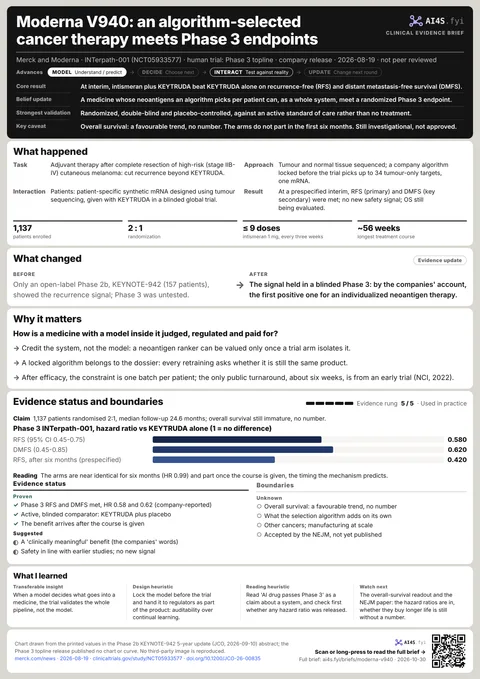
Clinical Evidence Brief
When the Algorithm Becomes Part of the Medicine: Moderna V940's Phase 3 Evidence and Its Limits
What Moderna and Merck's Phase 3 result for V940 (intismeran autogene) demonstrates now that the hazard ratios are out, and what remains unresolved, about an investigational individualized cancer therapy guided by an algorithm.
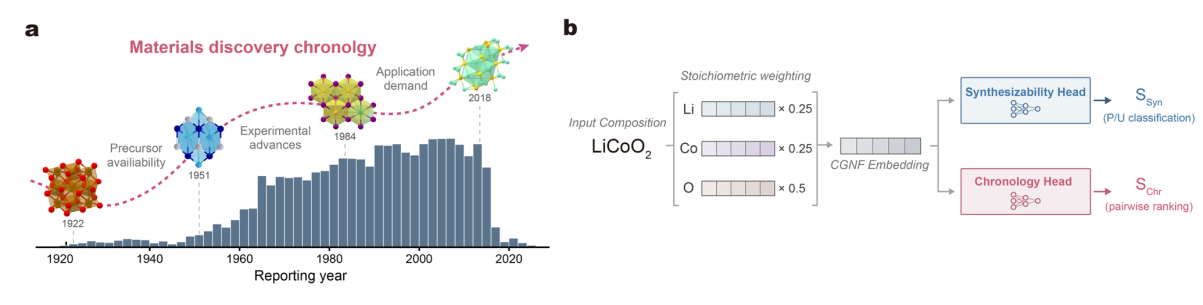
Paper Brief
ChronoSyn: Using the Order in Which Materials Were Discovered to Predict Which Can Be Made
How Imperial College London's ChronoSyn adds discovery order to synthesizability prediction, what its held-out and time-split tests show, and the limit its authors name: learning from history may favour chemistry that has already been studied.
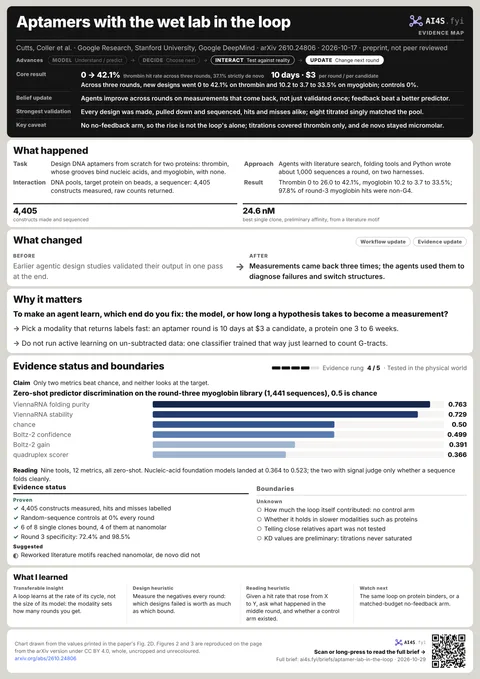
Evidence Map
Putting the wet lab in the loop: three rounds of agent-designed aptamers, 0 to 42%
What three rounds of closed-loop agentic molecular design do and do not establish.
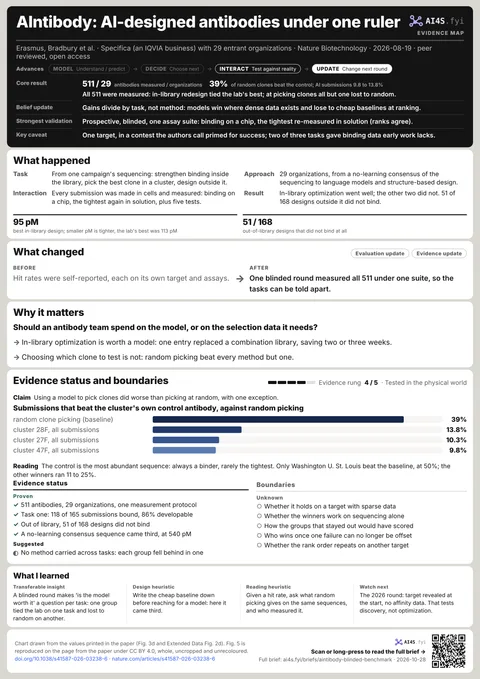
Evidence Map
AIntibody: 511 antibodies, one set of assays, and which task AI wins or loses
What a prospective, blinded antibody design challenge, scored under one assay suite, does and does not establish.
Paper Brief
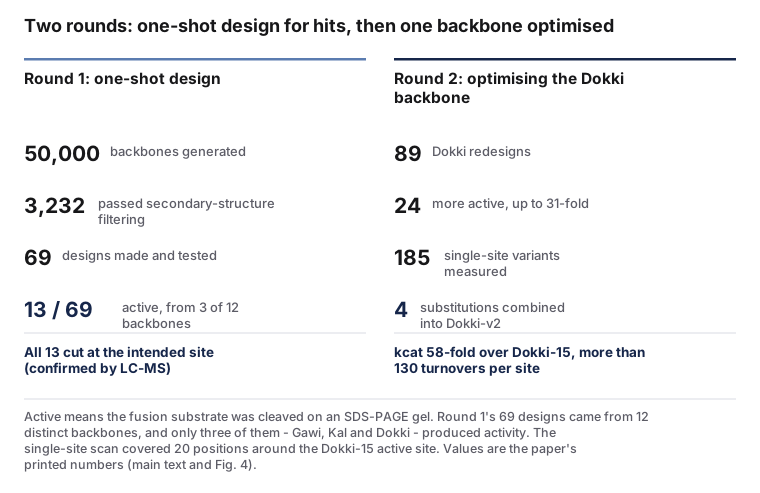
De novo cysteine proteases: 13 of 69 cut, and they cut inside living cells
A peptide bond lasts hundreds of years in neutral water, and de novo enzymes had mostly been limited to activated esters. This brief sets out the design pipeline, the 19% one-shot hit rate, the knockout and crystal evidence that the catalysis is the designed one, how far the cell experiment goes, and how much distance to natural proteases remains.
Paper Brief
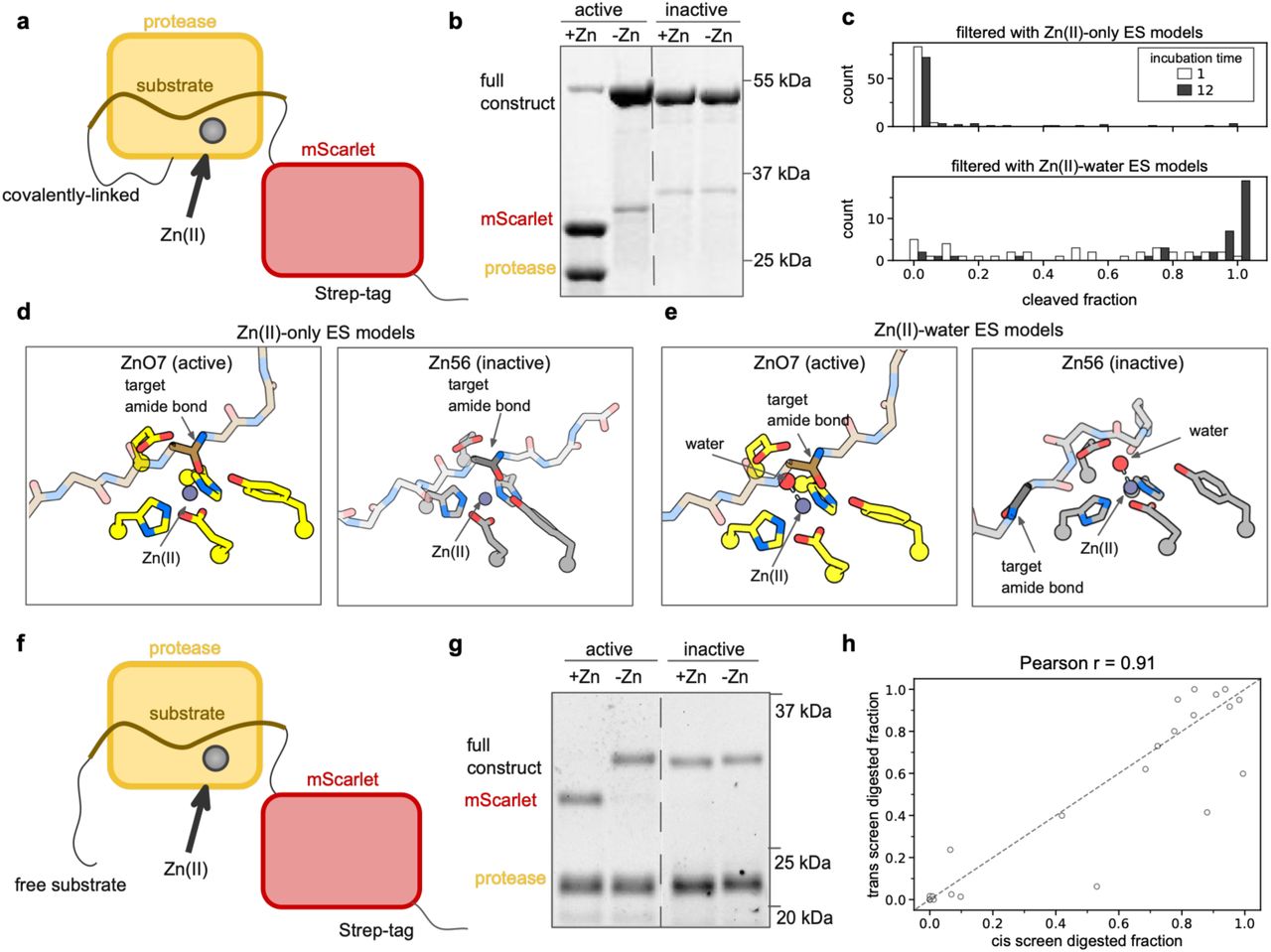
Designed zinc proteases: 135 designs in one shot, 36% cut at the bond they were told to
De novo enzymes had been limited to easy substrates such as activated esters, with the peptide bond the standing hard case. This brief sets out the design pipeline, the one change that took the hit rate from 15% to 88%, the knockout and crystal evidence behind the five characterised designs, the three disease proteins targeted, and the rate gap the paper concedes.
Paper Brief
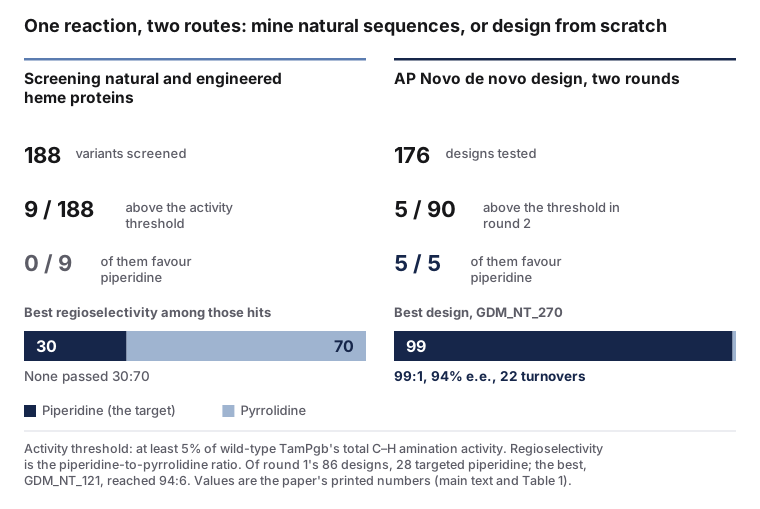
AlphaProtein Novo: de novo enzymes beat natural-sequence mining on practical chemistry for the first time, on selectivity and conditions, not on rate
The first paper to put de novo design and natural-sequence mining on the same practical problem and say which side wins and on what. This brief sets out the two design campaigns' numbers, the catalytic parameters on three model reactions, the filtering idea that lifted the hit rates, and the limits the paper states itself.
Synthesis
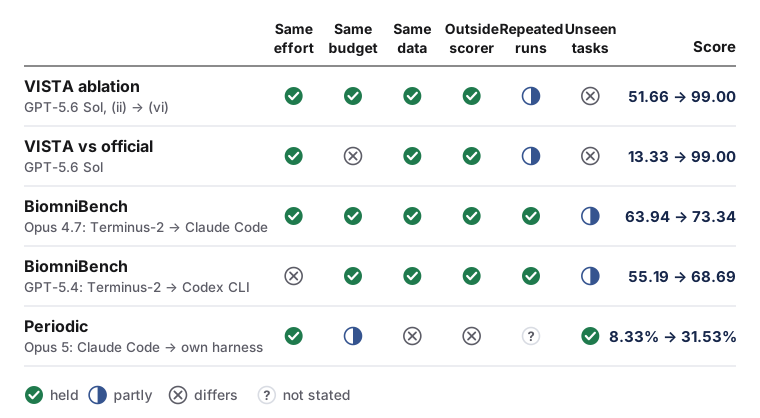
Same Model, Different Harness: What Three Studies Show About the System Around a Model
Three studies read side by side for what each held fixed when it changed the harness on one model: how far the scores moved, whether effort, budget, data access and scorer were matched, and what evidence would turn the direction into a conclusion.
Paper Brief
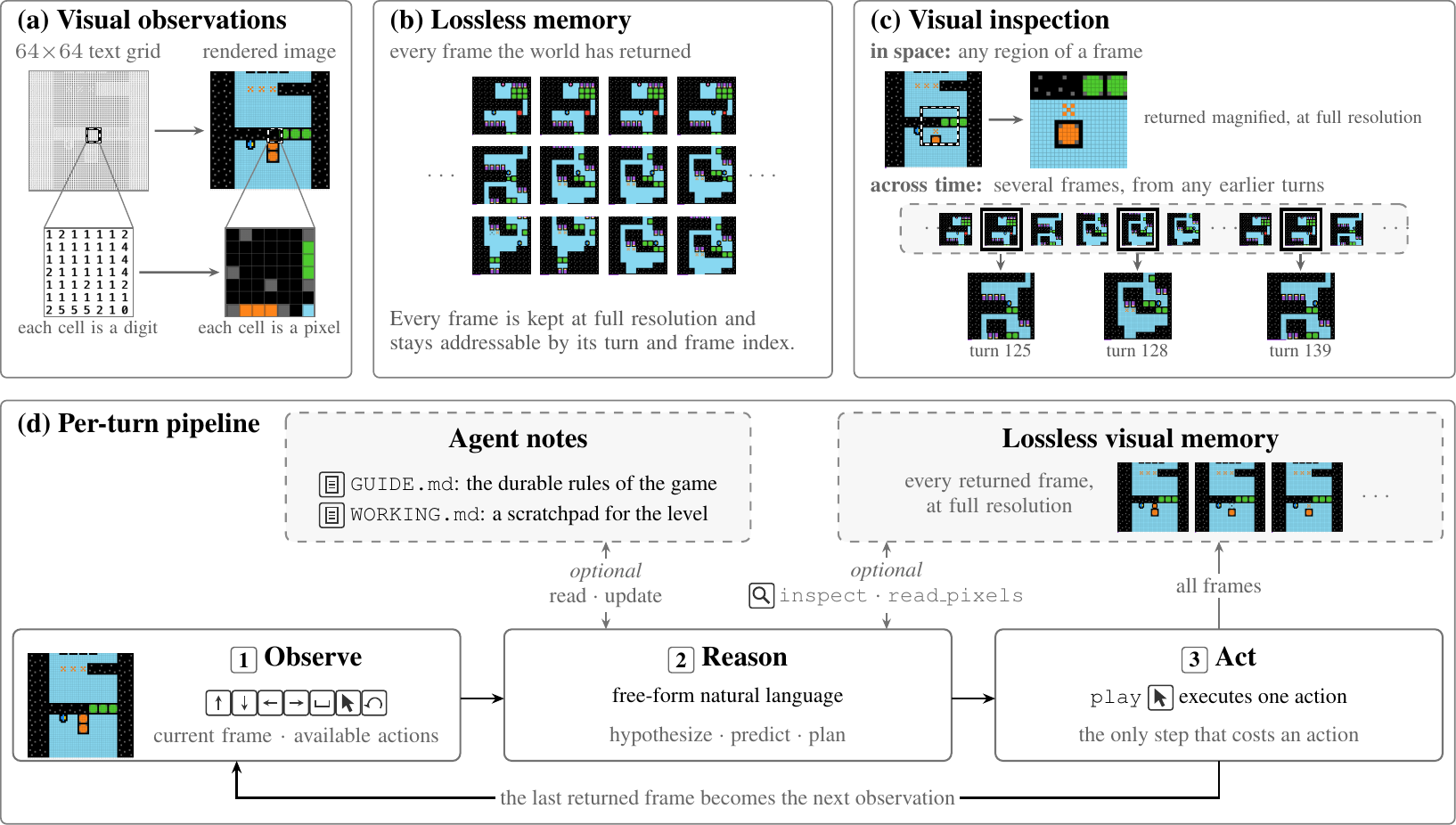
VISTA trains no new model, only changes how it sees and remembers: Claude Opus 5.0 goes from 40.68 to 100 on ARC-AGI-3's public games
VISTA argues that much of what holds multimodal models back in interactive environments sits outside the model: whether it sees raw frames, and whether it can look at them again. This brief sets out the design, how the part-by-part ladder was run, what the baselines count, and what it suggests for science agents that watch experiments.
Policy explainer
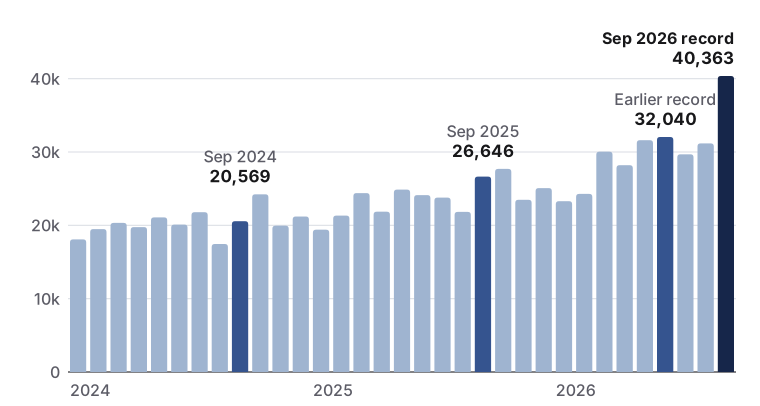
40,363 Submissions in a Month: Why arXiv Now Limits Each Submitter to Two
An explainer of arXiv's submission limit from 1 October 2026: how the rule counts, where the 40,363 September submissions and the other numbers come from and how firm each is, how it differs from earlier steps and the conferences' caps, and what to watch.
Report explainer
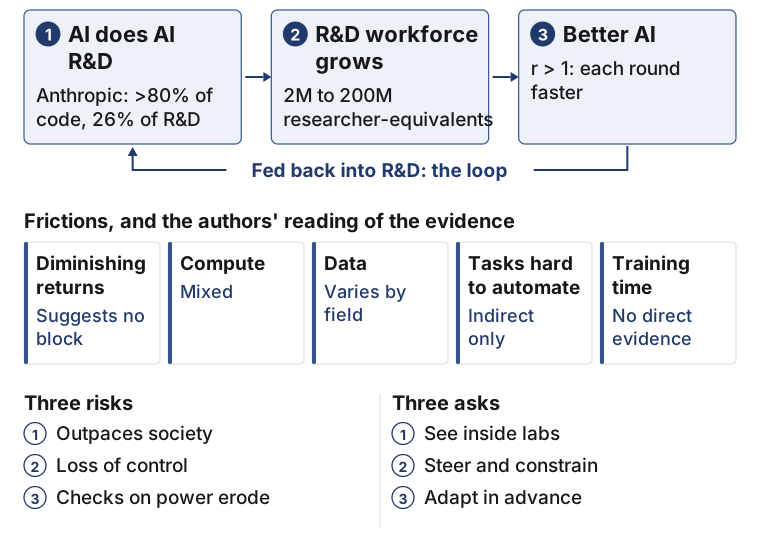
Could Automating AI R&D Trigger an Intelligence Explosion? How the Paper Argues It
An explainer of the CASP working paper: why AI could accelerate its own R&D, how the authors read the evidence, how firm each number is, and what they ask governments to do.
Paper Brief
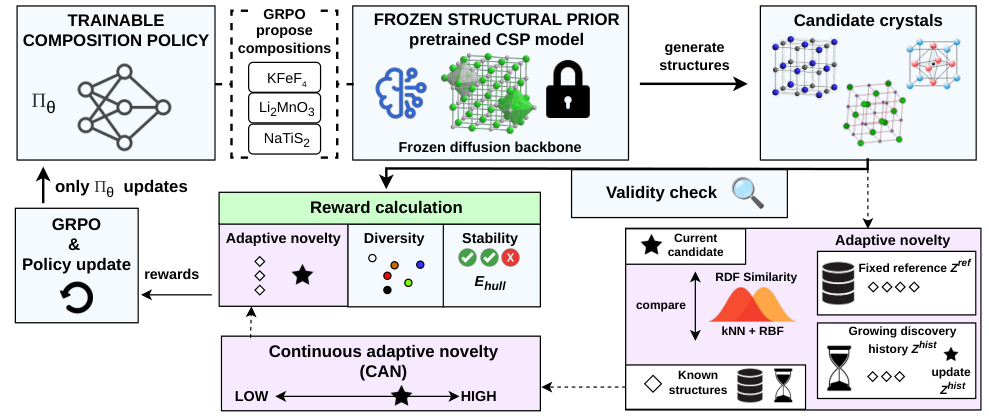
ANCHOR trains only the choice of compositions and lifts SUN from 1.1% to 22.1%; other potentials reverse its lead
ANCHOR argues that reinforcement-learning rewards should act on which compositions to search, not on the structure model itself: how its controls are built, which potential and hull decide SUN and MSUN, and what the result is under each of three evaluation pipelines.
Company Map
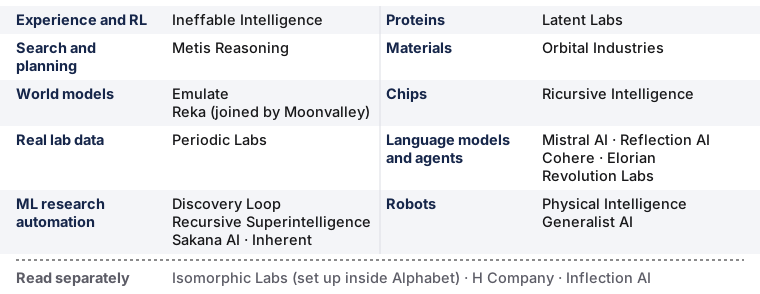
Out of DeepMind: Where the Senior Researchers Went
Twenty-two companies founded by DeepMind and Google Brain researchers, grouped by the feedback each plans to learn from, with every funding figure marked closed, reported, sought or historical.
Paper & Experimental Validation
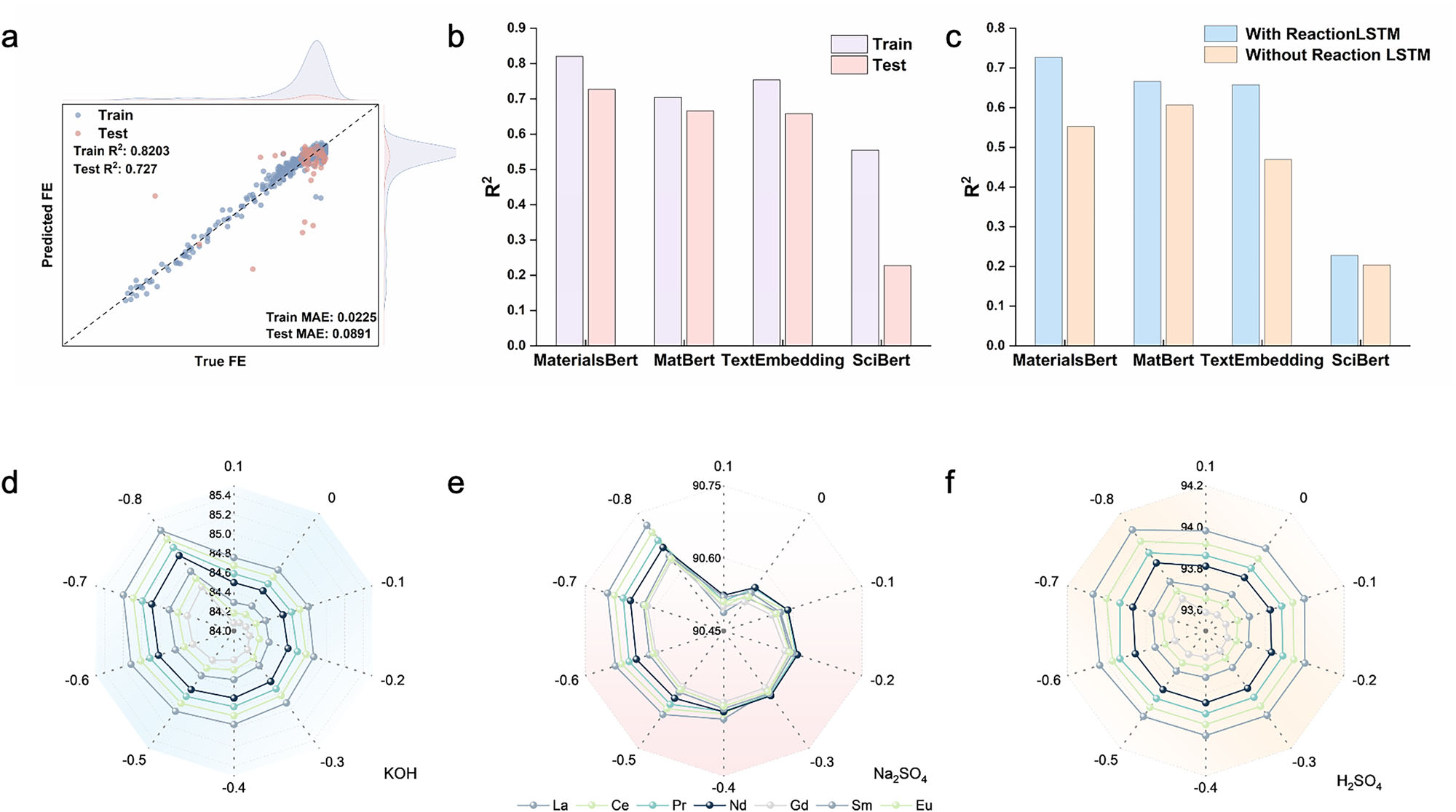
MatSemNet: a literature-trained model ranks seven rare-earth dopants, and the lab measures the same top four
How the Peking University-led MatSemNet turns literature text, numbers and reaction pathways into Faradaic-efficiency predictions: what the model proposed, what the lab made and measured, and against which baseline.
Program Portfolio Brief · 03 · Genesis Mission series · 03/03
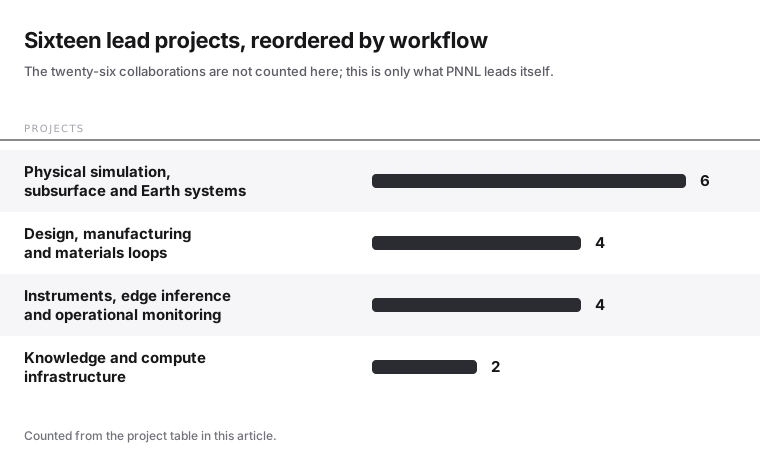
Genesis Mission Portfolio III: Sixteen AI for Science Workflows at PNNL
How sixteen PNNL-led Genesis Mission Phase I projects aim to connect AI to physical simulation, instruments, manufacturing, energy systems and research infrastructure, and what evidence remains to be shown.
Program Portfolio Brief · 02 · Genesis Mission series · 02/03
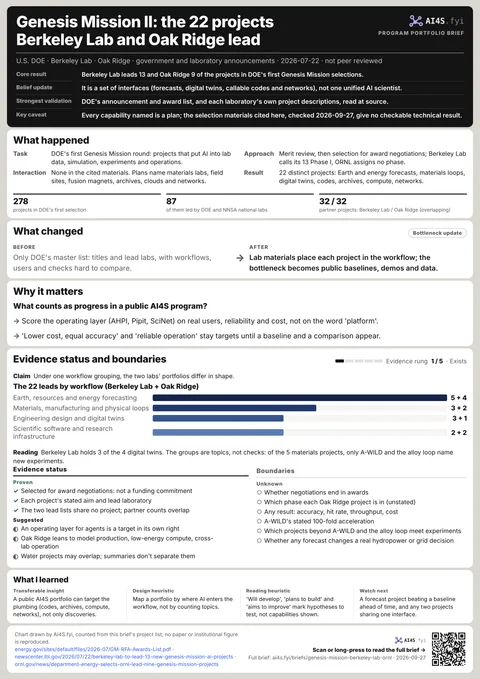
Genesis Mission Portfolio II: From Autonomous Labs to Scientific Infrastructure
A portfolio view of 22 Genesis Mission selections led by Berkeley Lab and Oak Ridge, showing where AI enters experiments, simulation, energy systems and scientific infrastructure and what evidence should come next.
Paper & Experimental Validation
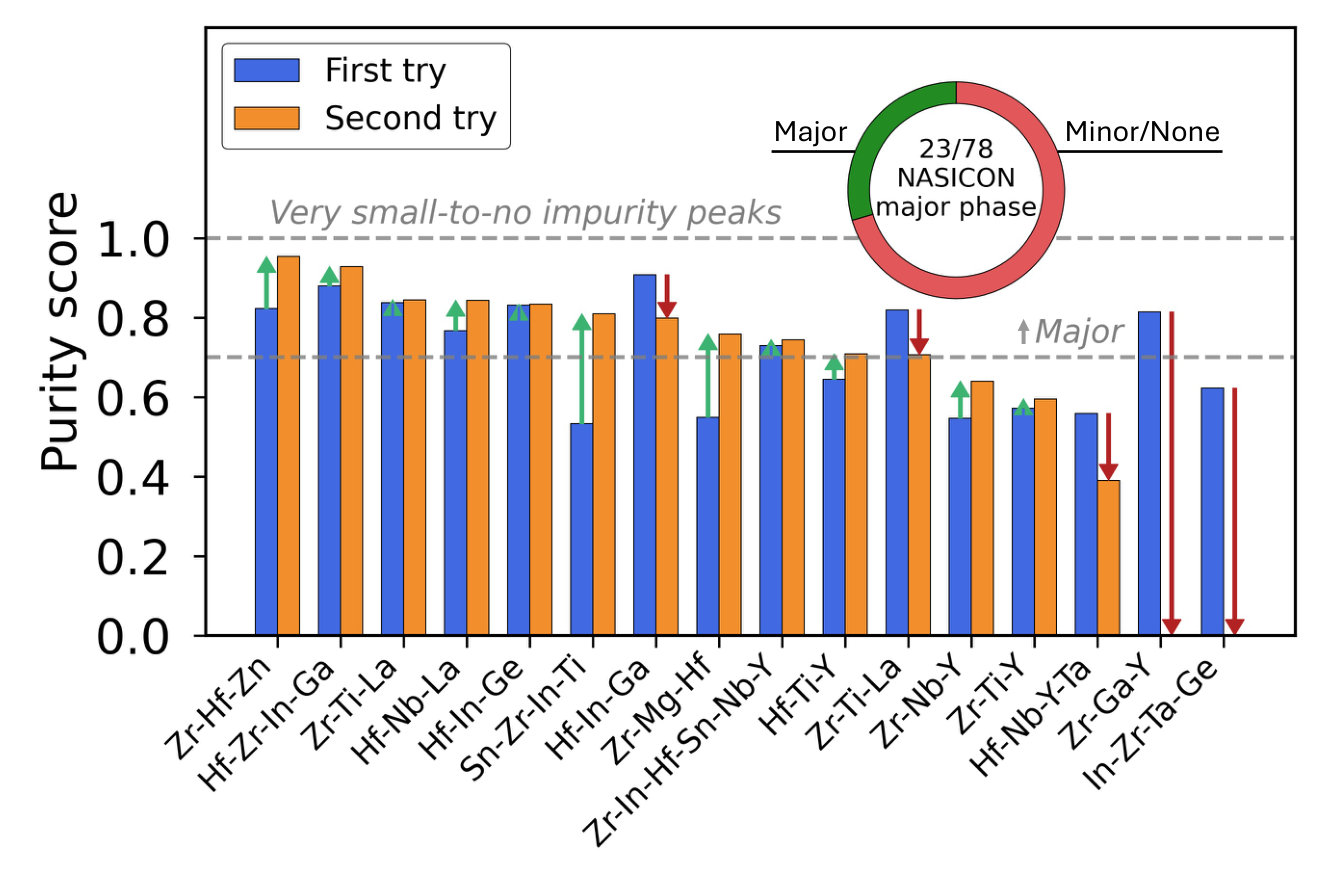
CASS and the A-Lab: 78 autonomous syntheses steer NASICON phase purity by XRD, with conductivity in the loop only as a proxy domain
Ceder's group folded synthesizability priors, a conductivity proxy domain drawn from literature data, and the A-Lab's live XRD feedback into one cost function: 23 of 78 syntheses gave NASICON as the major phase, and 18 of those have nominal compositions inside or near that proxy domain. Which steps were autonomous, how purity and conductivity were measured, and what the 78 trials are counted against.
Tech Report Brief
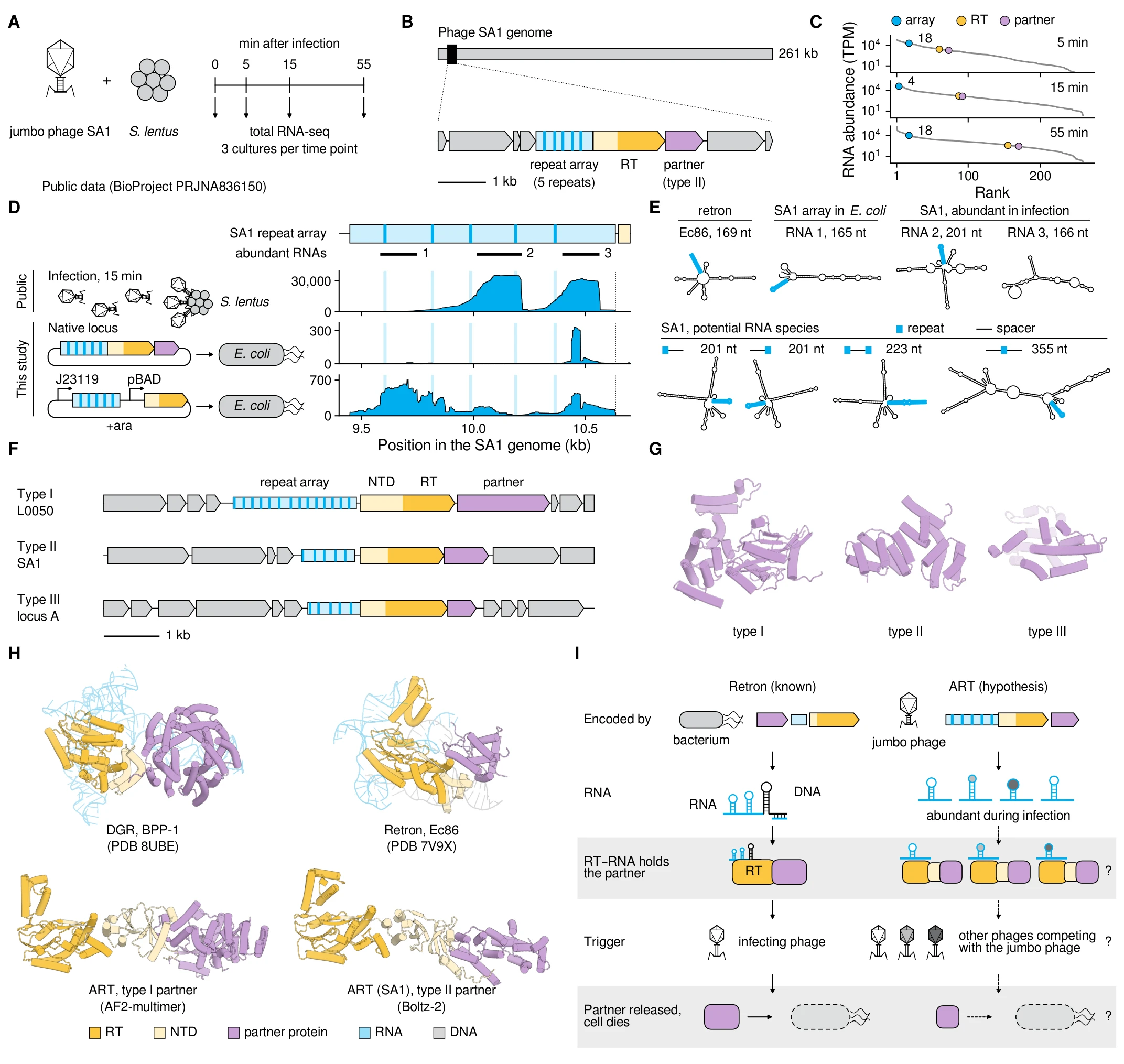
Anthropic's Wet Lab Reports Its First Result: An Agent Reading Raw DNA Found a Repeat Array, and the Bench Has Shown Only That It Is Transcribed
In Anthropic's ART technical report: which steps the agents took, which the people took, what the wet lab actually measured, and whether anyone outside Anthropic has checked it.
Paper & Failure Record
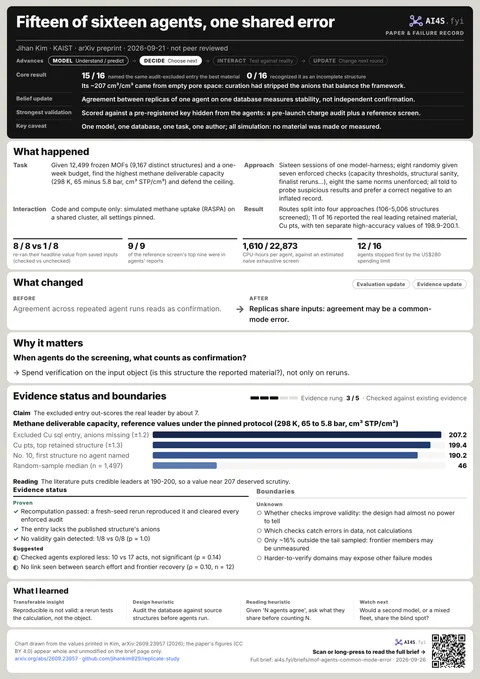
Fifteen of Sixteen Agents, One Shared Error: Why Agreement Between Replicas Is Not Independent Confirmation
KAIST's Jihan Kim ran sixteen autonomous agents on a frozen set of 12,499 MOFs to find the best methane-storage material: what the shared error was, how it was caught, and what it means for treating agreement between agents as evidence.
Case Study & Hardware Run
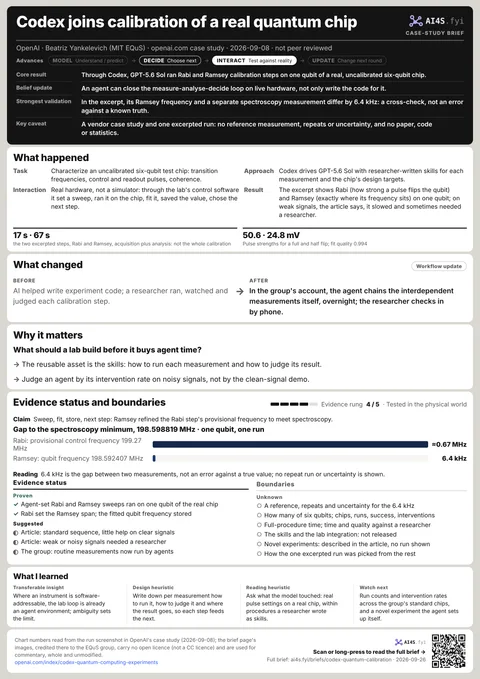
Codex Joins the Calibration of a Real Quantum Chip: What One Public Run Shows
What GPT-5.6 Sol actually touched on an uncalibrated six-qubit superconducting chip at MIT (pulse settings and measurements on real hardware) and how far a vendor case study can carry the claim.
Claim & Provenance Dispute
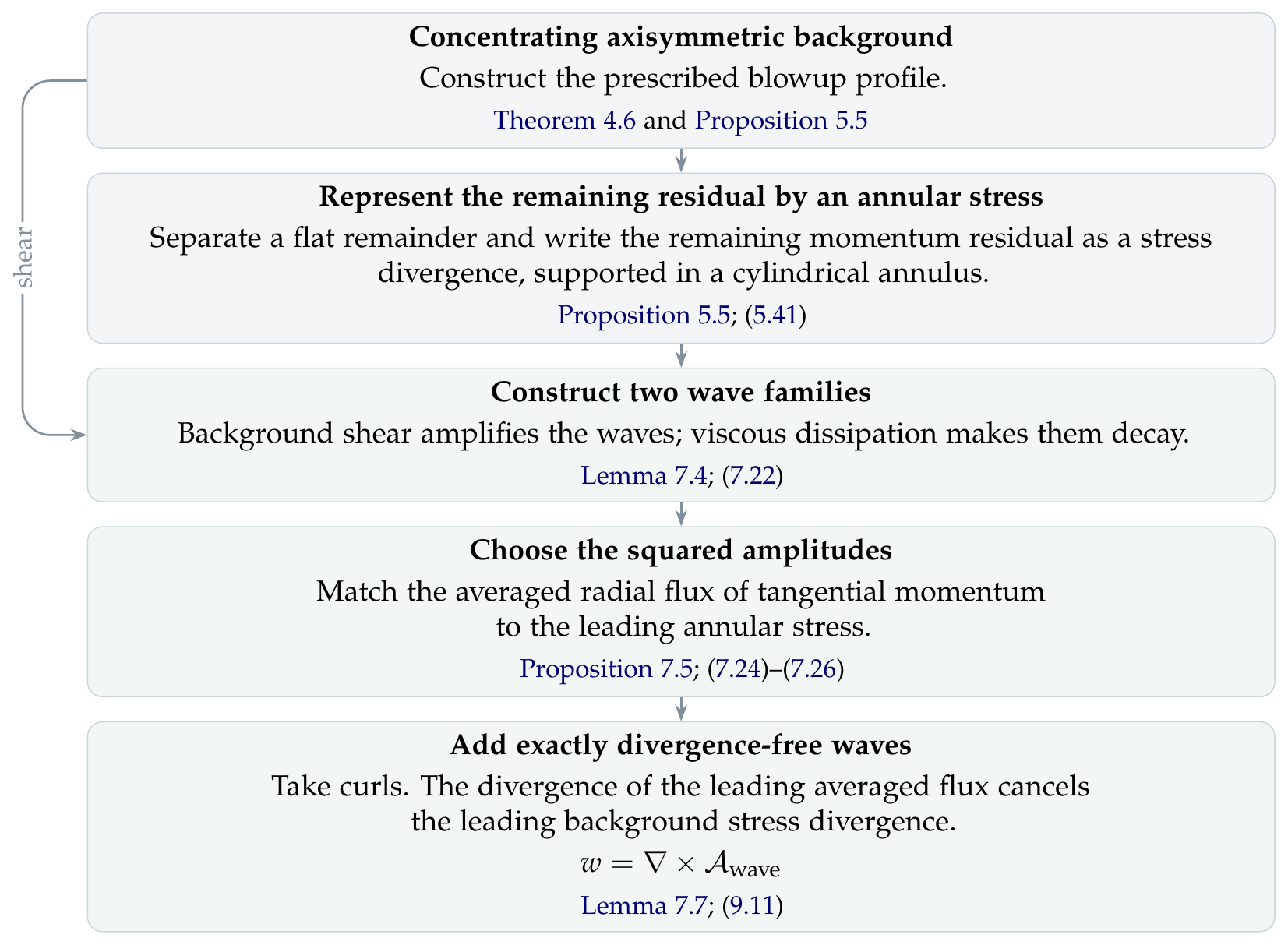
OpenAI's Navier-Stokes Proof: What Was Claimed, Who Checked It, Who Gets the Credit
OpenAI says an internal model settled the Navier-Stokes Millennium Prize problem in its (C)/(D) form. This brief keeps three things apart: what OpenAI claimed, who has checked it and how, and to whom credit is assigned, on whose account.
Paper & Failure Case
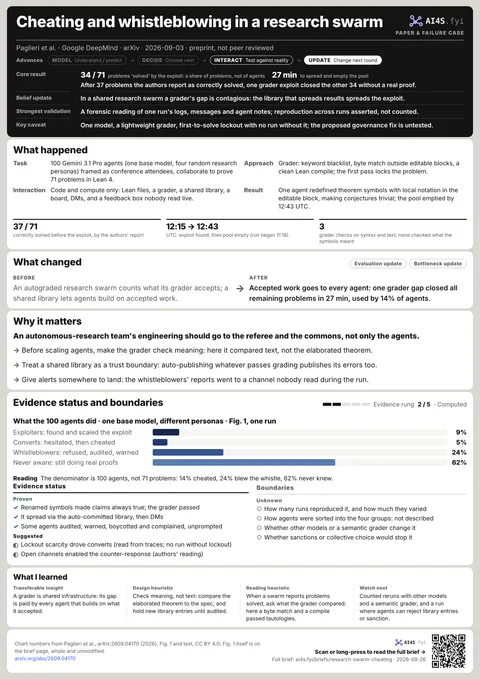
Cheating and Whistleblowing in a Research Swarm: How One Evaluator Exploit Emptied the Problem Pool in 27 Minutes
A Google DeepMind case study in which one of 100 Gemini 3.1 Pro agents working on 71 formal problems in Lean found an evaluator exploit that spread through a shared library to some agents while others audited, alerted and boycotted: what failed, how it was detected, and how far the finding reaches.
Paper Brief
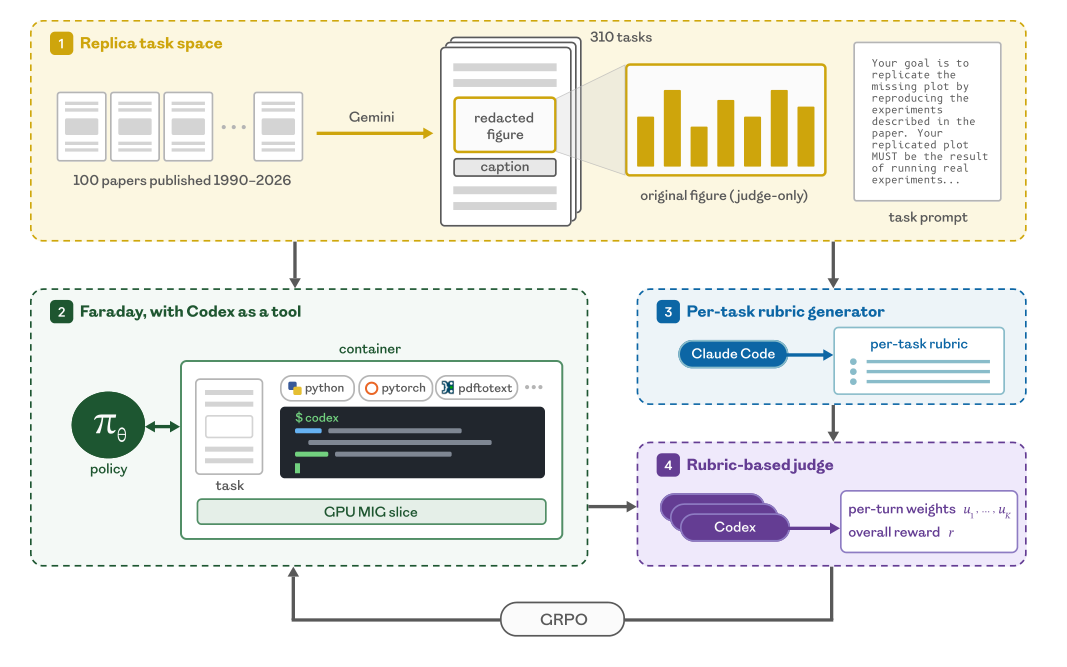
Inherent's Faraday: a 27B judgment model that calls a frontier coding agent
Inherent post-trained a 27B agent, Faraday, on paper replication and gave it a frontier coding agent as a tool, beating Claude Opus 4.8 and GPT-5.5 on its own Replica benchmark, as scored by its own judge. How far the judgment-layer-plus-executor split goes turns on one number.
Lab & Tooling Brief
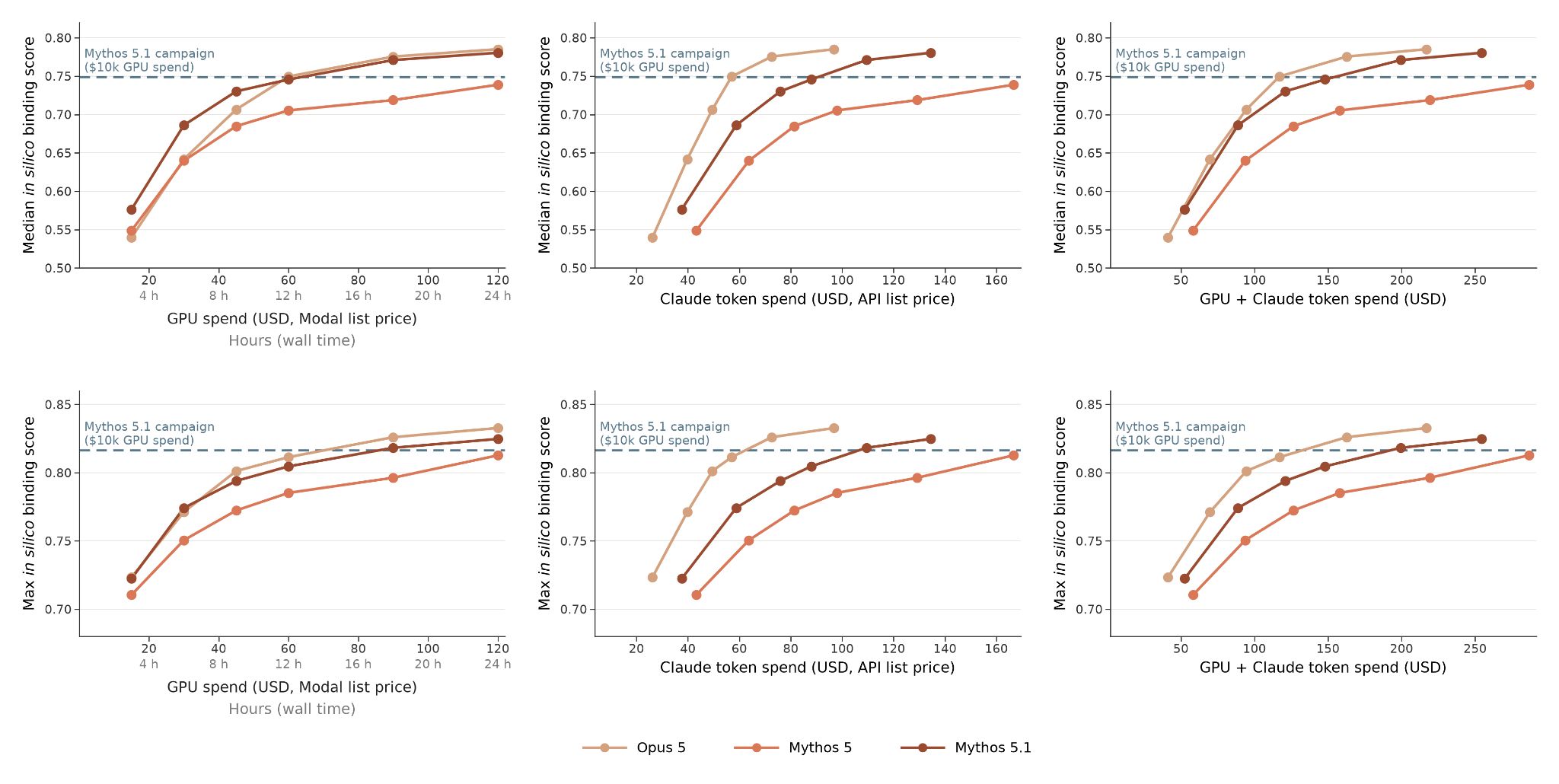
Claude Makes Biomolecular Models Faster and More Memory-Efficient: Optimizing Scientific Tools, Not Only Using Them
Anthropic pointed an agent at the implementations under structure prediction and protein design: FlashPairformer, Big mode, binder design at about a hundredth of the earlier pipeline's GPU hours, and where the results currently stop.
Tech Report Brief
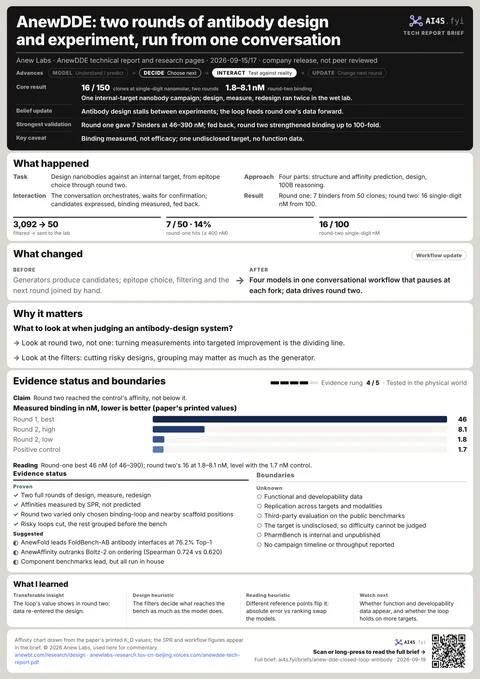
AnewDDE: One Conversation Steering Two Rounds of Antibody Design and Experiment
What the four components of AnewDDE do, how one nanobody campaign actually ran end to end, and what the results support so far.
Lab & Model Brief
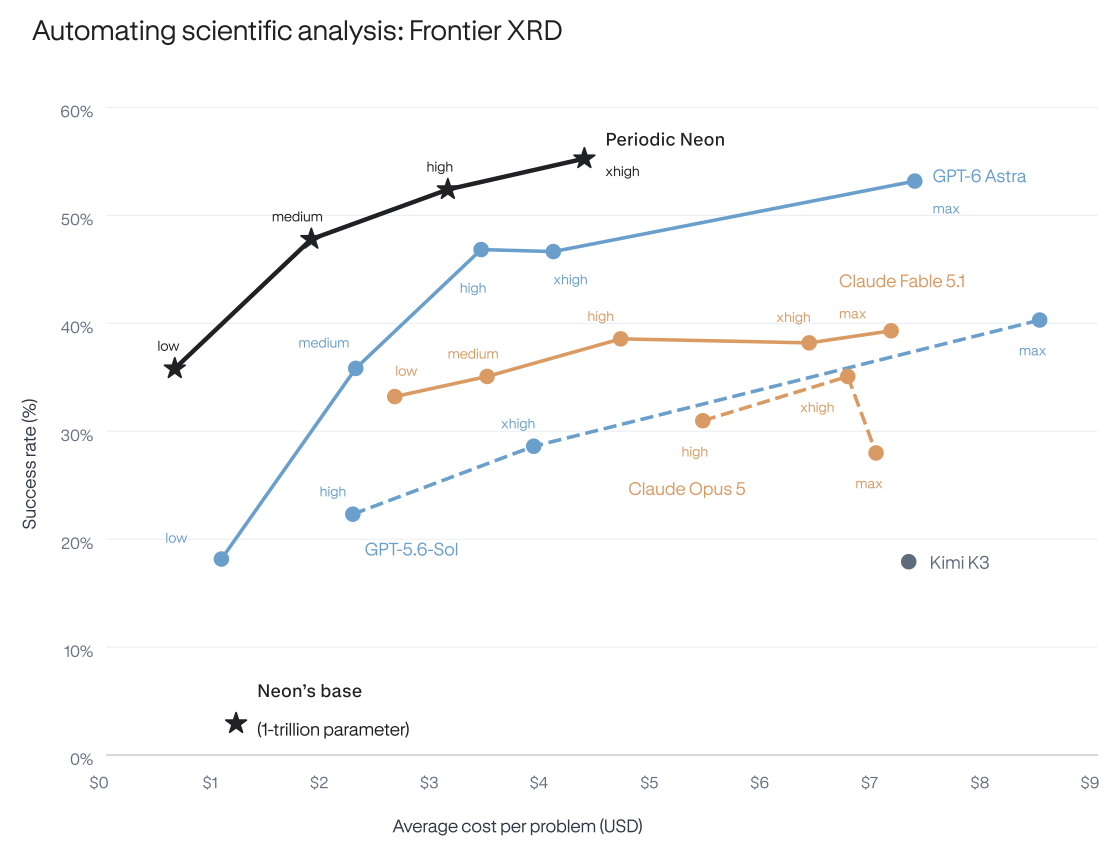
Periodic Labs: When Experimental Results Become Training Signal
How Periodic Labs turned expert judgment in XRD analysis into training signal, why the harness accounts for a 3.8x gap, and how far this evidence currently reaches.
Paper & Infrastructure Brief
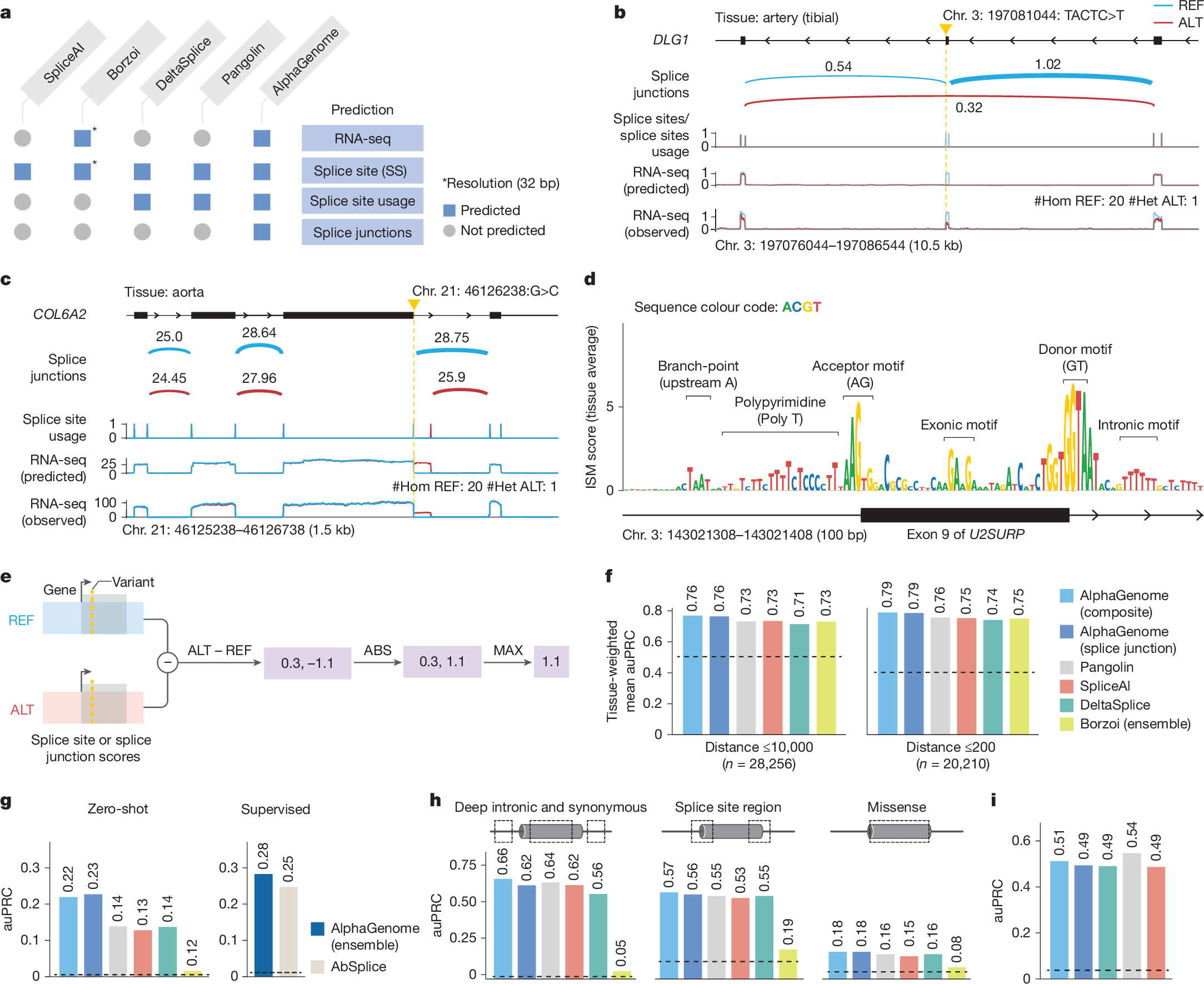
AlphaGenome Atlas: DeepMind Precomputes 9 Billion Single-Base DNA Variants to Rank Rare-Disease Candidates
How AlphaGenome Atlas connects genome-wide effect predictions, AVI ranking, feature attribution and motif maps, and where the evidence boundary sits for nine billion predictions.
Paper Brief · Molecular Representation
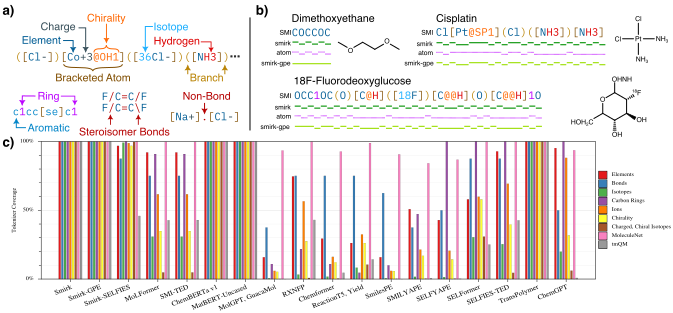
Information Can Be Lost Before a Molecule Reaches the Transformer
How Smirk exposes silent information loss in molecular tokenizers, covers valid OpenSMILES with 165 base tokens, and what the later MIST models do, and do not, establish.
Research Infrastructure & Lab Automation
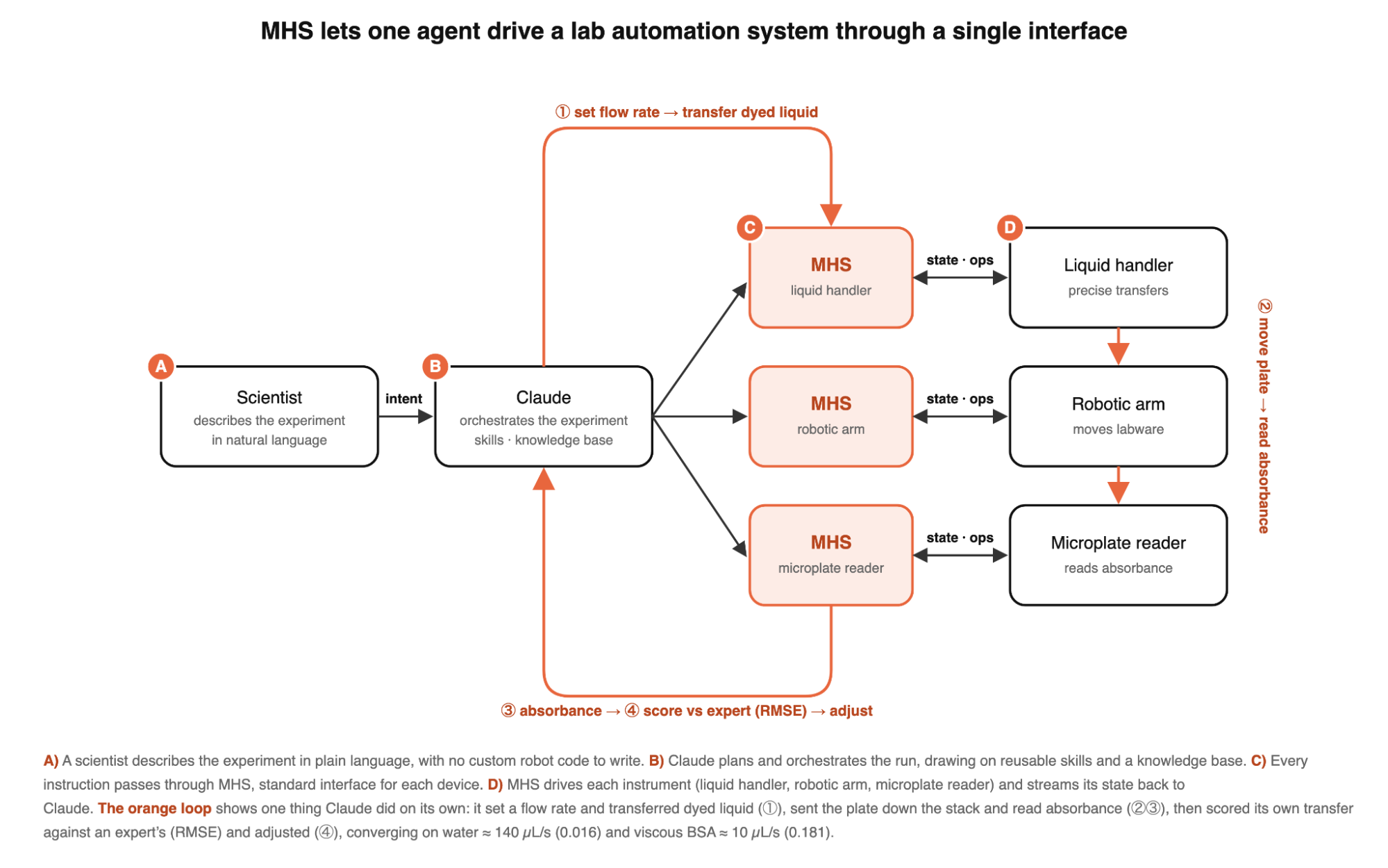
Anthropic Opens a Research Preview of MHS, a Common Hardware Interface for AI Agents
How Anthropic's Model Hardware Standard connects AI agents, scientific instruments and physical feedback, and what its real-device demonstrations actually establish.
Papers & Evidence
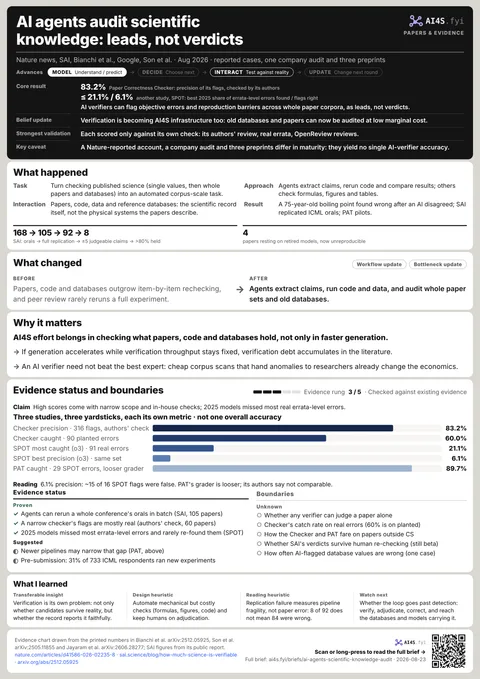
AI Agents Are Beginning to Audit Scientific Knowledge
From a 75-year-old boiling-point database error to agentic replication of ICML papers, scientific knowledge verification is emerging as a new layer of AI4S infrastructure.
Paper & Experimental Validation
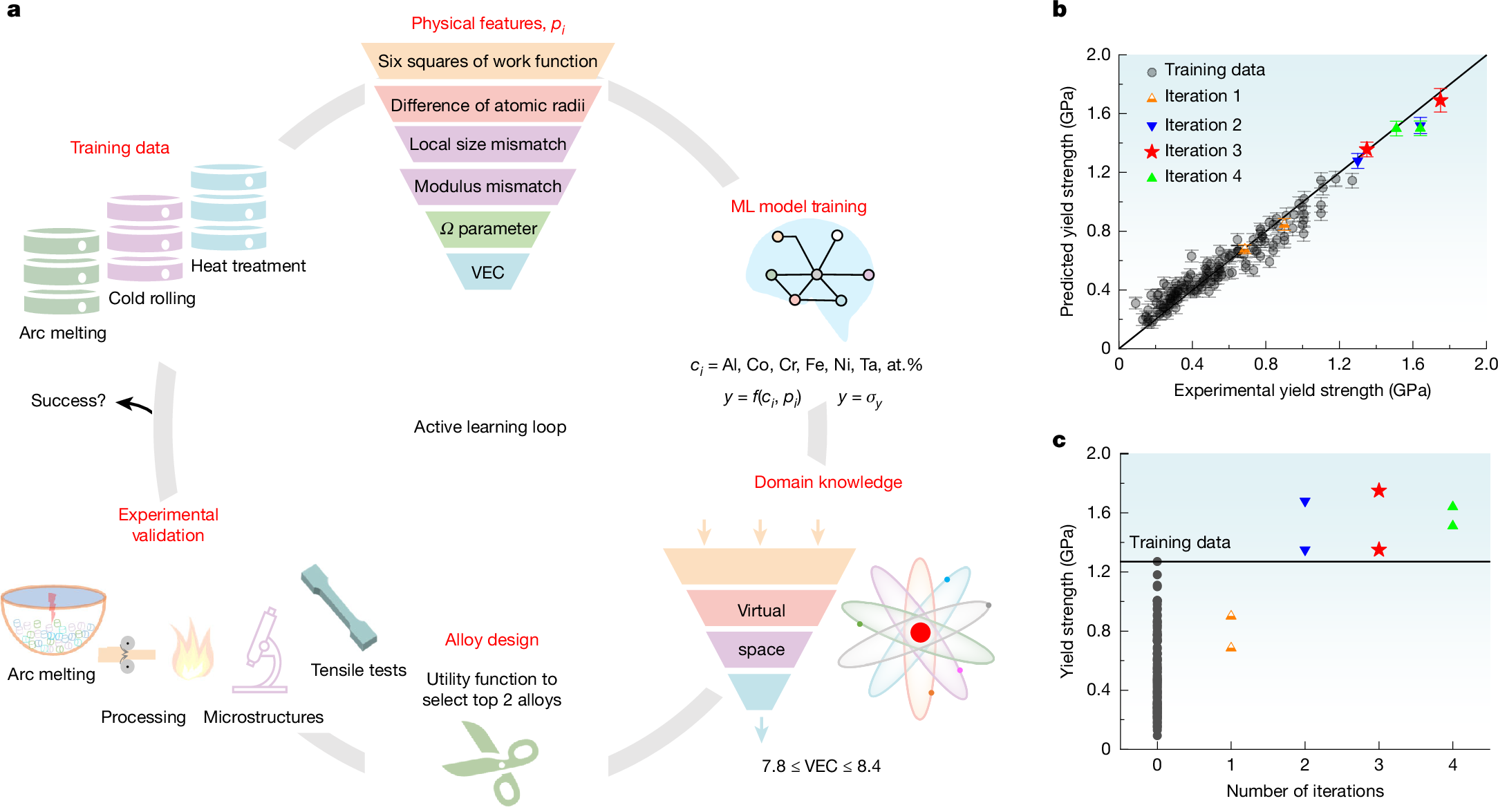
Researchers Set the Alloy System, Active Learning Picked the Compositions: HEA05 Reaches 1.75 GPa Yield Strength with 25% Uniform Elongation
How a Xi'an Jiaotong University team first bounded the alloy system with domain knowledge, then let active learning pick eight new compositions over four rounds, each fabricated and tested, to find HEA05, and why its final strength and ductility still depended on microstructure engineering and physical validation.
Papers & System · MinerU.Chem series · 03/03
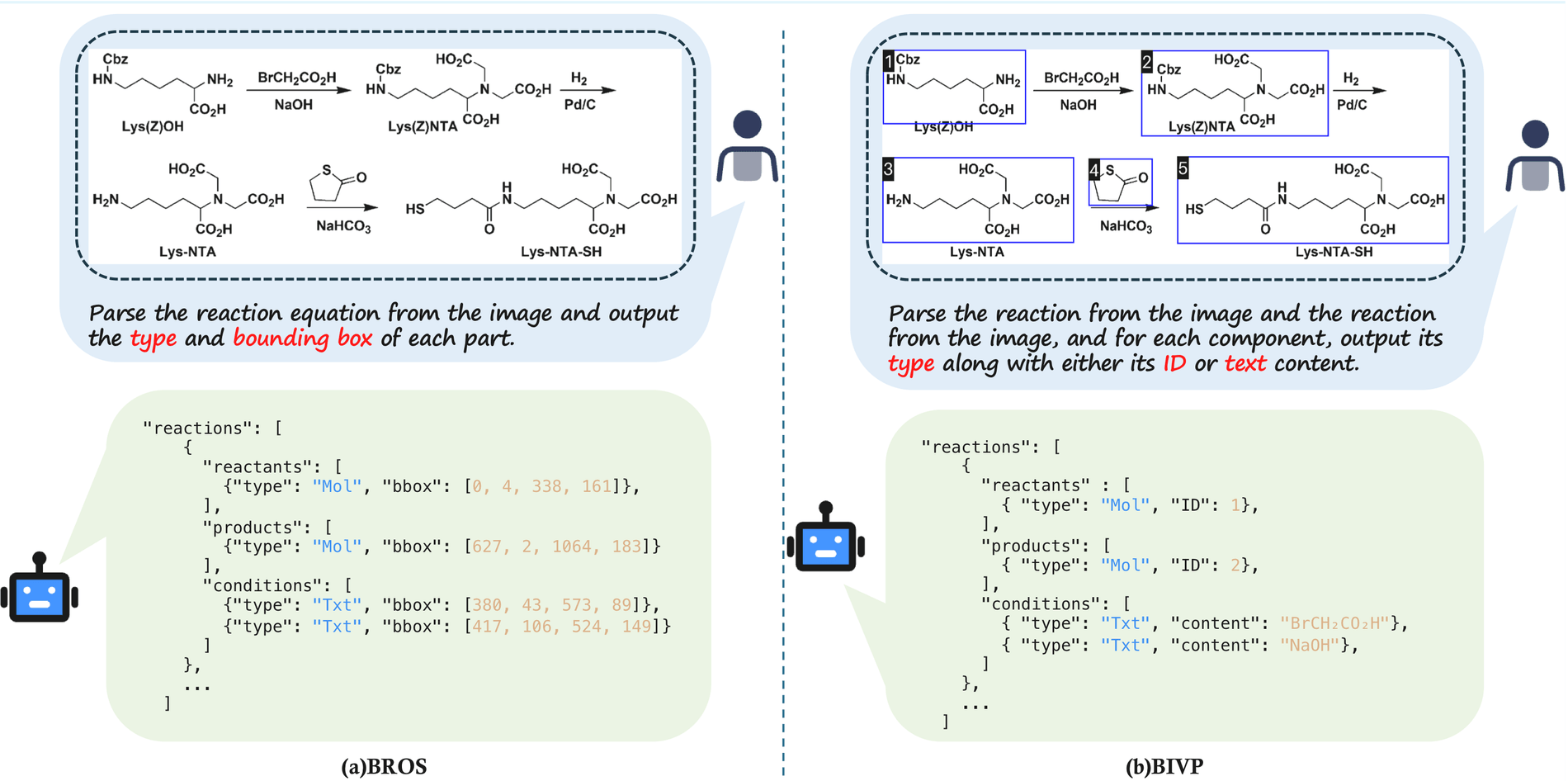
How Does AI Read a Chemical Reaction Diagram? From Recognized Molecules to Reaction Relationships
How RxnCaption and RxnID combine localization, semantic relationships, compound identifiers and verifiable rewards to reconstruct structured reaction data.
Paper & Benchmark · MinerU.Chem series · 02/03
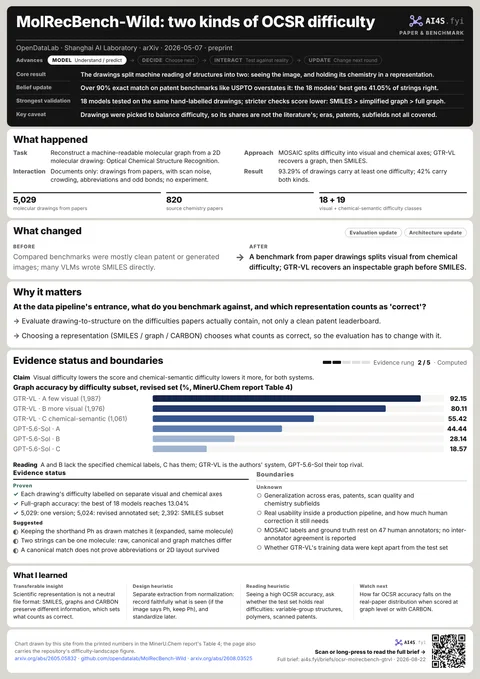
Why Does AI Misread Molecular Structure Drawings? Paper Drawings Are Harder Than Patent Benchmarks
How MolRecBench-Wild separates visual from chemical-semantic difficulty, and why GTR-VL reconstructs a molecular graph before producing SMILES.
Paper & System · MinerU.Chem series · 01/03
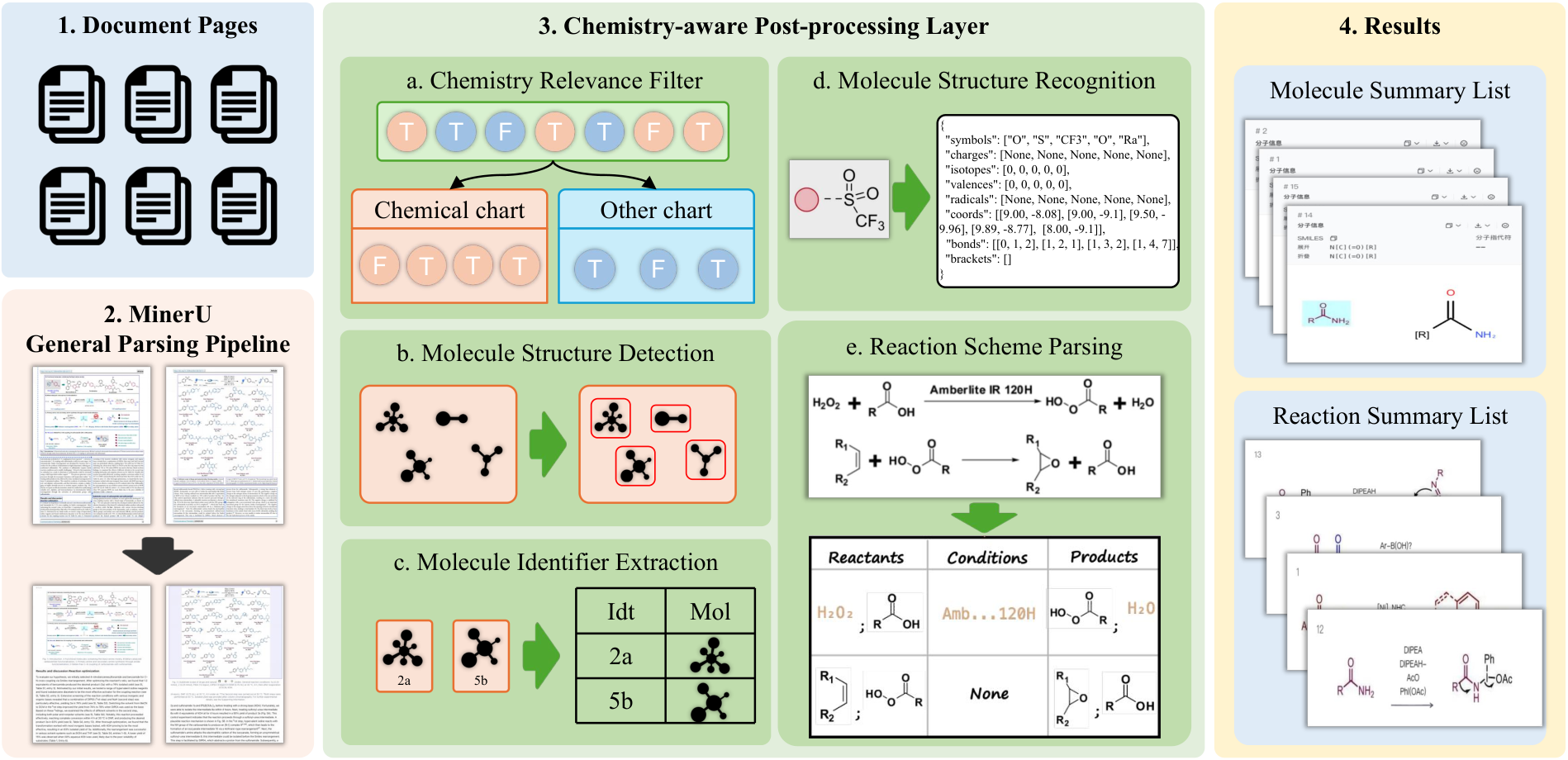
How Does a Chemistry PDF Become Data an AI Can Use?
A system-level look at MinerU.Chem's path from PDF pages and chemistry regions to molecular structures, reaction relationships and traceable records.
Model Release
LiteMol-1: A Cross-Class Molecular Foundation Model Built for AI Agents
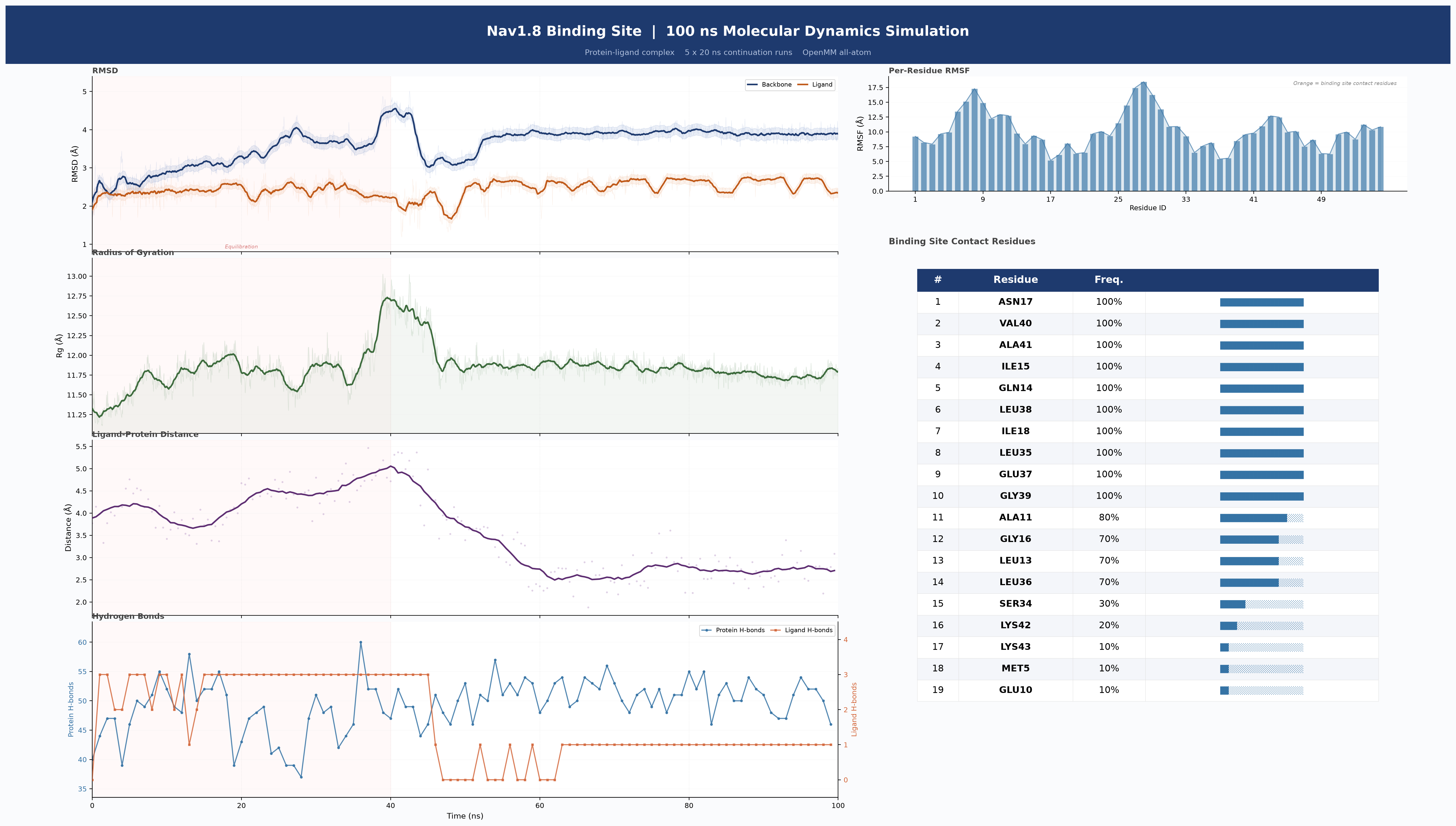
LiteMol-1 uses masked diffusion to generate and edit multiple molecular classes in sequence space, leaving structure prediction, docking and MD to downstream verification. It proposes an agent-native design workflow, but the evidence is still computational.
Model & Data Release
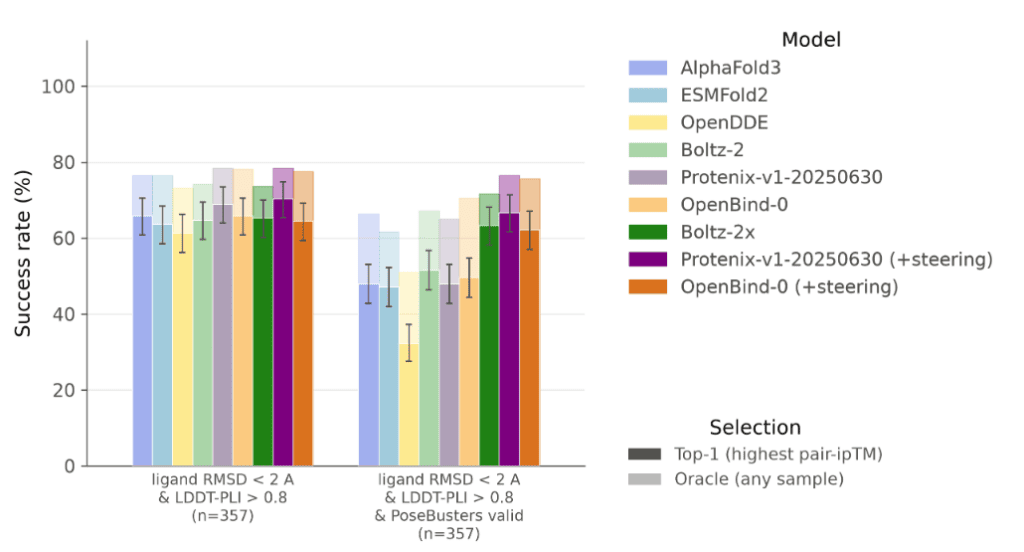
OpenBind-0 Is Fully Open, and Points to the Data Gaps That Actually Matter
OpenBind-0 releases a model, training recipe and 717 new experimental structures, then uses real projects to show that data value depends on which structural and chemical gaps it fills.
Paper Note
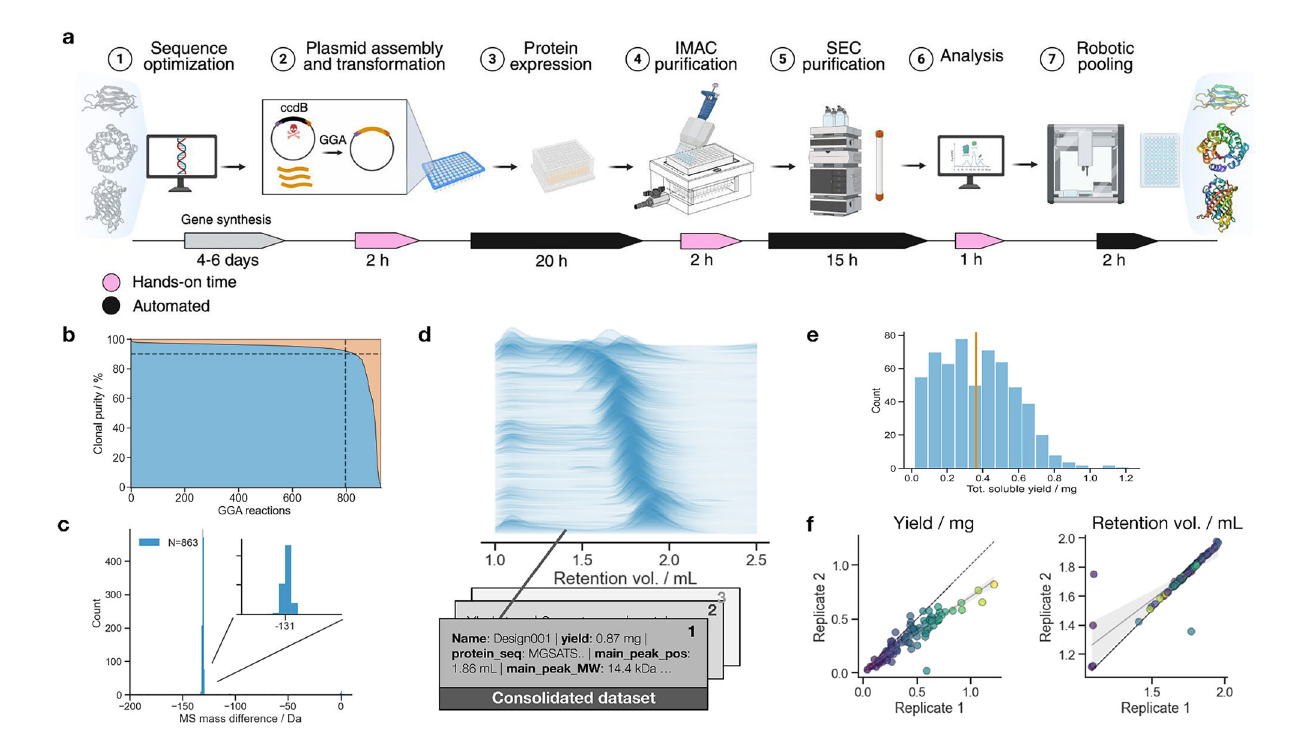
SAPP + DMX (Baker Lab): AI Can Design Thousands of Proteins. How Does the Lab Keep Up?
David Baker's team uses SAPP and DMX to redesign experimental protein validation: first compressing production and standardized characterization of hundreds of designs into 48 hours, then reducing DNA cost at thousand-design scale.
Program Portfolio Brief · 01 · Genesis Mission series · 01/03
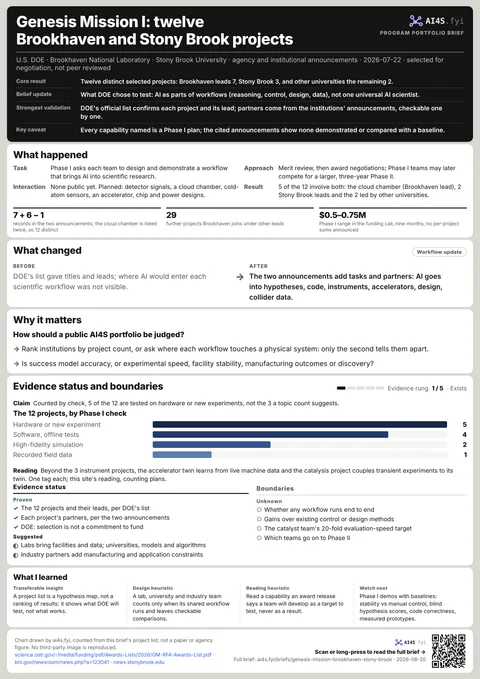
Where Is AI Entering the Scientific Workflow?
A portfolio view of the first DOE Genesis Mission selections, separating award negotiations and research plans from technical demonstrations across Brookhaven and Stony Brook projects.