中文

AI FOR SCIENCE · INTERVIEWS

Biohub's Alex Rives: virtual cells lack measurement first, models second

The Cognitive Revolution · 1:05:14 · Open on YouTube ↗
Guest
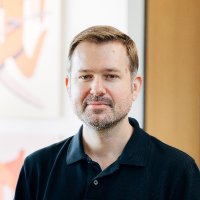
Alex RivesHead of Science, Biohub; co-founder, EvolutionaryScaleProfile, roles and records →
Company
BiohubOrganisation page: funding, people, research →
Source
The Cognitive Revolution ↗Published · 1:05:14
Core signal

Rives says the models called virtual cells today do not yet count as models that can simulate a cell. Getting there needs progress on three things at once, the model, data at scale and new tools to measure, and measurement is the most basic; what he thinks is reachable in about five years is a model that predicts the spread of next states from a cell's state and an intervention.

What this adds

The interview says what the $1.8B data push does first: the roadmap is still being set, but it will greatly expand spatial maps of cell biology that link molecular measurements to imaging, at 'hundreds of billions or more cells'. He also gives two dates: first drafts of cell atlases of health and disease in one to two years, and a 'pretty comprehensive' map within five with a coordinated effort.

Current boundary

The episode is his judgment and plans, with no new data, model or benchmark. There is no first dataset, date or access terms, and he hedges the five years himself ('let's say'); measurement systems such as tracking every cell in a zebrafish embryo are described, not checked here against a paper.

01

What they said

  1. Today's virtual cells are not yet models of the cell

    The host asks why virtual-cell models have not worked well so far, and whether the data is too poor. Rives says the cell is too complex: everything from interactions between atoms to the programmes a cell runs to sense, signal and respond within tissue and the body shapes the outcome. His bar is a model that can 'simulate the cell in a meaningful way' and serve as an 'oracle for experimental biology'; by that bar, none of today's models qualify.

    “The models that are being called virtual cells today, I just don't think they meet that definition of a model that could actually simulate the cell in a meaningful way.”Alex Rives
  2. Model, data and measurement must all advance, and measurement most of all

    He splits the problem in three: the modelling approach (the transformer lacks the multiscale structure a cell needs), generating data at scale that reveals the cell's programmes, and tools to observe and measure what matters. The third, he says, is 'even more fundamental': much in a cell cannot be measured, some of it cannot be seen at all, and most big advances in biology came from a new technology that changed what could be measured.

  3. The further from infinite data, the more a model's built-in assumptions matter

    He says that with unlimited data and compute every architecture is just a function approximator and the differences fall away. Proteins, with sequencing at scale, are close to that limit, which is why models like ESM worked; cell biology is 'so far from that', so the assumptions built into a model's structure (its inductive bias) matter. The end goal is 'a world model of life' that reaches atomically resolved structures, which he says is far off; what is feasible now is an information-level model of the cell, predicting a probability distribution over next states from a state and its inputs, in 'the next five years, let's say'.

  4. The $1.8B goes first to spatial maps

    The Virtual Biology Initiative launched in April, and on 7 October announced its partnership with DOE, NIH, Google DeepMind, Isomorphic and Meta. He says the core group is drawing up the longer roadmap; what is already clear is a large expansion of 'contextual' maps of cells, seen within tissue and among neighbouring cells, linking molecular measurements to imaging, at hundreds of billions of cells or more. He treats cell atlases of health and disease as the next step: first drafts in one to two years, a fairly comprehensive map within five with a focused, coordinated effort, used to find the cell states that separate disease from health and then to ask which intervention turns a diseased state back.

    “I think first drafts of that within the next one or two years, you know, within five years with with a really focused coordinated effort, we can have, you know, a pretty comprehensive map there.”Alex Rives
  5. Each scale needs its own measuring tool

    He names tools at three scales from Biohub's imaging institute. At the molecular scale, the laser phase plate: a standing-wave laser shifts the phase of the electron beam so cryo-electron tomography can make out single large molecules inside the cell, though only in part of it. At the scale of many cells, perturbing fields of cells and measuring their responses statistically. At the whole organism, the transparent zebrafish: microscopes that track every cell of an embryo from a single cell, or follow all the immune cells in a living fish. In the end, he says, a model has to integrate across these levels.

  6. Biology is checked by experiment, and learned across species

    He says reinforcement learning moves fast in mathematics and coding because answers can be verified quickly by computer; most of what we want to know in biology are empirical facts reachable only by experiment, so systems must be built that verify in the lab, letting AI ask a question, run the experiment, learn and propose a better one. Model organisms are imperfect proxies, but ESM and AlphaFold were trained on proteins from all of evolution, and a model trained on human proteins alone would not be accurate; so he argues for one model trained across species rather than a search for a perfect experimental proxy. Patient records he says he has thought about less, and worries they teach only correlations; Biohub sees itself at 'the technology layer'.

02

What changed

  • Prior public record

    The timeline records the $1.8B Virtual Biology Initiative of 2026-10-07: open, standardised data on how cells respond to interventions, with no first dataset, timetable or access terms for the company-funded data.

    This interview adds

    Rives says the roadmap is still being set but names the direction: spatial maps linking molecular measurements to imaging, at hundreds of billions of cells or more, and first drafts of health and disease atlases in one to two years. A dataset, a date and access terms are still not given.

  • Prior public record

    The timeline records Xaira's X-Cell (2026-03-18), trained on 25.6 million perturbed cells, whose test loss barely improves with scale, and Arc's PIE (2026-10-05), which predicts perturbation responses by reading what is already known about the gene and drug.

    This interview adds

    Rives gives his reading of such results: cell biology is too far from 'infinite data', so the assumptions built into a model matter, and the transformer lacks multiscale structure. He does not say which architecture should replace it, and names no model he is judging.

  • Prior public record

    The timeline records EvolutionaryScale's team joining Biohub on 2025-11-06, with Rives as head of science and Biohub planning 10,000 GPUs by 2028; commentary recorded, on 2026-10-20, his argument from this episode that measurement is the bottleneck.

    This interview adds

    The interview adds what Biohub actually builds on the measurement side: the laser phase plate, perturbation imaging of fields of cells, cell-by-cell tracking of whole zebrafish embryos; and what it leaves aside: patient records, he says, are not its focus.

03

Why it matters

His bar gives a way to read any virtual-cell claim

The target he states is concrete: from a cell's state and an intervention, predict the distribution of next states, well enough to answer questions for experimental biology. Any model called a virtual cell can be asked the same: how it predicts on cell types and interventions it has not seen, whether it predicts a distribution or one average, and whether its predictions were checked by experiment. That is our reading, not a checklist he gives.

The money goes to measurement and maps before models

On his account, the first output of this pooled money is data: spatial maps, imaging, perturbation responses. For people in the field, that means the spending and jobs of the next few years sit with spatial omics, imaging and large-scale experiments, and models wait on the data. Whether the data will be open, and when it can be used, he does not say.

Train across species rather than look for a better mouse

He carries the lesson of protein models over to cells: ESM and AlphaFold drew on sequences from all of evolution, not human proteins alone. If that holds for cells, data from yeast, zebrafish and organoids is not just a stand-in for human biology but training material for one model. It is his inference; no result at the level of cells has tested it.

04

Claims and boundaries

ClaimWhose voiceWhere it stands

No model called a virtual cell today can simulate the cell in a meaningful way or serve as an oracle for experimental biology.

Guest's judgment

His judgment; he names no model and gives no measure.

The transformer lacks the multiscale structure a cell needs.

Guest's judgment

He does not say what architecture would supply it.

Proteins, with sequencing at scale, are near 'infinite data'; cell biology is far from it, so inductive bias matters.

Guest's judgment

His explanation of why protein models such as ESM worked.

An information-level model of the cell, predicting the distribution of next states from a state and inputs, is attainable in 'the next five years, let's say'.

Guest's judgment

His forecast, hedged with 'let's say'; he does not say what would count as reaching it.

A 'world model of life' that projects a cell's state to atomically resolved structures and lets development unfold in silico.

Not yet closed

'I think we're very far from that,' he says.

Biohub launched the Virtual Biology Initiative in April and on 7 October announced its partnership with DOE, NIH, Google DeepMind, Isomorphic and Meta.

Company-reported

Matches the timeline's entry of 2026-10-07, which gives how the amount splits; he does not go into it here.

The roadmap will greatly expand spatial maps of cell biology linking molecular measurements to imaging, at hundreds of billions of cells or more.

Target

He says the core group is still drawing up the roadmap and this is the part 'really clear'; no date, dataset or access terms.

Cell atlases of health and disease: first drafts in one to two years, a fairly comprehensive map within five with a focused, coordinated effort.

Target

His timetable, conditional on 'a really focused coordinated effort'; he does not say which tissues or diseases a first draft covers.

The laser phase plate is 'the most powerful standing-wave laser in the world' and lets cryo-electron tomography make out single large molecules inside the cell.

Company-reported

Biohub's release of 11 June is more careful: 'one of the brightest lasers of its type in the world'; the Berkeley team's paper appeared in Science that day and was not read here.

Biohub's microscopes can track every cell of a zebrafish embryo from a single cell, or follow all the immune cells in a living fish.

Current system

His account, with no paper or dataset named, not checked here.

Reinforcement learning for biology is possible, but needs systems that verify in the lab, where AI asks, experiments, learns and improves.

Not yet closed

He says such systems are 'gonna need to be built differently', and does not say Biohub has one.

Whether language and biology models fuse into one shared representation he says he is unsure; it will be hard at first, for lack of data that bridges them.

Guest's judgment

'I'm not sure,' he says.

Patient records can help match existing drugs to patients, but without the right basis they teach mostly correlations, not causes.

Guest's judgment

He prefaces it by saying he has not thought about the question much.

05

What to watch next

  1. Whether the Virtual Biology Initiative publishes its roadmap and first datasets, with access terms.

    Would show up as A dataset released by Biohub or a partner: what was measured (spatial, imaging, perturbation), how many cells, who can download it and when, and whether the company-funded data is equally open.
  2. Whether first drafts of cell atlases of health and disease appear within one to two years.

    Would show up as A public first version or paper naming the tissues, diseases and number of cells covered, and the cell states that separate disease from health.Checked on Said: 'first drafts of that within the next one or two years'
  3. Whether, in about five years, a model predicts the distribution of a cell's next states and is checked by experiment on cell types and interventions it has not seen.

    Would show up as A paper or model release naming held-out cell types and interventions, a comparison with simple baselines, and lab results checking the predictions.Checked on Said: 'the next five years, let's say'
  4. Whether the laser phase plate resolves named large molecules in cryo-electron tomography inside cells, and moves into data production at scale.

    Would show up as An in-cell imaging paper naming the molecules resolved, the resolution and the number of samples, or a public dataset made with it.
Source and how it was read

Read 2026.10.20 The machine transcript on the episode page, with speakers named, read in full; the audio and video were not heard. The transcript spells his surname 'Reeves'; names follow the episode page. He says the $1.8B expansion was announced 'the day before yesterday', which was 7 October, so the interview was recorded around 9 October. The laser phase plate account was checked against Biohub's release of 11 June 2026, read in full; the Science paper was not read. Open the interview ↗Episode page, with the full transcript ↗