中文

AI FOR SCIENCE · INTERVIEWS

Real materials discovery must cross manufacturing and qualification

Latent Space · 1:16:49 · Open on YouTube ↗
Guest
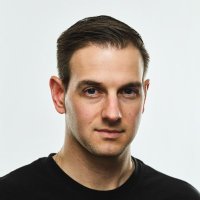
Joseph KrauseFounder and CEOProfile, roles and records →
Company
Radical AIOrganisation page: funding, people, research →
Source
Latent Space ↗Published · 1:16:49
Core signal

Radical says its loop already runs from proposing an alloy to early property tests; what it has not closed is manufacturing, qualification and real deployment.

What this adds

The first operating numbers: seven to ten campaigns at once, eight to twenty alloys a day, a mid-year target of 100 a day; and an admission that synthesis is still run by metallurgy PhDs.

Current boundary

By Krause's own bar, a discovery is a material inside a product, and none of the 1,200 alloys has crossed manufacturing and qualification; the date for the 100-a-day target has passed with no public confirmation.

01

What they said

  1. The constraint is experiments, not compute

    The alloy composition space is about 10^40 in theory, but a material is more than a formula: melting, annealing, processing and supply chain all change the outcome. So in Krause's account a model can only propose a starting point; the material itself is the ground truth.

    “We're not compute constrained in the materials industry. We're experiment constrained.”Joseph Krause
  2. No model can one-shot a material; what works is a system

    The AI Scientist is a multi-agent system: a top-level agent generates hypotheses and runs a feasibility check first, it reads paid industry databases such as CALPHAD, and a literature-review agent feeds it; simulation, the lab and scientists' intuition sit around it.

    “There is no one model that can one-shot a new material.”Joseph Krause
  3. A self-driving lab is not an automated lab

    Krause's comparison: an automated lab is driver assistance, with a person giving every instruction; a self-driving lab takes a destination. Radical runs by campaign, about seven to ten at once by his count, with results feeding back daily or every other day. Every hypothesis today comes from the AI, which has moved into composition regions no one has published on.

  4. The bar for discovery is high, and manufacturing and qualification sit outside the loop

    Krause counts a discovery only when a new material sits inside a phone. Synthesis is still run by metallurgy PhDs, and he says the custom tool should be automated 'by the summer'; scale-up and qualification are not connected, and the company leans on industrial partners with manufacturing experience.

    “We count it as a discovery when you pick up your phone and there's a new material sitting inside of it.”Joseph Krause
  5. The moat is experimental data and the integration grind, not the model

    Radical open-sources tools such as TorchSim and LitXBench. Krause expects most models to be open within five years and does not plan a proprietary foundation model; what stays is the experimental data and the instrument interfaces, mechanical engineering and cross-discipline operations that are hard to copy.

02

What changed

  • Prior public record

    Radical's public record was its own releases: the open tools TorchSim, LitXBench and MATRIX, a $55M seed round, an Air Force contract and a DOE memorandum. None said where the discovery loop stops.

    This interview adds

    Krause describes a campaign-level loop through discovery, synthesis, characterization and early testing, and says manufacturing, qualification and deployment are outside it.

  • Prior public record

    The timeline has no Radical entry before 2026-06-17, and the throughput, parallelism and per-experiment cost figures in the company dossier all come from this interview.

    This interview adds

    Eight to twenty alloys a day, seven to ten campaigns at once, roughly $60 to $300 per experiment and 50 to 150 data points per alloy.

  • Prior public record

    The Latent Space episode page says the AI scientist tested 300 new materials, ten with novel state-of-the-art properties.

    This interview adds

    In the interview Krause says about ten alloys had performance that has the company 'very excited', stresses that qualification still lies between testing and a product, and ranks instrument interfaces, tacit manufacturing knowledge and qualification as first-class bottlenecks.

03

Why it matters

Materials discovery is paced by experiments, not compute

There is no AlphaFold-style single model for materials, and Krause's argument is that the bet belongs on the throughput and quality of experimental feedback. That is his judgment; no controlled comparison backs it in the interview.

The hard part of an AI scientist is the lab around it

The agent is an orchestration layer between databases, simulators and instruments; the difficulties he lists are instrument interfaces, mechanical engineering and the human judgment still inside synthesis, not the reasoning.

If models become commodity, what is left is the data and the qualification route

If models go open as Krause expects, value sits in experimental data and in partners who can carry a material through manufacturing and qualification. That is our inference from his argument, not a figure he gave; who holds the qualification route is the question to ask.

04

Claims and boundaries

ClaimWhose voiceWhere it stands

A campaign loop through discovery, synthesis, characterization and early testing is running; by his count roughly seven to ten campaigns can run at once.

Current system

Krause's description; no independent description of the system was read.

All hypotheses come from the AI Scientist, a multi-agent system with a feasibility check, CALPHAD databases and a literature-review agent.

Current system

Krause's description; architecture details are not public.

Synthesis is still run by metallurgy PhDs; characterization and some testing are automated; the custom synthesis tool 'should be automated by the summer'.

Current automation

The summer date has passed with no public confirmation in the record; see After the interview.

About 1,200 alloys made and characterized, roughly 300 not in the literature, and about ten whose performance has the company 'very excited'.

Company-reported

The transcript gives two windows for the 1,200: 'five or six months' near the start and 'three months' when comparing with MACH; the episode page says six months, and this page follows it and flags the inconsistency. The episode page says the ten have novel state-of-the-art properties, stronger than the interview's wording, with no data.

Hafnium is about 10% of C103 by weight and its price rose ten to fifteen times; Krause says they have already made an alloy without hafnium that meets the same performance spec.

Company-reported

No composition, property data or comparison.

Eight to twenty alloys a day now; he said the whole lab should reach 100 a day, whatever the system, around June to July 2026.

Target

The target date has passed with no public confirmation; the last disclosed range is still 8 to 20.

DARPA and GE Aerospace's MACH program synthesized 500 new alloys in a year, cited as a comparison.

Industry context

The episode page cites it too; whether the testing depth is comparable is not stated.

Manufacturing scale-up, qualification and end deployment are not yet in the loop.

Not yet closed

Stated plainly by Krause.

05

What to watch next

  1. Whether an outside lab publishes its own full property test: named alloy, test conditions, the incumbent compared.

    Would show up as A report by the outside institute itself, not Radical's post about it.Partly answered The Purdue torch test (2026-08-07) is reported only by Radical: one sample, about a minute, and no Purdue report was read.
  2. Whether throughput reaches 100 a day, or any higher figure, with the testing depth stated.

    Would show up as A new throughput figure from the company on the same basis.Checked on Said: around June to July 2026Target date passed Krause expected 100 alloys a day across the lab around June to July 2026; the last range this record holds is still the interview's 8 to 20 a day, and nothing public confirms 100.
  3. Whether the hafnium-free alloy's composition and properties are published beside C103.

    Would show up as A release or paper that gives composition and data.
  4. Whether any alloy is made at batch or kilogram scale by a partner, with the qualification step named.

    Would show up as A named manufacturing partner, the scale and the qualification status.
  5. Whether the synthesis step stops needing a metallurgy PhD.

    Would show up as A company statement that synthesis is automated, with how it runs.Checked on Said: by summer 2026Target date passed Krause said the custom synthesis tool should be automated by summer 2026; nothing in the record says synthesis no longer needs a metallurgy PhD. Radical's one automation post since (with Makino, 2026-08-26) covers sample preparation after synthesis, an EDM fixture that cuts five samples at once, not synthesis itself.
↳

After the interview

Later evidence that tests or limits what was said, and targets whose date has passed.

  • Radical says Purdue Applied Research Institute torch-tested the alloy RAI-939 above 2,500 C: it gained 0.25% in mass where C103 lost 32%. It is an outside test, but of one sample for about a minute, no Purdue report was read, and it does not show scale manufacturing, qualification or deployment.Timeline entry →

  • Radical says all six materials its electronic-property model proposed met the target in its lab, while a second model did worse. It shows the predict-to-measure loop completing, but the post gives no property values and nothing on manufacturing or qualification.Timeline entry →

Source and how it was read

Read 2026.10.01 The full transcript (a third party's machine transcript), checked against the Latent Space episode page; the first version, of 2026-09-10, was checked against the YouTube transcript. Open the interview ↗Full interview on YouTube ↗