中文

AI FOR SCIENCE · INTERVIEWS

Concept abstraction may be the last mile of AGI

Silicon Valley 101 · 1:49:21 · Open on YouTube ↗
Guest
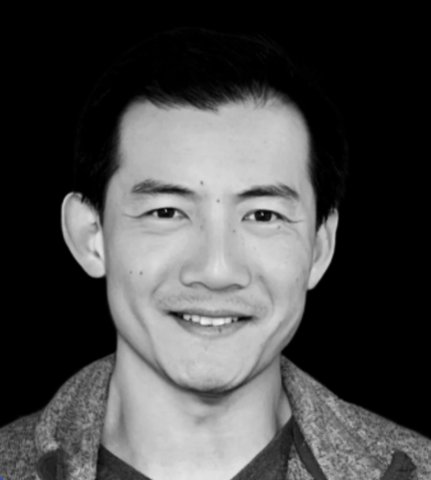
Yuan CaoCo-founder of Unreasonable Labs, formerly a senior research scientist at Google DeepMindProfile, roles and records →
Company
Unreasonable LabsOrganisation page: funding, people, research →
Source
Silicon Valley 101 ↗Published · 1:49:21
Core signal

A former DeepMind scientist who co-founded Unreasonable Labs argues that AI4S is limited today by physical verification and in the long run by concept formation, which he calls the last mile of AGI.

What this adds

He takes a model-to-experiment loop apart (how search scores exploiting against exploring), says which problems suit AI now, gives his reading of Google's, OpenAI's and Anthropic's differing priorities in AI4S, and says what his own company is doing: a symbolic layer around a language model to generate low-probability new ideas.

Current boundary

Almost all of it is his own judgment and forecast; his company's approach comes with no numbers or results; what he says about other firms' internal priorities and departures is his reading, not a source.

01

What they said

  1. The loop's bottleneck is verification, and physical verification is slowest

    Code and maths show at once whether they are right, which is why AI coding forms a loop; science needs experiments, and a drug's effect is unknown until it is on the market. He says that if a physical experiment came back in a minute you could generate unlimited data and post-train as with code and maths. Simulation is the fastest step today and wet labs the slowest, so the answers are automated labs and fewer experiments per result.

  2. Problems that suit AI now: cleanly modelled and quickly verified

    Problem definition and taste remain human. AlphaFold worked because the problem is cleanly defined and represented; he calls OpenAI and Ginkgo's closed-loop experiment the most convincing example so far. He also objects to treating science as only an application of AI: for AI to do well on science its own reasoning, abstraction and experimentation must improve, and hard science problems in turn push AI.

  3. A general model as orchestrator, vertical models as experts, search by value function

    A general model acts as lab director calling vertical models such as AlphaFold, GNoME and MatterGen; choosing the next experiment is a search tree whose node scores combine an intuitive value with how often a path has been sampled, the same exploit-explore balance as in reinforcement learning. He adds that the loop must also be able to change its own workflow, which he calls meta-recursion.

  4. Search is not discovery: new concepts are the long-term boundary

    He says AI can recombine inside an existing representation, already faster than people; abstracting a new concept from observation, such as 'number' from three geese and four birds, is out of reach for now. He cites Doudna saying none of the proposals AI gave her team was new to them, and reads AlphaGo's move 37 as a new sample inside an existing representation, not a new concept. He calls concept abstraction the last mile of AGI and doubts it is even Turing-computable, which he marks as personal.

  5. His company: a symbolic layer around a language model

    Unreasonable Labs wants a mechanism around the language model that is not another language model, using rules to connect knowledge across papers and fields and give the model a new intuition that produces low-probability ideas. The difficulty is balancing novelty with feasibility. He expects an eventual mix of about 98% connectionist and 2% symbolic, and says Lean-checked formal proof in maths is already a neuro-symbolic structure.

  6. Time scales and where people stay

    His rough time sense: basic capabilities such as causal reasoning, long-term memory and continual learning need five to six years; Nobel-level autonomous discovery at least two or three decades. Commercialisation of AI4S is layered: drugs and biology first, with materials' value chain too fragmented. People's place is defining problems, verifying and judging value; with proofs in glut, he says, people must understand and judge, or it is like watching a robot play piano.

02

What changed

  • Prior public record

    The timeline entry of 2026-08-05 records Jeff Dean leaving Google to found Discovery Loop, aiming to automate scientific and engineering loops.

    This interview adds

    Cao gives his reading the day after the news: Google is putting Gemini first, and Dean's team works in the direction his own startup took; he calls it talent moving, not Google giving up AI4S.

  • Prior public record

    On the timeline AI4S loop results sit in wet labs: Radical, Lila and others publish their platforms' throughput and specific materials.

    This interview adds

    Cao offers a higher-level split: problem selection, representation, search, verification and concept formation, with verification setting the loop's speed and concept formation the ceiling of discovery.

03

Why it matters

Verification sets the loop's speed, abstraction its ceiling

In his frame, companies like Radical and Lila are working on speed, the return time of a physical experiment; his own is betting on the ceiling, how a model proposes ideas outside its training distribution. Whether the two need one model the interview does not answer.

Who judges value once proofs are in glut

He cites Terence Tao: hard problems already have piles of AI-generated answers that no expert has the capacity to verify. His conclusion is that people keep value judgment, because unexplainable results raise the cost of maintenance and trust. It is a prediction about research workflow, not something measured.

04

Claims and boundaries

ClaimWhose voiceWhere it stands

Computable, cleanly modelled and easily verified problems best suit current AI; problem definition and scientific taste stay with people.

Guest's judgment

His task-selection framework, not a cross-domain benchmark result.

Verification is the biggest bottleneck of an AI4S loop; a physical experiment a minute would let it iterate like code and maths.

Guest's judgment

Argued from experimental cost and latency; each field's actual bottleneck needs separate measurement.

OpenAI and Ginkgo's closed-loop experiment is the most convincing closed-loop case so far.

Industry context

His assessment; details of that work are under related evidence on the OpenAI interview.

A-Lab ran 353 experiments in 17 days and synthesized 36 of 57 target materials.

Industry context

A public case the host cites; this interview does not discuss the dispute over it. The 36 of 57 is the count after Nature's author correction of 19 January 2026: it removed one compound that was already in the training data and, on a manual re-analysis of the diffraction data, confirmed 36 of the 40 reported successes, with 4 inconclusive. The correction also says the paper's "novel" meant new to the prediction platform, not necessarily new to science.

Current language models' causal reasoning is unreliable: it breaks when the wording changes or under intervention (do-calculus); world models may help.

Guest's judgment

His judgment, based on sensitivity to wording and out-of-distribution stability; the gain from world models is untested.

AI has not shown the ability to create new concepts from observation; concept abstraction is the last mile of AGI and may not be Turing-computable.

Guest's judgment

Marked by him as personal; there is no accepted benchmark for concept invention.

Basic capabilities need about five to six more years; Nobel-level autonomous discovery at least two or three decades.

Guest's judgment

A rough sense of time, not a roadmap.

Unreasonable Labs adds a symbolic layer around a language model to generate low-probability ideas; the difficulty is balancing novelty with feasibility.

Company-reported

An early stage of development; no results or numbers are given.

Google reprioritised AI4S for Gemini, OpenAI folded AI4S into Codex after Kevin Weil left, Anthropic's Claude Science is a workbench, and John Jumper may build a biology model there.

Industry context

His reading of the three firms' internal priorities, not a source. The timeline holds OpenAI's: Kevin Weil left on 17 April as OpenAI for Science was split into other research teams, and only its Prism writing workspace moved to the Codex team, narrower than 'folded into Codex'; the rest is not on this record.

There is no benchmark for new concept formation, and whether world models or a neuro-symbolic structure improve novelty and feasibility together is untested.

Not yet closed

He acknowledges these are still being explored.

05

What to watch next

  1. Whether a public benchmark appears that measures proposal novelty and feasibility.

    Would show up as A defined evaluation with scores for several systems.Still open The nearest is a paper from Cao's own company: ProjectionBench (arXiv, 2026-05-28, before the interview; on the timeline since 17 October). Four GPT and Gemini models predict the results of 45 recent materials papers from the research question alone, then with more detail, scored by GPT-5 on overlap with each paper's conclusions. It scores several systems, but it measures agreement with a published result, not novelty or feasibility, and the benchmark itself had not been released. A public benchmark of novelty and feasibility is still not seen.
  2. Whether Unreasonable Labs shows results for the symbolic layer against an LLM alone.

    Would show up as Side-by-side novelty and feasibility figures on the same problems, ideally externally reviewed.Still open The company's news page as read on 11 October has four posts: two are illustrative walkthroughs (2026-04-21 and 2026-05-19, before the interview) with no side-by-side novelty and feasibility figures and no outside review (on 18 October the page returned 503 and was not reread). The record holds two company papers, both from May 2026: LEIA (05-27) predicts how lattice materials deform and where stress builds, checked only against simulation; ProjectionBench (05-28) scores GPT and Gemini models only, with no symbolic layer and no system of the company's own. Neither compares the symbolic layer with an LLM alone.
  3. Whether a world model or similar method beats text-only models on intervention-style causal tests.

    Would show up as A test including intervention questions, with a comparison across the same models.
  4. Whether Discovery Loop or another loop company reports closed-loop results with physical verification.

    Would show up as A named result stating the verification method and throughput.Partly answered BigHat and Anthropic's technical report of 27 October is a named result stating both: Claude, connected to BigHat's lab data system, proposed changes, and BigHat's automated lab made and tested about 1,010 antibody variants in about 10 weeks over seven rounds, measuring binding, heat stability and clumping (on the timeline since 27 October). It is the two companies' own report, not peer reviewed, with every measurement in BigHat's lab; Discovery Loop has still published no result.
↳

After the interview

Later evidence that tests or limits what was said, and targets whose date has passed.

  • The interview calls physical verification the bottleneck and expects Anthropic to strengthen biology. On 18 September Reuters reported Anthropic has built a physical wet lab for Claude to orchestrate robotic experiments, a step from the information layer to the physical one.Timeline entry →

  • Lila reported an iridium-free catalyst screened from 2,942 oxides and verified in experiments for 1,000 hours of stability. It is a closed-loop experiment; the search ran inside fixed oxide systems, the kind of search he distinguishes from concept creation.Timeline entry →

  • Anthropic bought a one-person drug company, Mithril Medicine, and began running drug programmes of its own; the same post reported six partnerships, three of them with wet-lab results measured in the partner's own lab. It bears out the interview's expectation that Anthropic would strengthen biology further than the wet lab did, though the post itself says the work is mostly preclinical and every result is the companies' own report.Timeline entry →

Source and how it was read

Read 2026.10.01 The full Chinese auto-captions from YouTube (machine-made, unpunctuated). The first version, of 2026-08-23, was checked against BigGo's written notes. Open the interview ↗BigGo's written notes on the interview ↗