


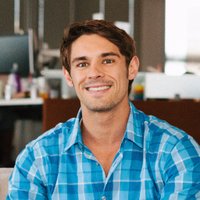
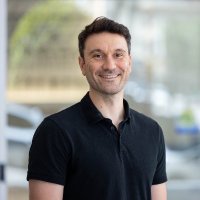

Periodic Labs' founders say their first year did not go to plan: small, part-manual labs came before one big automated lab, the AI's use so far is mostly in the routine steps of synthesis and characterisation, and the full discovery loop has not yet produced a compelling result.
Small, part-manual labs came first and decide what the big lab scales up
Liam Fedus says the founding plan was a first year spent designing materials by computation alone, then switching on a high-throughput autonomous lab. It went differently: small labs, part manual and part automated, came first, and they steered the research, showed which equipment to scale up for the big lab and closed the feedback loop sooner. The class was given in May 2026, about 11 months in; the two confirm a facility of about 40,000 square feet in Menlo Park. The record before it held the $300 million seed round of September 2025 and Forbes' report in May of talks on a new round.
The AI earns its keep on small steps: mixing powders, catching mix-ups, reading diffraction
They say the AI's job is less to predict which material will make a good superconductor than to handle the small things science is made of: how to mix powders, how to keep an impurity out, how to catch a sample mix-up before it affects a result. Samples come out of the furnace without labels, and knowing what was made means shooting X-rays at them and reading the diffraction pattern, a system they are building up. Their agent is called Onnes, after the physicist whose lab liquefied helium and found superconductivity, and who, they say, was among the first to argue for research at industrial scale.
Active learning every day; Bayesian optimisation of little use, catalysis left alone
Ekin Dogus Cubuk says Bayesian optimisation is probably not that useful, because a model's estimate of its own uncertainty generalises worse than its predictions; active learning is the opposite, useless on a fixed academic dataset but in daily use for them, with most of each day's new samples predicted by the current model. Density functional theory, he says, is good for ground-state properties such as formation enthalpy and not for band gaps or excited states, and they have not been modelling catalysis. Fedus says the work turns on sample efficiency: a maths problem can take a thousand or a million rollouts, while experiments cannot be scaled by ten or a hundred on a whim, so they lean on model-based reinforcement learning.
The full discovery loop has not yet produced a compelling result
Fedus says the end-to-end discovery loop has not yet produced a very compelling instance, and no room-temperature superconductor has been found, nor is it known to be physically possible; they hope for the first soon. Cubuk says a discovery can be a crystal structure never seen before, a property beyond the current best (ambient-pressure superconductivity stands at about 133 kelvin, he says, so 160 would count) or a better synthesis recipe. The host, who teaches the course, says he met the founders while at a16z and went from first meeting to term sheet in four or five days, so this is a company talking with its investor.