


AI FOR SCIENCE · ON THE RECORD
University of Cambridge
On the timeline →People filter →
Research on the record
- 2026-10-19Six foundation interatomic potentials are pushed onto disordered carbon, where low energy and force errors do not reveal the failures that binding curves and dynamics exposeLevel 3 · Checked against existing evidence
- 2026-10-08Computing the Coulomb repulsion from first principles takes about 40 K off Mg2IrH6's predicted superconducting temperatureLevel 2 · Computed
- 2026-09-24HetCat26: a model's rank on general materials benchmarks says little about how it handles catalysisLevel 2 · Computed
- 2026-09-22An LLM-guided AI finds the sequence rule for RNA Pol II pausing, then helps overturn the pause-release modelLevel 4 · Tested in the physical world
- 2026-09-20Cambridge's BRIDGE-AD nominates a lysosomal gene for Alzheimer's, then tests it in microgliaLevel 4 · Tested in the physical world
- 2026-02-06Counting the cells a compound leaves alive predicts popular bioactivity benchmarks about as well as Cell Painting models, because many of their assays measure cell deathLevel 2 · Computed
Graded by how far the evidence went, not how good the result is. See the methodology.
Read on AI4S.fyi
Also on the timeline
- 2026-10-14Google.org gives $36M to 17 organisations using AI in science, from fusion plasmas and sodium-ion batteries to African drug-metabolism genesCapital
- 2026-09-28OpenAI's chief scientist, an Anthropic co-founder, Hinton and Bengio co-sign a paper warning that automating AI research could set off an intelligence explosionPolicy
People
Only people the AI4S.fyi record has named: in a round, a timeline entry, commentary, an interview or a sourced role. Not the full team.
Named on AI4S.fyi
- SSarah TeichmannProfessor and group leader, Cambridge Stem Cell Institute; Chair in Stem Cell Medicine Human Cell Atlas co-founder Sarah Teichmann: the single-cell reference is near a first draft, and drug development uses it first for targets and safety
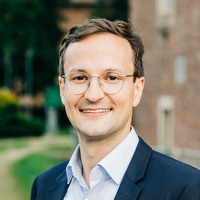 Christoph SchranAssistant Professor, TCM Group, Cavendish Laboratory Six foundation interatomic potentials are pushed onto disordered carbon, where low energy and force errors do not reveal the failures that binding curves and dynamics expose
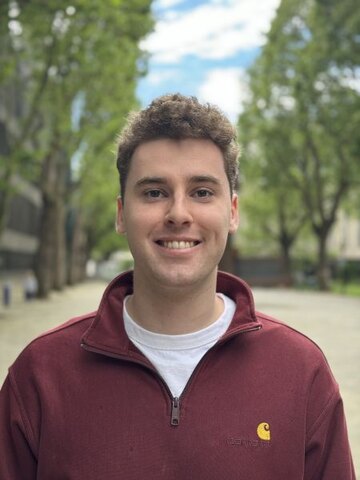 Joseph HartMember of the Schran research group, Cavendish Laboratory Six foundation interatomic potentials are pushed onto disordered carbon, where low energy and force errors do not reveal the failures that binding curves and dynamics expose
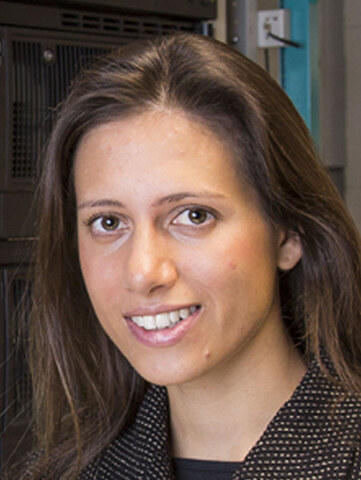 Lucy J. ColwellUniversity Associate Professor, Yusuf Hamied Department of Chemistry Google DeepMind shows its Antigravity agent hunting antimicrobial peptides, and reaches one candidate now in wet-lab testing with no results yet
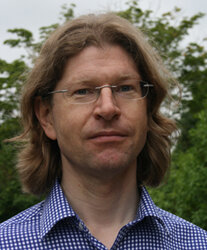 Chris J. PickardAuthor affiliation on a 2026 preprint (corresponding author), Materials Science and Metallurgy Computing the Coulomb repulsion from first principles takes about 40 K off Mg2IrH6's predicted superconducting temperature
 Kieran BozierAuthor affiliation on a 2026 preprint (first author), Materials Science and Metallurgy Computing the Coulomb repulsion from first principles takes about 40 K off Mg2IrH6's predicted superconducting temperature
 Sven KrippendorfAssistant Teaching Professor for AI and Physics, DAMTP and Department of Physics; Head of Mathematical AI, Cambridge–Infosys AI Lab The Future of AI-assisted Physics: Discovering, Verifying and Organizing Results via Formalization
 Matthew ColbrookResearcher; AIM organiser AIM: an invitation to explore mathematics together
6 more people
 Alexandre PeuchPhD Student HetCat26: a model's rank on general materials benchmarks says little about how it handles catalysis
 Fabian BergerNow: Postdoctoral Researcher, Feodor Lynen Fellow · University of Cambridge, Yusuf Hamied Department of Chemistry HetCat26: a model's rank on general materials benchmarks says little about how it handles catalysis
- NNova FongNow: Author affiliation on a 2026 paper · University of Cambridge, Centre for Mathematical Sciences An LLM-guided AI finds the sequence rule for RNA Pol II pausing, then helps overturn the pause-release model
- GGreta BaltusyteNow: Author affiliation on a 2026 paper · University of Cambridge (Milner Therapeutics Institute) Cambridge's BRIDGE-AD nominates a lysosomal gene for Alzheimer's, then tests it in microglia
 Namshik HanNow: Author affiliation on a 2026 paper · Milner Therapeutics Institute, University of Cambridge Cambridge's BRIDGE-AD nominates a lysosomal gene for Alzheimer's, then tests it in microglia
 Timothy GowersDepartment of Pure Mathematics and Mathematical Statistics; fellow of Trinity College Why I didn’t sign the Fields medallists’ letter
Previously there
 David BermanNow: Founder · Metis Reasoning Thore Graepel's Metis Reasoning launches with four founders, a 12-person team and a white paper
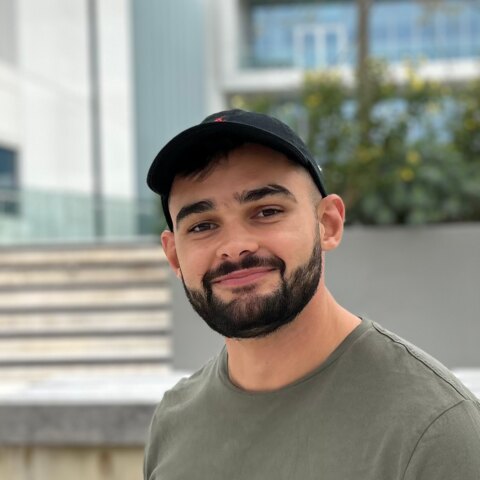 Samuel G. H. BrookesPhD student and postdoctoral fellow, Schran group (FAST), Cavendish Laboratory Six foundation interatomic potentials are pushed onto disordered carbon, where low energy and force errors do not reveal the failures that binding curves and dynamics expose
This page compiles what AI4S.fyi has recorded and links each item to its source. It is not a grade of the organization and not its complete history: a blank means the record has not caught up as often as it means nothing happened.