


AI FOR SCIENCE · ON THE RECORD
University of Liverpool
On the timeline →People filter →
Research on the record
- 2026-10-12AriadneX splits a powder diffraction pattern into the phases already known and what is left over, to point chemists at the samples holding something newLevel 3 · Checked against existing evidence
- 2026-10-09An audit of Google's GNoME crystal data finds most predicted structures sit within 0.05 Å of a known crystal's geometryLevel 3 · Checked against existing evidence
- 2024-02-15A Liverpool lab steers its search with a model trained on known crystals and finds Li7Si2S7I, a new lithium conductor at about 10 mS/cmLevel 4 · Tested in the physical world
- 2021-09-21A model trained on known crystals ranks untried element combinations, and the fifth-ranked one, Li-Sn-S-Cl, yields a new lithium conductorLevel 4 · Tested in the physical world
- 2021-06-17Machine learning points a Liverpool lab at barium-yttrium titanates, and the new oxide it makes there has the lowest thermal conductivity reported for a first-row transition-metal oxideLevel 4 · Tested in the physical world
- 2017-06-08A computed energy map sends a Liverpool lab to one corner of a five-element oxide system, and two new crystal structures turn up thereLevel 4 · Tested in the physical world
Graded by how far the evidence went, not how good the result is. See the methodology.
Also on the timeline
People
Only people the AI4S.fyi record has named: in a round, a timeline entry, commentary, an interview or a sourced role. Not the full team.
Named on AI4S.fyi
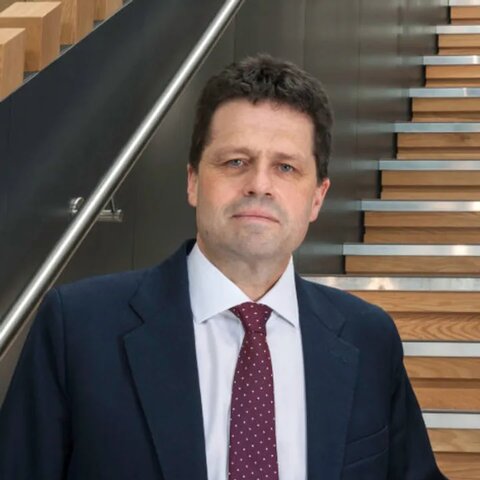 Matt RosseinskyProfessor of Inorganic Chemistry, Department of Chemistry AriadneX splits a powder diffraction pattern into the phases already known and what is left over, to point chemists at the samples holding something new
 Vladimir GusevLecturer (Assistant Professor), Algorithms and Computing Systems, School of Computer Science and Informatics AriadneX splits a powder diffraction pattern into the phases already known and what is left over, to point chemists at the samples holding something new
- GGuopeng HanResearch Associate, Chemistry A Liverpool lab steers its search with a model trained on known crystals and finds Li7Si2S7I, a new lithium conductor at about 10 mS/cm
- JJohn ClaridgeReader, Department of Chemistry A Liverpool lab steers its search with a model trained on known crystals and finds Li7Si2S7I, a new lithium conductor at about 10 mS/cm
- AAndrij VasylenkoResearch Associate, Department of Chemistry A model trained on known crystals ranks untried element combinations, and the fifth-ranked one, Li-Sn-S-Cl, yields a new lithium conductor
- CChris CollinsPostdoctoral Research Associate, Chemistry Machine learning points a Liverpool lab at barium-yttrium titanates, and the new oxide it makes there has the lowest thermal conductivity reported for a first-row transition-metal oxide
This page compiles what AI4S.fyi has recorded and links each item to its source. It is not a grade of the organization and not its complete history: a blank means the record has not caught up as often as it means nothing happened.