OrganizationsIndustry


What happened
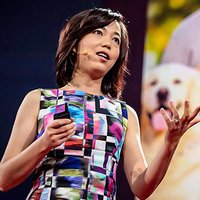
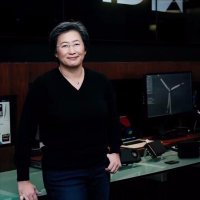
World Labs builds models that generate 3D scenes and simulate them for robot training. Fei-Fei Li will join AMD as chief scientist, reporting to Lisa Su. Closing is expected by end of 2026.
Why it matters
Li's bet is that AI must model the physical world, not just words; AMD pays $8.2B to put it beside its chips. Robot training and simulation link it to labs.
Evidence
Organizations
Organisation, capital, partnership, policy and people entries are recorded, not graded: they carry no claim to test.
Source
Organisations
 AMD
Semiconductor company in Santa Clara, California, founded in 1969, that designs processors and graphics chips.
People in this entry
Latest people moves
All people → Thariq ShihiparNov 25 · Anthropic → OpenAI
 Ruochen WangNov 24
 Ayush JaiswalNov 24 · Joined Epochal
 Daniel D. JohnsonNov 24 · Transluce → Thinking Machines
 Deepak SampathNov 24 · Ultragenyx → Peptone
 Guodong ZhangNov 24 · xAI → Epochal
 Sarah SchwettmannNov 24 · Transluce → Thinking Machines
 Yuke ZhuNov 24 · UT Austin → Princeton University
 Zihang DaiNov 24 · xAI → Epochal
- AVAndrew V. SutherlandNov 24 · Joined Institute for Responsible Superintelligence (RESI)
- LSLei ShaNov 24 · Jindu Shengke (OxTium) → Jindu Shengke (OxTium)
- MKManuel KroissNov 24 · xAI → Epochal
Argued around this time
All commentary →- AI and TCS: The Next
Six Months Simons Institute working group (organisers Tony Feng, Zeph Landau, Amit Sahai, Nikhil Srivastava) · Simons Institute - Joint Statement
about Mathathon Caltech Mathathon organizers, open-letter coauthors and community members (guest post) · What’s new · Terence Tao’s blog - Testing AI for materials discovery? Include a predicted
poor performer Jorge Bravo-Abad · Discovery at Scale
Read next
- Vinci raises $250M at a $1.5B valuation for a physics model meant to replace simulation checkpoints in
chip design Advent, Temasek and Xora Innovation co-led the Series B; AMD Ventures and Madrona joined, and Eclipse and Khosla Ventures followed on. - Anthropic prices its IPO at $83 a share, above its $70 to $78 range, and sells 980
million shares Anthropic priced its initial public offering at $83.00 a share on 18 November: 980,000,000 Class A shares, 956,351,354 sold by the company and the rest by existing stockholders. - OpenAI says its models improved AMD's flagship GPU designs by up to 14% on power, performance and area, with some changes in a design sent
for manufacturing OpenAI says its models, rewriting the code that describes a chip's circuits, improved the power, performance and area of AMD's flagship GPU designs by up to 14% over heavily optimised baselines, in under five months, checking each rewrite with Synopsys tools. - Oak Ridge opens Lux, an AMD system built by HPE, to scientific users, with half its 3.5 million node-hours a year set aside for the
Genesis Mission AMD announced on 16 November that Lux, a supercomputer HPE built at the Department of Energy's Oak Ridge National Laboratory, is open to scientific users. - Google adds two TPU systems to its eighth generation: a dual-chip TPU 8i Max and a TPU 8tx with hardware
confidential computing Google announced TPU 8i Max, which puts two TPU 8i chips on one package to double compute, on-chip memory and memory bandwidth in the same rack space, and TPU 8tx, which pairs TPU 8t silicon with AMD EPYC hosts so data and model weights stay protected and isolated even while in use. - Danaher and Microsoft partner on a shared AI agent platform to run and read Danaher's lab instruments, with the first agent-enabled instruments planned
for 2027 Danaher's release says the platform runs on Microsoft Azure, with Microsoft Foundry powering agents that turn a scientist's intent into an experiment plan, control the instrument within set safety limits, flag quality problems as results arrive and suggest next experiments for the scientist to review. - Innovate UK gives £9.3M to eight businesses building digital, automated and robotic labs for developing and
making medicines The money comes from the Transforming Medicines Manufacturing Innovation programme, part of UKRI's life sciences industrial strategy. - First Person Labs, founded by Stanford PhD Ken Liu, raises a $10M seed led by a16z for Second, a personal model its
users own Ken Liu announced the round with the launch of Second, which learns from a person's activity on their Mac and serves that context to the agents they choose.