Research
Claude computes a nine-loop amplitude in a toy particle-physics theory, checked by the physicist who reached eight loops
Evidence 2/5: ComputedAnthropic ↗Anthropic · SLAC National Accelerator Laboratory


Research
Evidence 2/5: ComputedAnthropic ↗Anthropic · SLAC National Accelerator Laboratory
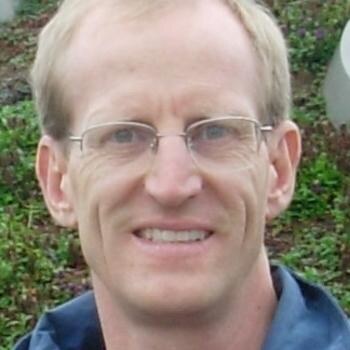
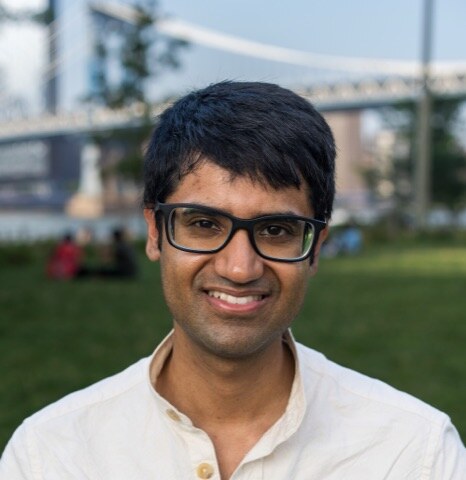
Anthropic physicists Liam Fitzpatrick and Siddharth Mishra-Sharma had Fable 5.1, in Claude Science, compute the six-particle amplitude of planar N=4 super Yang-Mills at nine loops, a target science writer Matt von Hippel had set as a challenge. With prompts little beyond "keep going", it did the calculation two ways, each costing one to two thousand dollars; the bootstrap ran a week on 96 CPUs. Lance Dixon of SLAC and Stanford, who reached eight loops in 2023, validated it.
Dixon had thought the nine-loop amplitude too hard to compute directly and planned an indirect route; Claude ran the field's own fragile bootstrap recipe end to end, writing the code from scratch. Von Hippel reads it as showing that frontier computations can be closer than experts assume, not that the model found a new method: Song He's group in Beijing had most of the result as well, using GPT-6 for some of the constraints.
N=4 super Yang-Mills is a toy theory used to test methods, not to predict experiments. Anthropic commissioned and paid for von Hippel's post, and Dixon received Claude credits; the result is posted on Zenodo, and the papers explaining it will come from Dixon's and He's teams.
Happened September 25, 2026Added October 17, 2026Edited by Dekun Sun
The result exists in software: a benchmark score, prediction, proof, generated candidate or simulated outcome. A benchmark that scores models belongs here even when its tasks are built from real measurements: ranking models on existing data is computing, not checking. So is a new benchmark or dataset released with models' scores on it, and a speed or accuracy measured by running software on ordinary computers: running code is computing.
Who evaluated it External: Evaluated, executed or reviewed by another party.
How far it was read Anthropic guest post and Dixon's addendum read in full; the Zenodo result and the concurrent He, Jing and Li result were not opened
 Anthropic
Bets that the scarce thing in AI-assisted science is not candidates but verification, and builds the checkers, interfaces and access that make a claim inspectable (since September 2026, in biology, the bench as well).
 SLAC National Accelerator Laboratory
Research laboratory in Menlo Park, California, sponsored by the US Department of Energy and administered by Stanford University.
 Thariq ShihiparNov 25 · Anthropic → OpenAI
 Ruochen WangNov 24
 Ayush JaiswalNov 24 · Joined Epochal
 Daniel D. JohnsonNov 24 · Transluce → Thinking Machines
 Deepak SampathNov 24 · Ultragenyx → Peptone
 Guodong ZhangNov 24 · xAI → Epochal
 Sarah SchwettmannNov 24 · Transluce → Thinking Machines
 Yuke ZhuNov 24 · UT Austin → Princeton University
 Zihang DaiNov 24 · xAI → Epochal