Research
Brice Ménard uses Claude Science to build a full-sky ultraviolet map, a third of it predicted from other wavelengths
Evidence 3/5: Checked against existing evidenceAnthropic ↗Anthropic · Johns Hopkins University


Research
Evidence 3/5: Checked against existing evidenceAnthropic ↗Anthropic · Johns Hopkins University
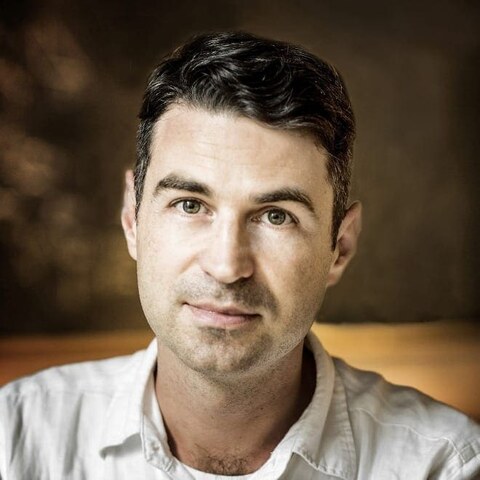
Brice Ménard, an astrophysicist at Johns Hopkins and Anthropic, had agents in Claude Science gather and cross-calibrate the public UV surveys, among them GALEX's 38,000 observations, and fill the third of the sky never observed in UV by learning how UV brightness tracks visible, infrared and radio maps, then add over 100 million Gaia stars. On measured patches hidden from it, the model came within about 10% of the real UV. Each pixel is marked measured or predicted, with an uncertainty.
A complete UV sky was missing because filling it takes weeks of pixel-level calibration that nobody puts first; here it took a few days of a scientist steering agents between his own projects. The map is a teaching tool, and the post's point is that most fields have a backlog of such resources that is now much easier to clear.
The predicted third is a statistical estimate, checked only against held-out patches that were measured; no new UV observation tests it. Ménard caught a calibration artefact that two rounds of agent review had missed, and the post cites no paper or outside review of the map.
Happened October 8, 2026Added October 17, 2026Edited by Dekun Sun
The result is evaluated against measurements, records or operational systems that already exist, under a defined evaluation procedure. What is checked is a particular result, such as a prediction, a design or a forecast, not a ranking of models on a benchmark, which is rung 2. A model's own predictions scored against real measurements or records it was not trained on (held-out experiments, clinical labels, observed weather) are rung 3, even when the release is a database of predictions; the database alone is rung 2. A single worked example that reproduces an already-known result is not a defined procedure.
Who evaluated it Internal: Evaluated by the originating team.
How far it was read Anthropic post read in full; the interactive map at menard.pha.jhu.edu/uvmap was not opened
 Anthropic
Bets that the scarce thing in AI-assisted science is not candidates but verification, and builds the checkers, interfaces and access that make a claim inspectable (since September 2026, in biology, the bench as well).
 Johns Hopkins University
Private research university in Baltimore, Maryland, opened in 1876.
 Thariq ShihiparNov 25 · Anthropic → OpenAI
 Ruochen WangNov 24
 Ayush JaiswalNov 24 · Joined Epochal
 Daniel D. JohnsonNov 24 · Transluce → Thinking Machines
 Deepak SampathNov 24 · Ultragenyx → Peptone
 Guodong ZhangNov 24 · xAI → Epochal
 Sarah SchwettmannNov 24 · Transluce → Thinking Machines
 Yuke ZhuNov 24 · UT Austin → Princeton University
 Zihang DaiNov 24 · xAI → Epochal