Research
ImmuneAgent ranks antibody candidates out of human B-cell sequencing: 60 of 110 cloned neutralised a virus, 12 of them broadly
Evidence 4/5: Tested in the physical worldarXiv 2610.03160 ↗Institute of Physics, Chinese Academy of Sciences


Research
Evidence 4/5: Tested in the physical worldarXiv 2610.03160 ↗Institute of Physics, Chinese Academy of Sciences
The system reads single-cell B-cell receptor data from people who were vaccinated or infected, ranks candidates on cell type, sequence, predicted structure and a trained predictor together, and feeds each round of lab results back into the model. Of 110 cloned antibodies (60 from an antigen-sorted SARS-CoV-2 dataset, 50 from an unsorted influenza one), 60 neutralised and 12 were broadly neutralising. Five protected all six mice each against a lethal flu dose, as the clinical-stage antibody MEDI8852 did.
Antibody discovery usually starts by sorting cells against a known antigen. Only the influenza arm skipped that step, and it is the one the mouse protection came from, which is what would matter for a virus nobody has sorted cells for yet; the larger SARS-CoV-2 half was sorted as usual. What was tested is prophylaxis in mice, six per group, and the authors say the design cannot establish equivalence to MEDI8852. One group's preprint, baselines retrained by the same team, and their own audit found 19% of the SARS-CoV-2 test sequences within 90% identity of training data.
Happened October 2, 2026Added October 5, 2026Edited by Dekun Sun
A new experiment or physical execution is performed because of the result: something is synthesized, measured, or run on physical hardware beyond ordinary computing, such as a quantum processor, a robot or a lab instrument.
Who evaluated it Internal: Evaluated by the originating team.
How far it was read arXiv 2610.03160, full text read; supplementary tables not read
 Institute of Physics, Chinese Academy of Sciences
China's national academy for the natural sciences, headquartered in Beijing, with research institutes throughout the country.
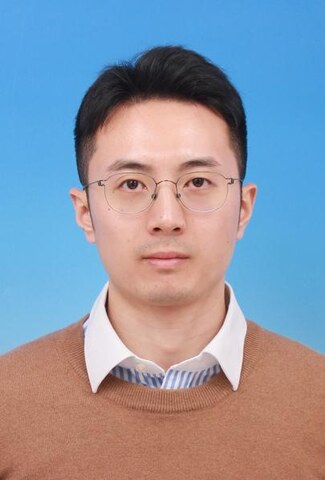 Hantao LouAssociate professor, College of Life Sciences · Nankai University
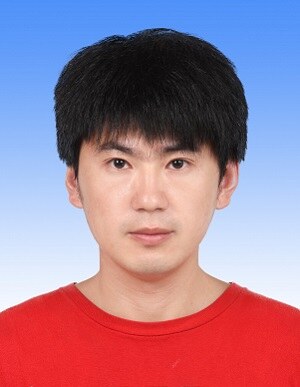 Xiangxi WangProfessor and principal investigator, State Key Laboratory of Biomacromolecules · Institute of Biophysics, Chinese Academy of Sciences
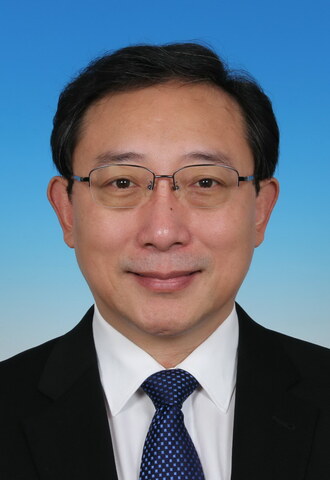 Xuetao CaoChair of the Academic Committee and director of the Immunotherapy Research Center · Chinese Academy of Medical Sciences
 Thariq ShihiparNov 25 · Anthropic → OpenAI
 Ruochen WangNov 24
 Ayush JaiswalNov 24 · Joined Epochal
 Daniel D. JohnsonNov 24 · Transluce → Thinking Machines
 Deepak SampathNov 24 · Ultragenyx → Peptone
 Guodong ZhangNov 24 · xAI → Epochal
 Sarah SchwettmannNov 24 · Transluce → Thinking Machines
 Yuke ZhuNov 24 · UT Austin → Princeton University
 Zihang DaiNov 24 · xAI → Epochal