PeopleIndustry
Mathematicians dispute credit for OpenAI’s Navier–Stokes result
ContestedThe Next Web ↗OpenAI · Anthropic


PeopleIndustry
ContestedThe Next Web ↗OpenAI · Anthropic
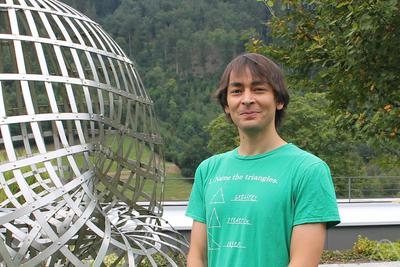
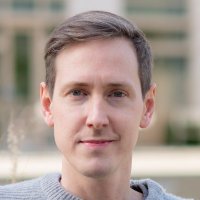
Tristan Buckmaster (NYU) and Levent Alpöge (Anthropic) say their unpublished forced-Euler work came first and reached OpenAI, and that OpenAI resisted listing Alpöge. Sébastien Bubeck disputes parts of it and apologises for his wording.
At the frontier of mathematics, a capability claim now arrives bundled with questions of priority, data access and authorship that peer review was never built to settle.
Based on public posts and reporting; the parties’ accounts differ and the underlying proofs are still under review.
Happened September 8, 2026Added September 15, 2026Edited by Dekun Sun
People
Organisation, capital, partnership, policy and people entries are recorded, not graded: they carry no claim to test.
 OpenAI
Puts general agents inside the tools researchers already open (code, instruments, the paper itself), with one domain model series, GPT-Rosalind, for the life sciences; progress is measured mainly in research throughput.
 Anthropic
Bets that the scarce thing in AI-assisted science is not candidates but verification, and builds the checkers, interfaces and access that make a claim inspectable (since September 2026, in biology, the bench as well).
 Thariq ShihiparNov 25 · Anthropic → OpenAI
 Ruochen WangNov 24
 Ayush JaiswalNov 24 · Joined Epochal
 Daniel D. JohnsonNov 24 · Transluce → Thinking Machines
 Deepak SampathNov 24 · Ultragenyx → Peptone
 Guodong ZhangNov 24 · xAI → Epochal
 Sarah SchwettmannNov 24 · Transluce → Thinking Machines
 Yuke ZhuNov 24 · UT Austin → Princeton University
 Zihang DaiNov 24 · xAI → Epochal