OrganizationsIndustry
The Medicine Nobel goes to optogenetics, the light switch that lets neuroscientists intervene in living circuits rather than only watch them
Nobel Prize ↗Nobel Prize · Stanford University


OrganizationsIndustry
Nobel Prize ↗Nobel Prize · Stanford University
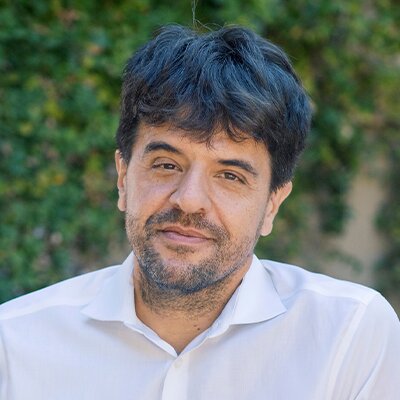
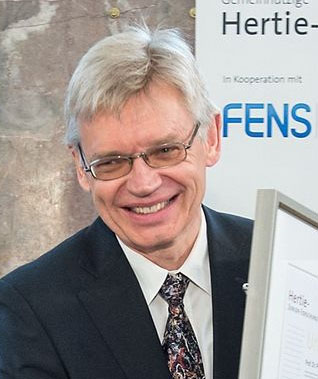
Karl Deisseroth (HHMI and Stanford), Peter Hegemann (Humboldt University of Berlin) and Georg Nagel (University of Würzburg) share the prize for light-gated ion channels and optogenetics. Hegemann and Nagel found channelrhodopsin in an alga: shine blue light on it and ions flow into the cell. Deisseroth put its gene into rat neurons and fired them with light in 2005, and made it work in living mice two years later. Researchers can now switch chosen neurons on or off in a living brain.
AI4S attention tends to go to better models and predictions; optogenetics is a reminder that what a science can do also rests on precise, repeatable intervention in the real system. It gave neuroscience a causal intervention layer: from watching neurons to switching chosen ones on and off. A 2015 review from Deisseroth's lab describes closed-loop control: stimulating in response to activity observed as it happens, to test whether a model of a circuit holds in a living animal. The model proposes; the light tests.
Organizations
Organisation, capital, partnership, policy and people entries are recorded, not graded: they carry no claim to test.
How far it was read Nobel Prize press release, read in full; 'on or off' is the Nobel Assembly's Thomas Perlmann, quoted by Reuters; the 2015 Neuron review read in abstract
 Nobel Prize
The prizes Alfred Nobel's will set up, overseen by the Nobel Foundation, a private institution established in 1900.
 Stanford University
Private research university in Stanford, California.
 Thariq ShihiparNov 25 · Anthropic → OpenAI
 Ruochen WangNov 24
 Ayush JaiswalNov 24 · Joined Epochal
 Daniel D. JohnsonNov 24 · Transluce → Thinking Machines
 Deepak SampathNov 24 · Ultragenyx → Peptone
 Guodong ZhangNov 24 · xAI → Epochal
 Sarah SchwettmannNov 24 · Transluce → Thinking Machines
 Yuke ZhuNov 24 · UT Austin → Princeton University
 Zihang DaiNov 24 · xAI → Epochal