PartnershipsIndustry
OpenAI and Broadcom unveil Jalapeño, OpenAI's first chip, an inference processor they say went from design to tape-out in nine months with help from OpenAI's models
Tom's Hardware ↗OpenAI · Broad Institute


PartnershipsIndustry
Tom's Hardware ↗OpenAI · Broad Institute
OpenAI and Broadcom unveiled Jalapeño, OpenAI's first chip: an inference processor built for running large language models, made on a 3-nanometre process, with Celestica contributing board, rack and system expertise. The companies say it went from first design to tape-out in nine months, helped by OpenAI's own models, and that engineering samples already run GPT-5.3-Codex-Spark at target clock speed and power. Deployment is to begin in late 2026, with production ramping in 2027.
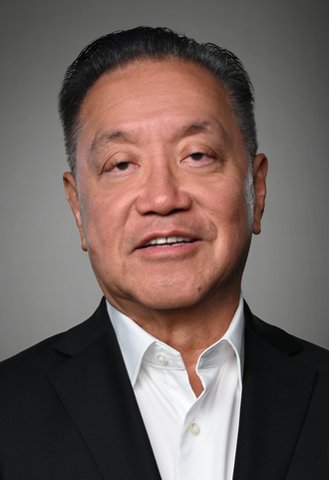
A frontier lab now designs its own silicon and says its models helped bring the chip to tape-out in nine months, where Tom's Hardware puts the usual at 18 to 24 months. Richard Ho, who leads OpenAI's hardware programme, says the architecture was optimised around the kernels, memory movement, networking and serving patterns that matter most for frontier AI models. Broadcom's chief executive Hock Tan says the chips will go into gigawatt-scale data centres with Microsoft and other partners from 2026.
At the June announcement the companies gave no performance numbers, benchmarks or memory configuration; the claim of better performance per watt rested on early internal tests (OpenAI posted first results in August). How much of the nine months is owed to the models, rather than Broadcom reusing its own logic, is not stated. Tom's Hardware estimates the compute die at about 840 square millimetres from photographs.
Partnerships
Organisation, capital, partnership, policy and people entries are recorded, not graded: they carry no claim to test.
Tom's Hardware tomshardware.com ↗
How far it was read Tom's Hardware (Anton Shilov, 24 June) and All About Circuits (Jake Hertz, 1 July) read in full, including the quotes from Richard Ho and Hock Tan; OpenAI's and Broadcom's own announcements not read (OpenAI's pages refuse automated readers)
 OpenAI
Puts general agents inside the tools researchers already open (code, instruments, the paper itself), with one domain model series, GPT-Rosalind, for the life sciences; progress is measured mainly in research throughput.
 Broad Institute
Biomedical and genomic research center in Cambridge, Massachusetts, a nonprofit that partners with MIT and Harvard.
 Thariq ShihiparNov 25 · Anthropic → OpenAI
 Ruochen WangNov 24
 Ayush JaiswalNov 24 · Joined Epochal
 Daniel D. JohnsonNov 24 · Transluce → Thinking Machines
 Deepak SampathNov 24 · Ultragenyx → Peptone
 Guodong ZhangNov 24 · xAI → Epochal
 Sarah SchwettmannNov 24 · Transluce → Thinking Machines
 Yuke ZhuNov 24 · UT Austin → Princeton University
 Zihang DaiNov 24 · xAI → Epochal