Research
A claimed proof of the local smoothing conjecture in every dimension carries the Kakeya conjecture with it, where the published record had reached three dimensions
Evidence 2/5: Computedopenai/math on GitHub ↗OpenAI


Research
Evidence 2/5: Computedopenai/math on GitHub ↗OpenAI
OpenAI's 59-page paper, its author line reading OpenAI, dated 25 October and added to its public repository the next day, proves Sogge's conjecture for every spatial dimension at least two, with arbitrarily small Sobolev loss and none at p=2. From it the paper deduces the Bochner-Riesz conjecture, sharp bounds for Stein's square function, and the Kakeya and Nikodym maximal conjectures. OpenAI says it is releasing the model's output directly.
The published record had the plane from Larry Guth, Hong Wang and Ruixiang Zhang, and three-dimensional Kakeya from Hong Wang and Joshua Zahl last year; this claims every dimension at once, and cites two OpenAI preprints from September that it supersedes. Unlike the complexity result released the same day, the Lean here covers the headline claims: the local smoothing bound in every dimension, and that a set holding a unit segment in every direction has full Hausdorff dimension.
Nobody outside OpenAI has checked it, and OpenAI's own repository calls these manuscripts raw research data rather than polished papers. The restriction estimates for the sphere, paraboloid and cone hold only inside the conjectured range, so that conjecture is not settled here. The same repository withdrew three manuscripts on 7 October over a sign error.
The result exists in software: a benchmark score, prediction, proof, generated candidate or simulated outcome. A benchmark that scores models belongs here even when its tasks are built from real measurements: ranking models on existing data is computing, not checking. So is a new benchmark or dataset released with models' scores on it, and a speed or accuracy measured by running software on ordinary computers: running code is computing.
Who evaluated it Internal: Evaluated by the originating team.
openai/math on GitHub github.com ↗
How far it was read The 59-page preprint read at source: its abstract, Theorem 1.1, the prior-work discussion and the bibliography entries for Guth, Wang and Zhang, for Wang and Zahl, and for the two September OpenAI preprints it supersedes; the proof sections were not read. OpenAI's own Lean scope note at lean/docs/079.md and the history.md entry announcing the release read in full. Its announcement page is 403 from here
 OpenAI
Puts general agents inside the tools researchers already open (code, instruments, the paper itself), with one domain model series, GPT-Rosalind, for the life sciences; progress is measured mainly in research throughput.
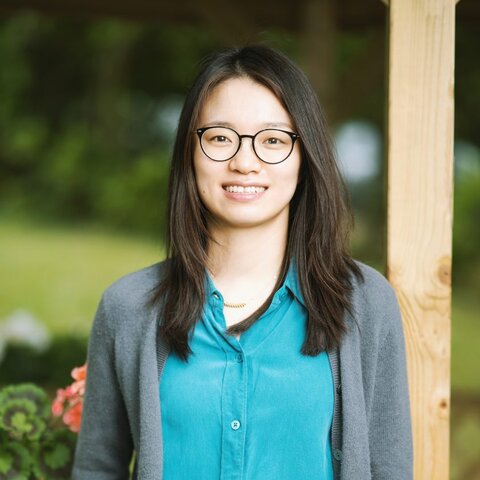 Hong WangPermanent Professor · Institut des Hautes Etudes Scientifiques
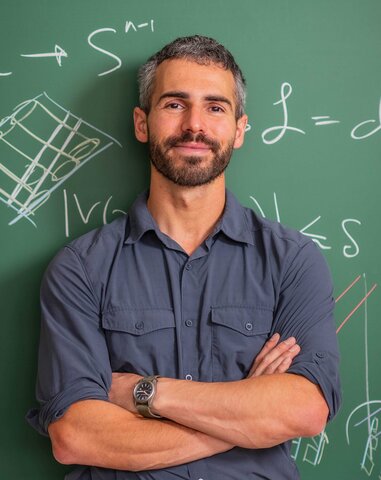 Joshua ZahlAssociate Professor, Department of Mathematics · University of British Columbia
 Larry GuthClaude E. Shannon (1940) Professor of Mathematics · MIT
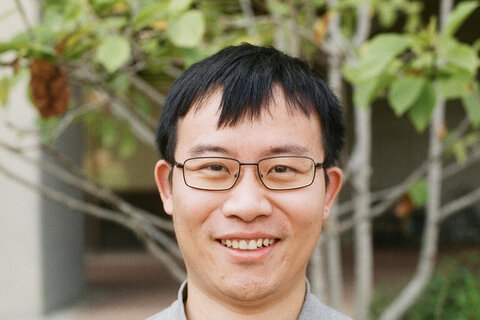 Ruixiang ZhangAssociate Professor, Department of Mathematics · University of California, Berkeley
 Thariq ShihiparNov 25 · Anthropic → OpenAI
 Ruochen WangNov 24
 Ayush JaiswalNov 24 · Joined Epochal
 Daniel D. JohnsonNov 24 · Transluce → Thinking Machines
 Deepak SampathNov 24 · Ultragenyx → Peptone
 Guodong ZhangNov 24 · xAI → Epochal
 Sarah SchwettmannNov 24 · Transluce → Thinking Machines
 Yuke ZhuNov 24 · UT Austin → Princeton University
 Zihang DaiNov 24 · xAI → Epochal