CapitalIndustry


What happened
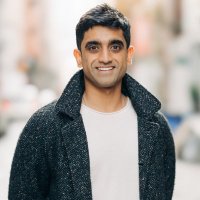
Proximal Ventures will write pre-seed and seed cheques of $500,000 to $1.5 million and has already backed seven start-ups, TechCrunch reported on 10 November. Its backers include the venture firms SignalFire and Kleiner Perkins, Bertelsmann Healthcare Investments, Nan Li and Zavain Dar, co-founders of Dimension, and Amy Abernethy, a former principal deputy commissioner of the FDA. Raoof spent two years as a principal at SignalFire and earlier led business development at Iterative Health and partnerships at Flatiron Health.
Why it matters
The fund bets on the service side of drug development. Drugmakers have long paid contract firms to make thousands of compounds, work out how to manufacture a drug at scale and analyse trial data, and Raoof argues AI can deliver that same work cheaper and faster, as it has begun to in legal and financial services. So the buyer he is counting on is pharma's outsourcing budget, which pays for services, rather than software, which pharma has not been thought a good buyer of.
Evidence and limits
Fund size, cheque size and strategy are as TechCrunch reported them, with Raoof quoted; no announcement or filing from the fund was read. Of the seven start-ups only ChronicleBio is named, and the report gives no customer or result for any of them.
Evidence
Capital
Organisation, capital, partnership, policy and people entries are recorded, not graded: they carry no claim to test.
Source
How far it was read TechCrunch's report of 10 November read in full; Proximal Ventures has no site or announcement found, and the fund's Form D was seen only as a directory listing, not read
People in this entry


Latest people moves
All people → Thariq ShihiparNov 25 · Anthropic → OpenAI
 Ruochen WangNov 24
 Ayush JaiswalNov 24 · Joined Epochal
 Daniel D. JohnsonNov 24 · Transluce → Thinking Machines
 Deepak SampathNov 24 · Ultragenyx → Peptone
 Guodong ZhangNov 24 · xAI → Epochal
 Sarah SchwettmannNov 24 · Transluce → Thinking Machines
 Yuke ZhuNov 24 · UT Austin → Princeton University
 Zihang DaiNov 24 · xAI → Epochal
- AVAndrew V. SutherlandNov 24 · Joined Institute for Responsible Superintelligence (RESI)
- LSLei ShaNov 24 · Jindu Shengke (OxTium) → Jindu Shengke (OxTium)
- MKManuel KroissNov 24 · xAI → Epochal
Argued around this time
All commentary →Read next
- Mirendil, founded by ex-Anthropic researchers to automate AI research, raises a $1B Series A led by Kleiner Perkins and
Clearlake Capital Mirendil says it raised $1B, with Battery Ventures, Doerr Capital, Gil & Co, Google, M13, Pear VC and S32 also in. - Danaher and Microsoft partner on a shared AI agent platform to run and read Danaher's lab instruments, with the first agent-enabled instruments planned
for 2027 Danaher's release says the platform runs on Microsoft Azure, with Microsoft Foundry powering agents that turn a scientist's intent into an experiment plan, control the instrument within set safety limits, flag quality problems as results arrive and suggest next experiments for the scientist to review. - Anthropic prices its IPO at $83 a share, above its $70 to $78 range, and sells 980
million shares Anthropic priced its initial public offering at $83.00 a share on 18 November: 980,000,000 Class A shares, 956,351,354 sold by the company and the rest by existing stockholders. - Innovate UK gives £9.3M to eight businesses building digital, automated and robotic labs for developing and
making medicines The money comes from the Transforming Medicines Manufacturing Innovation programme, part of UKRI's life sciences industrial strategy. - First Person Labs, founded by Stanford PhD Ken Liu, raises a $10M seed led by a16z for Second, a personal model its
users own Ken Liu announced the round with the launch of Second, which learns from a person's activity on their Mac and serves that context to the agents they choose. - Yejin Choi and Carlos Guestrin launch Noeri with $110 million to build self-improving AI that its
users own Stanford professors Yejin Choi and Carlos Guestrin launched Noeri, with offices in Palo Alto and Zurich, and $110 million from backers Choi said include Menlo Ventures, Madrona Ventures, NVIDIA, NEA, Kindred Ventures, Wing, AIX Ventures, Cisco and Snowflake. - Oak Ridge opens Lux, an AMD system built by HPE, to scientific users, with half its 3.5 million node-hours a year set aside for the
Genesis Mission AMD announced on 16 November that Lux, a supercomputer HPE built at the Department of Energy's Oak Ridge National Laboratory, is open to scientific users. - OpenAI starts a blog for science, opening with a physicist's guest post on a proof GPT-6
Astra led OpenAI launched a science blog on 15 November, which it says will share new findings, practical methods and firsthand accounts from researchers using AI.