中文

AI FOR SCIENCE · INTERVIEWS

Platt: Google's ERA began as an attempt to automate Kaggle, and he says it solved a contrail problem his team was stuck on for two years

Latent Space · ~2:01:00 · Open on YouTube ↗
Guest
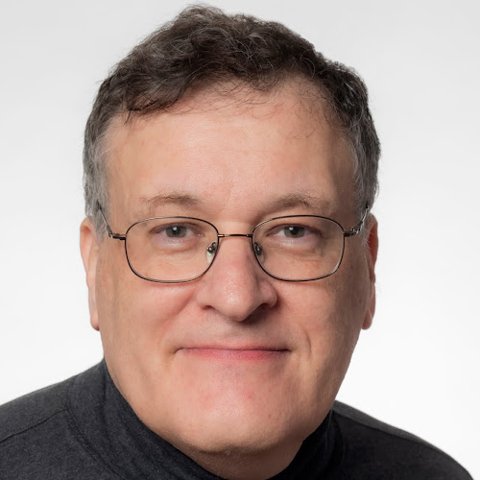
John PlattGoogle Fellow; leads the Applied Science branch of Google ResearchProfile, roles and records →
Company
Google ResearchOrganisation page: funding, people, research →
Source
Latent Space ↗Published · ~2:01:00
Core signal

Platt says ERA, Google's system in which Gemini rewrites code under a tree search, can take on any science problem written as a score, and that choosing the score and not overfitting it are the scientist's job. His example is contrails: his team was stuck for two years on estimating the sunlight they reflect, and ERA found a model that worked.

What this adds

How ERA runs day to day: it began as an 'auto-Kaggle' project, grows ten notebook branches a round from a shared history, and runs for hours before a person steps in; in his view it could not have worked on Gemini 2.0. And a contrail result with no paper yet: a simple model with a set of confounders the team had not tried, which passed the team's own synthetic tests.

Current boundary

The contrail result is not yet submitted (he says it was presented at EGU) and has been checked only on the team's own synthetic data with injected contrails. ERA closes its loop only in computation, and someone else has to gather the data; he says no general lab that can run any experiment exists. Beyond the CDC forecasts, he gives no ranking from any competition.

01

What they said

  1. Write the science problem as a score, then let an AI search over code

    ▶ 4:05

    He says the team found that many science problems can be written as 'scorable tasks': a piece of code is wanted that makes some score as high as possible. Statistical models are one kind, but not the only one: Michael Brenner turns the asymptotic expansion of an ordinary differential equation into a test, and another project estimates the carbon dioxide only OCO-2 and OCO-3 can measure from the coarse pixels of the GOES weather satellite. Evolutionary coding has existed since the 1970s and never took off, because random mutation in code is close to useless; ERA works because the thing rewriting the code is a model that knows a lot. He says the team worked on it in 2024 and 2025, that it could not be done on Gemini 2.0, and that it began to work with 2.5.

    “random mutation in code space is pretty much worthless”John Platt
  2. A score gets gamed, so choosing it and guarding the holdout are people's work

    ▶ 22:27

    He separates predictive models (lowest error on some dataset) from descriptive ones (they capture the physics and can extrapolate), says science wants the second, and says ERA hands back the first, so deciding whether a model is descriptive is the scientist's job. Systems find holes all the time, and so do people: in Google's contrail Kaggle competition, the entrants who beat Google had found a half-pixel error in its labels and exploited it. His answer is more rigour: hidden holdout sets nobody looks at, layer on layer of checks. He says ERA is built with a person in the outer loop: it runs for a few hours, the person comes back, points it at a paper or says what is wrong, and lets it run again.

  3. Contrails: ERA unstuck a quantity no one can measure directly

    ▶ 42:42

    He says that by current estimates contrails cause about 1% of human-made warming; where air traffic is dense, as over Europe, extra contrails cover a few percent of the sky and add about one watt per square metre of forcing locally, against about three watts for all human-made warming averaged over the globe. A plane only has to drop two flight levels to pass under the ice-supersaturated layers, for a little extra fuel. The team watches contrails in satellite images, predicts those layers with convolutional nets, and gives the maps to flight-planning software; those models are not ERA's. The hard part is how much warming a contrail avoided caused, a counterfactual question. The team had a model and a paper for the longwave, heat-trapping half, but was stuck for two years on the reflected sunlight; ERA found a simple model with a combination of confounders the team had not tried, which passed the team's test of recovering contrails injected into synthetic data, where the team's own attempts had failed.

  4. Statistical models suit closed problems with enough data; climate is not one

    ▶ 52:53

    He says weather and protein structure are data-rich, closed problems where a statistical model will do, AlphaFold being the example. Climate is not: it is non-stationary, the attractor itself is moving, there is no data from thirty years ahead, and a location may have fifty annual data points; the uncertainty in how much carbon dioxide the biosphere absorbs alone is about 300 ppm by 2100, against about 440 to 450 ppm today. So, he says, AI has not changed climate modelling. His hope is a future tool that reads far more papers than any person and writes code constrained by what is known; he stresses that today's ERA does not do this.

    “so far, AI has not revolutionized it 'cause it's very, very resistant, again, 'cause of this data problem.”John Platt
  5. The bottleneck is the experiment, and people stay for creativity, rigour and domain knowledge

    ▶ 1:31:47

    He says ERA today is all computation and someone has to gather the data; the 'lab in the loop' is still wide open, with many labs that each do one controllable thing and none that does everything. Asked which bottleneck he would remove by magic, he wants a general lab that takes a JSON request and runs any experiment. He does not expect scientists to be replaced: AI is strong at writing code and finding knowledge and still weak at creativity and rigour, and ERA will not discover new physics from scratch, though it follows the constraints it is told. His advice to young people is to go deep in one domain, use the tools widely, and sometimes do the work by hand.

    “the everything lab that you could like send JSON blob to, and it will do any experiment at all”John Platt
How a round of ERA runs, as Platt describes it
  1. Set the scoreAn agent talks with the scientist and writes a Python notebook with a scoring function.
  2. SeedGemini reads the papers it is pointed to and writes a first version; sometimes it has bugs and scores minus infinity.
  3. PickAmong hundreds or thousands of notebooks, the upper confidence bound (UCB) picks the one with the highest optimistic estimate, not always the current best.
  4. MutateBy default ten branches grow at a time; each is scored and put back in the tree, with a shared history so later attempts see earlier results.
  5. A person steersAfter a few hours a person looks at the results, points to a paper or flags a mistake, and lets it run again.

He says the team has also tried combining ideas from two candidates into a third.

02

What changed

  • Prior public record

    Google's blog of 19 May 2026, published with the Nature paper, says ERA can search the literature, write code and optimise over thousands of options with a tree search; that eight manuscripts apply it; and that it is part of Computational Discovery, a Google Labs trusted-tester tool. It does not say where the project came from or how it is used day to day.

    This interview adds

    Platt says it began as 'auto-Kaggle', Kaggle being part of Google; that the default is ten branches a round because too much in parallel means no learning across them; that a run lasts hours with a person steering the outer loop; and that in his view it could not have worked on Gemini 2.0.

  • Prior public record

    A Google team's paper in Atmospheric Measurement Techniques, March 2026, estimates the longwave (heat-trapping) forcing of long-lived contrails from satellite observations with causal inference, and validates the method on synthetic data with a known injected truth. The site's timeline has no contrail entry.

    This interview adds

    Platt says the other half, the reflected sunlight, had the team stuck for two years until a model ERA found passed the same kind of synthetic test; that paper is not yet submitted.

  • Prior public record

    The same blog says ERA's flu, COVID-19 and RSV forecasts 'consistently rank at or near the top' of CDC's public leaderboards.

    This interview adds

    Platt also says it did very well in CDC's, and adds a limit: outside Kaggle's playground competitions, ERA got close in other contests but not through the last thirty or so places, because no one was there to shave off the last 0.001.

03

Why it matters

A score makes the search possible, and is what the search will exploit

On Platt's account, with a tool like ERA a person's work moves from writing code to setting the score, choosing the data and hiding the holdout. The more relentless the search, the faster it finds the gap between the score and the real problem; the half-pixel case was done by people, and a system only does it faster. So for a result reached by searching over code, who set the held-out data and who never saw it tells more than how high the score went.

Where reality gives no answer key, the score is built from synthetic data

How much warming a contrail caused cannot be measured: no one sees the sky where the plane did not fly. The team injected known contrails into synthetic data and checked whether a method recovers them, which is what gave ERA a score to chase. It is one way to stretch scorable tasks to counterfactual questions; it shows the method recovers what was injected, not that the synthetic data resemble the real atmosphere.

Searching over code stops at the lab door

ERA's loop closes only in computation, and the data come from someone else. Platt naming a general lab as the thing he most wants amounts to saying that the supply of experimental data sets the ceiling for systems like this. For anyone deciding where money and people go, that puts the question on automated labs rather than more search.

04

Claims and boundaries

ClaimWhose voiceWhere it stands

ERA runs a tree search over hundreds or thousands of notebooks, picks with UCB, grows ten branches a round by default with a shared history, and has an agent that helps the scientist set the scoring function.

Current system

Platt's description; he is among the ERA preprint's authors. Google's blog describes a tree search over thousands of options; ten a round comes only from this episode. He speaks of the set-up 'in the product', while the show notes say ERA is not currently a Google product; Google's blog says it is part of the trusted-tester tool Computational Discovery.

ERA could not have worked on Gemini 2.0 and began to work with 2.5.

Guest's judgment

His judgment; no published comparison.

ERA did very well in Kaggle playground competitions and in CDC's COVID-19 and flu forecasting, and got close in other contests without closing the last thirty or so places.

Company-reported

No competition or rank is named. CDC's end-of-season evaluation of 30 September ranked Google's flu ensemble first of 39 models; see After the interview.

A simple model ERA found solved the counterfactual estimate for the sunlight contrails reflect, passing the team's synthetic-data test where the team's own attempts failed.

Company-reported

The paper is not yet submitted; he says it was presented at EGU, which was not read here; the test is only on the team's own synthetic data. The longwave half has its March 2026 paper.

Contrails cause about 1% of human-made warming; about one watt per square metre locally over Europe against about three watts for all human-made forcing averaged globally; each gram of water or soot emitted pulls out about ten kilograms of ice.

Industry context

He gives these as 'the estimates people have', from memory; the original studies were not checked here.

Google runs a satellite contrail-monitoring system and convolutional nets that predict ice-supersaturated layers, with maps given to flight-planning software; a plane need only drop two flight levels, for little extra fuel.

Current system

Platt's description; he says these models are not ERA's. The episode cites no result from any flight trial.

An ERA-built model estimates carbon dioxide concentration from GOES weather-satellite data, a kind of super-resolution of the narrow strips OCO-2 and OCO-3 measure.

Company-reported

Google's blog of 19 May describes the same result (every 10 minutes); the paper was not read here.

FireSat: some 50 to 80 satellites could spot a fire about five metres on a side anywhere on Earth within 15 to 20 minutes; pixels are about 50 metres, super-resolved to five; one prototype has been launched with Earth Fire Alliance and Muon Space.

Target

The constellation is a target, with one prototype in orbit; no data from the prototype was read here.

ERA will not discover new physics from scratch but follows the constraints it is told; AI has not changed climate modelling.

Guest's judgment

His judgment.

The system combining ERA with Antigravity is not yet public.

Not yet closed

He says a preprint used both; Google's blog of 19 May describes a solar-capture case study with them.

ERA closes its loop only in computation; no general lab that can run any experiment exists.

Not yet closed

Stated plainly by Platt.

There is a definite chance that someone makes commercially relevant fusion by the end of this decade: 'three years away, not thirty'.

Guest's judgment

His forecast. The transcript has no speaker labels; the line follows his account of having worked on fusion, and the show notes attribute it to him.

05

What to watch next

  1. Whether the paper on the reflected-sunlight half of contrail forcing is published, with the synthetic test's set-up and results.

    Would show up as A preprint or paper stating the model ERA found, the confounders used and the error in recovering injected contrails.
  2. Whether anyone outside the team reaches a similar estimate of contrails' shortwave forcing by independent observation or method.

    Would show up as An outside group's paper compared side by side with Google's estimate.
  3. Whether ERA-built forecasts lead CDC's forward scoring for more than one season and more than one virus.

    Would show up as CDC's own end-of-season evaluations, not Google's blog.Partly answered The CDC evaluation of the 2025-26 flu season, read by the timeline, ranks Google_SAI-FluEns first of 39 models with a relative weighted interval score of 0.56, the next three at 0.58; one season, one virus.
  4. Whether a group outside Google publishes a result made with ERA, stating its held-out data and scoring.

    Would show up as A paper or preprint by outside authors whose methods say ERA was used.
  5. Whether anyone makes commercially relevant fusion by the end of this decade.

    Would show up as A machine whose energy output exceeds the whole plant's input, or a contract to supply the grid that starts delivering.Checked on Said: even by the end of this decade ... I think it's like three years away, not thirty years away
↳

After the interview

Later evidence that tests or limits what was said, and targets whose date has passed.

  • Eight days after the interview CDC published its evaluation of the 2025-26 flu season: Google_SAI-FluEns, which Google says it built with ERA, ranked first of 39 models with a relative weighted interval score of 0.56, the next three at 0.58. The forecasts were submitted week by week before admissions were known and scored by CDC, a step past the Nature paper's retrospective study, and they bear out his 'did super well' on CDC's challenge; but the lead is narrow and covers one flu season.Timeline entry →

Source and how it was read

Read 2026.11.01 What was read is the full machine transcript linked as 'Read transcript' on the Latent Space episode page (a transcript of the podcast audio), and the page's show notes; the audio and video were not heard. The transcript has no speaker labels: the two hosts introduce themselves as Brandon and RJ, and this page counts as Platt's only what is plainly his answer. Latent Space is an independent show, not a Google channel; Platt is among the authors of the ERA preprint (arXiv 2509.06503). What he says about the ERA paper, the contrail paper and the CDC scoring was checked against Google's blog of 19 May 2026, the abstract of the March 2026 paper in Atmospheric Measurement Techniques, and the CDC report the timeline has read. Open the interview ↗Latent Space episode page ↗