

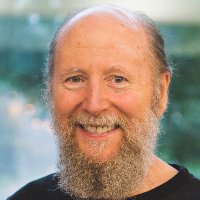
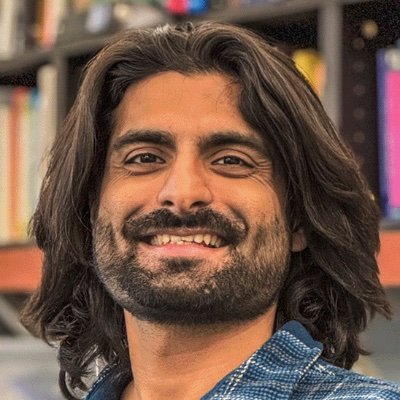
Rich Sutton, one of the pioneers of reinforcement learning, and his former student Khurram Javed argue that today's large models never change their weights once in use, and that synthetic data people make cannot stand in for the real world. Oak Lab, which they founded in June 2026, aims at agents that learn while they work, form their own abstractions and plan with them.
Why synthetic data will not do
Sutton calls synthetic data "a big mistake". The reason is the "big world hypothesis" from a 2024 paper by the two of them: the world is far more complex than any agent or simulator, so an agent acts on approximations and has to keep correcting them from experience. Javed adds a practical reason: deciding which synthetic data is good still takes people, so the approach is bottlenecked by human experts. His example is self-driving: the simulators improve only as engineers patch each gap with the real world, and he wants the agent to learn its own model from experience and plan inside it.
Forgetting can be fixed, they say, in two ways
A model that updates while it is used tends to wipe out what it knew, which is called catastrophic forgetting. Sutton says it is "totally curable": give every weight its own step size and learn those step sizes too, so most weights move slowly, and keep adding freshly initialised units for backprop to test. The second part is the continual backprop of their 2024 Nature paper, which showed that standard deep learning gradually loses its ability to learn in continual settings and that reinitialising a small share of little-used units keeps it. Javed says these methods cannot be bolted onto an existing model: a new foundation model has to be trained with them from scratch.
Where science comes in: learning a model, then planning with it
Sutton says no system in the field yet learns a model of the world and then plans with it; AlphaGo and proving theorems in Lean manage it only because the rules are given. Javed describes a scientific paradigm shift as the same skill: a person builds new abstractions from experience, plans with them and finds new knowledge, which he says current systems lack. Both are judgments; the episode shows no experimental result.
The target, and what is not shown
Their target is a trillion-parameter mind that keeps learning on 20 watts, within five to ten years. Sutton's arithmetic: ten years of Moore's law is about two orders of magnitude, so it should be doable on about 2,000 watts today. Javed thinks the big labs are stuck in a local minimum, since a new paradigm gets worse before it gets better, and Oak Lab will start with a very small team. The episode shows no result, benchmark or product of Oak Lab's own; the one published piece of evidence is the 2024 Nature paper, which tested standard tasks, not Oak Lab's system. Sutton's view that language models are "20 percent or a quarter" of intelligence is his own judgment.