Research
Eleven mathematicians release ten unpublished research questions to test whether AI can prove what they have proved
Evidence 2/5: ComputedarXiv 2602.05192 ↗Stanford University · UC Berkeley · Harvard University


Research
Evidence 2/5: ComputedarXiv 2602.05192 ↗Stanford University · UC Berkeley · Harvard University
Mohammed Abouzaid, Martin Hairer, Nikhil Srivastava, Lauren Williams, Rachel Ward and six colleagues posted ten questions from their own research, each solved by its author in five pages or less and kept off the internet, with answers released on 13 February. Their own tests with Gemini 3.0 Deep Think and ChatGPT 5.2 Pro in early February, posted with the answers, found most of the best attempts flawed. Two were essentially correct, one improving on its author's method.
Most maths benchmarks use contest problems. These come from the last step of real research, with answers that were not online, so a model could not simply look them up. The authors' notes say how the attempts failed: a sketch on a homepage passed off as a proof, invented lemmas, an easier problem solved instead. A second batch of ten followed in June, with referee reports on the AI solutions.
Ten questions graded by their own authors are not a benchmark, as the authors say themselves. Unpublished did not mean nothing related was online: Hairer's question had a short sketch on his homepage, a 2024 paper was close to Question 9, and the key idea of the best answer to Question 10 was already in a 2016 arXiv paper.
Happened February 5, 2026Added November 2, 2026Edited by Dekun Sun
The result exists in software: a benchmark score, prediction, proof, generated candidate or simulated outcome. A benchmark that scores models belongs here even when its tasks are built from real measurements: ranking models on existing data is computing, not checking. So is a new benchmark or dataset released with models' scores on it, and a speed or accuracy measured by running software on ordinary computers: running code is computing.
Who evaluated it External: Evaluated, executed or reviewed by another party.
How far it was read v1 abstract and v2 HTML read: introduction, discussion and Appendix A (the authors' notes on the AI attempts); the human solutions in Appendix B not read; the June second batch (arXiv 2606.18119) abstract only
 Stanford University
Private research university in Stanford, California.
 UC Berkeley
Public research university in Berkeley, California, the founding campus of the University of California.
 Harvard University
Private research university in Cambridge, Massachusetts, founded in 1636.
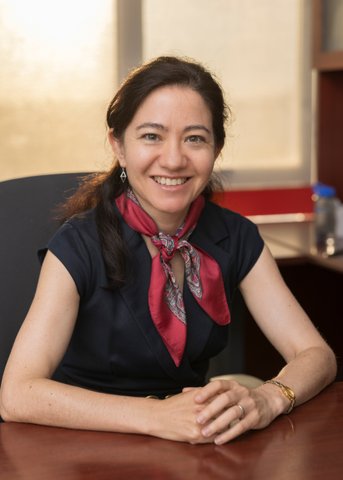 Lauren WilliamsDwight Parker Robinson Professor of Mathematics · Harvard University
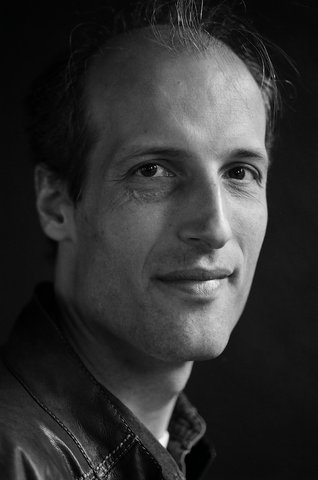 Martin HairerProfessor of Pure Mathematics · EPFL
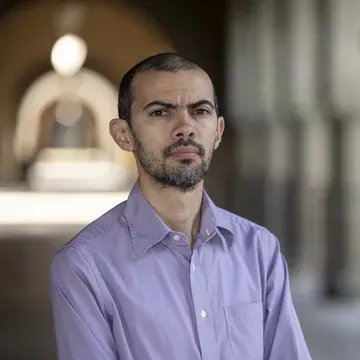 Mohammed AbouzaidProfessor of Mathematics · Stanford University
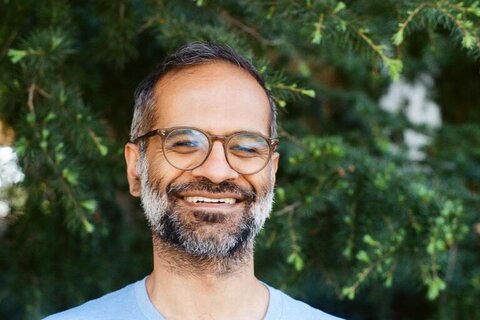 Nikhil SrivastavaProfessor of Mathematics · UC Berkeley
 Rachel WardMoncrief Distinguished Professor in Computational Engineering and Sciences, and Professor of Mathematics · University of Texas at Austin
 Thariq ShihiparNov 25 · Anthropic → OpenAI
 Ruochen WangNov 24
 Ayush JaiswalNov 24 · Joined Epochal
 Daniel D. JohnsonNov 24 · Transluce → Thinking Machines
 Deepak SampathNov 24 · Ultragenyx → Peptone
 Guodong ZhangNov 24 · xAI → Epochal
 Sarah SchwettmannNov 24 · Transluce → Thinking Machines
 Yuke ZhuNov 24 · UT Austin → Princeton University
 Zihang DaiNov 24 · xAI → Epochal