中文

AI FOR SCIENCE · INTERVIEWS

Radical Numerics' Eric Nguyen: biology is not short of data, it is short of models that pull the signal out

The Generalist · 1:22:14 · Open on YouTube ↗
Guest
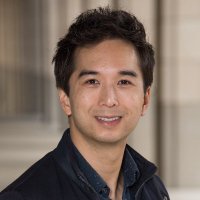
Eric NguyenCo-founder and CEO, Radical NumericsProfile, roles and records →
Company
Radical NumericsOrganisation page: funding, people, research →
Source
The Generalist ↗Published · 1:22:14
Core signal

Nguyen says there is more public DNA than all the text on the internet, while the models applied to biological data today are 'as strong as linear regression', so the bottleneck sits on the modelling side rather than in collecting more data. He also says design and defence belong in one company: a model that can write DNA lowers the barrier to making dangerous things, so whoever works on defence has to stand at the frontier of design.

What this adds

The interview gives several things the record did not carry: Evo 2's safeguard was removing eukaryotic viruses that can infect humans, while genes and proteins from bacterial pathogens stay in the training database; the company meant to publish its pathogen detector as an open API and biosecurity experts talked it out of it, because a dangerous-or-not answer is a reward signal an attacker can optimise against; access now goes first to partners in the US government; wet work is outsourced to CROs while its own lab comes 'pretty soon'; and Greg Brockman took a four-month sabbatical to work on Evo 2. He also gives, for the first time outside the company's own post, an account of Omnii reproducing an Alzheimer's result.

Current boundary

All of it is his account, with no new figures, benchmark or paper. His description of the Alzheimer's recapitulation does not line up with the company's own post of June: he speaks of ranking which genes most likely cause the disease, while the post picks out which variant actually does something across nine loci; he says mid-training and post-training drew the knowledge out, and the post says that nine-loci result comes from sequence alone. Neither 'more public DNA than all text on the internet' nor 'nothing but AlphaFold is stronger than linear regression' comes with a source or a measure, and this page checked neither. No date is given for its own wet lab.

01

What they said

  1. DNA as the base, the other omics as different sensors on one system

    ▶ 7:02

    He says most biological AI works one modality or one speciality at a time, protein structure prediction being its most successful branch, while Radical wants one system that reads DNA, RNA, proteins, epigenomics and metabolomics together. His reasons are two. In information terms, everything needed to make an organism is in the DNA. In practice, going from DNA alone to every property may be intractable, and the other modalities are a ready shortcut, an imprint of what the physical world did: the three-dimensional structure of DNA, for instance, tells a model directly that two sites a million letters apart sit next to each other. He likens the modalities to the several sensors used to fix a position: none is accurate on its own, and you combine them to triangulate the real one.

  2. His 'hot take': biology has too much data and models too weak

    ▶ 47:45

    He says the amount of public data is not the problem: DNA alone is 'internet scale', more than all the text online and, counted in raw tokens, 'orders of magnitude more', with the other omics adding more again. The problem is the models put on that data, which, apart from AlphaFold, he says are about 'as strong as linear regression or logistic regression' and plateau as data and compute go up. So Radical works first on modelling and pre-training, squeezing the public data and keeping expensive, clinically relevant labelled data for post-training. Generating supervised data in-house to get around a weak model, he says, is what bankrupts a company.

    “I agree that there's a data problem, but my hot take is there's not a lack of data. There's too much data in bio.”Eric Nguyen
  3. Reading about people doing science is not doing science

    ▶ 29:20

    He says the way frontier labs do science now is to reason and orchestrate in natural language, the way a person does, and to call bioinformatics pipelines and specialised models when raw data has to be handled, because human annotation of raw scientific data is far sparser. On his account there is a ceiling to learning science by reading textbooks, journals and lab notebooks: more of the facts are still in raw data nobody has written up, and he expects the frontier labs to work out that training directly on scientific data is more efficient. This is what he worked on through his PhD, and he says he saw language models as a new kind of microscope.

    “It's reading about humans doing science versus doing the science itself.”Eric Nguyen
  4. Selling the reading first, with four markets open at once

    ▶ 1:05:10

    He splits the capability into reading and writing: reading DNA to make predictions is the easier first step, and generating or writing is harder. So what comes first is interpreting the genome, helping pharmaceutical companies judge which target and which disease to put R&D money behind, plus cancer detection and diagnostics. Taking a stretch of DNA and judging its properties and how pathogenic it is runs the same way for biodefence, which he says is naturally an API business. The company therefore keeps four directions open at once, pharmaceuticals and drug discovery, diagnostics, synthetic biology and biodefence, which he says no single company does together, and he compares the route to the frontier labs: ship a general tool, see where users take it, then go deeper there.

  5. Verification happens in the wet lab: outsource first, build later

    ▶ 58:04

    He agrees verification is the bottleneck and says it will stay one for some time. The present answer is partnerships: routine experiments go to CROs, the bespoke work stays in house, and he says the timeline for its own wet labs is moving earlier because the modelling side has run faster than expected, so they will likely have their own 'pretty soon'. The other way around it is retrospective work: take a published result and see whether the model reaches the same conclusion on its own, which he treats as a bridge to real wet-lab experiments. His example is the Alzheimer's section of the Omnii preview: a paper spent two years of wet-lab work establishing which genes are most causal, and he says a colleague days into the job reproduced the same ranking with Omnii in about two days.

  6. Design and defence cannot be separated, so release policy is the only valve

    ▶ 1:10:14

    At Evo and Evo 2 they were PhD students whose default was open source, and the safeguard was removing from the training data the eukaryotic viruses that can infect humans; he says that is one kind of safeguard only, and genes and proteins from bacterial pathogens are technically still in the database. His argument is that a model able to rewrite the substrate of life necessarily lowers the barrier to making dangerous things, and leaving data out of the model does not stop that, so one company has to push design and defence together, since whoever works on defence has to know the frontier design capabilities or will not know what to defend against. Access to the models is handled more carefully now, and he says the balance they hold today is to get the defensive capability to partners in the US government first.

    “If you're going to build models with such capabilities to control the substrate of life, you're going to lower the barrier to making dangerous things.”Eric Nguyen
Why a public 'is this DNA dangerous' endpoint helps an attacker
  1. The gapHe says there is no publicly available AI-side tool that detects dangerous pathogens, so the company's plan was simply to host one as an API.
  2. The endpoint answers yes or noThe model looks at a stretch of DNA and says whether it is dangerous and how pathogenic.
  3. A yes or no is a reward signalBiosecurity experts told them not to do it: a yes-or-no judgment you can query repeatedly is a verifier the design side can optimise against.
  4. So the question becomes who gets itThe company controls access instead, giving it to partners in the US government first, and he says this is not settled once and will change as capabilities do.

All four steps are his own account; there is no third-party description and no partner is named.

02

What changed

  • Prior public record

    The timeline's $50M seed round (2026-06-15) says the money goes to larger models, more researchers and compute, leaves both early partnerships unnamed (a cancer-detection company and a US national lab working on pathogen detection), and records that the revenue mix is, in the CEO's words, not worked out.

    This interview adds

    He puts an order on what is sold: the reading tasks first, helping pharmaceutical companies choose targets and diseases, plus cancer detection and diagnostics, and an endpoint that judges how pathogenic a stretch of DNA is, which he says is naturally an API business; writing and making drugs come after more modalities. Partners and prices are still absent.

  • Prior public record

    The timeline's Omnii preview (2026-06-15) carries the benchmarks the company ran itself: AUROC 0.975 on ClinVar noncoding single-letter variants against 0.909 for CADD and 0.911 for Evo 2 40B, plus copy-number and TraitGym scores, a design method and attention maps. It does not carry the nine-loci experiment.

    This interview adds

    He gives that experiment a backstory: a paper took two years of wet-lab work to establish which genes are most causal, and a colleague days into the job reproduced the same ranking with Omnii in about two days, with the model never having seen Alzheimer's labels. The company's June post describes something else: in a massively parallel reporter assay in microglia derived from human iPS cells, the top statistically fine-mapped variant at nine loci is never the functional one, Omnii ranks the functional variant in the top three every time and first at six, CADD ranges from first to sixteenth, and the post states that this step works from sequence alone.

  • Prior public record

    The timeline's Evo 2 entry (2026-03-04) records the open foundation model: roughly nine trillion base pairs and a one-million-token context. It says nothing about what was kept out of the training set, or how the team decides what to release.

    This interview adds

    He says the safeguard then was removing eukaryotic viruses that can infect humans, while genes and proteins from bacterial pathogens stay in the database; that Greg Brockman took a four-month sabbatical to work on Evo 2 with them; and that the company is now more careful with access, giving it to partners in the US government first rather than releasing it openly.

  • Prior public record

    The timeline has no entry for that phage genome: a separate team using Evo to generate a full phage genome that was synthesised into a working virus appears only in a commentary entry of 2026-09-23, which is after this episode.

    This interview adds

    He calls it the turning point for the company and says it is what made the team decide to work on design and defence together. He names neither the team nor a date.

03

Why it matters

A bio-model claim can be asked first whether more data makes it better

His test is not a single score but the curve: as data and compute go up, does performance keep climbing or flatten. Asked that way, 'we measured one more modality' and 'our model gets stronger with scale' are two different claims. He passes only AlphaFold and puts the rest on the flattening side, which is his judgment, with no basis of comparison given in the interview.

If the reading sells first, money and jobs land on variant interpretation and detection

His route is to sell genome interpretation and detection first and talk about making drugs later, through APIs and models tuned for pharmaceutical companies rather than carrying a drug of its own into the clinic. That is a different shape of company from the one proven path in biotechnology, going deep on a drug all the way to trials, and he says it is the company's bet. For a reader it means what becomes checkable next is contracts and deployments, not a pipeline.

If the capability is inseparable, safety lands on how access is handled

His argument moves the valve from the model to the release: taking data out does not stop it, and a detector can itself serve as a verifier, so what can be asked is who received what, under which checks, and who does the checking. That is also the part that can be followed: a named deployment on the defence side is easier to verify than a statement of capability. That is our reading, not a checklist he gives.

04

Claims and boundaries

ClaimWhose voiceWhere it stands

Omnii is their current-generation genome language model, built on DNA and taking other biological contexts as input.

Current system

His description; the company's June preview post describes DNA plus conservation tracks and a two-million-base context.

One system learning DNA, RNA, proteins, epigenomics and metabolomics together; he says biology has dozens of modalities and calls it 'the ultimate multimodal problem'.

Target

He says this is the capability the company is going after, and does not say which modalities are in the model already.

Apart from AlphaFold, models applied to biological data are 'as strong as linear regression or logistic regression' and plateau as data and compute grow.

Guest's judgment

His judgment; he names no model and gives no basis of comparison.

There is more public DNA than all the text on the internet, orders of magnitude more in raw tokens, with the other omics adding more again.

Industry context

He gives no source or method of counting, and this page did not check it.

About 1.5% to 2% of the human genome codes for proteins and the rest is mostly regulatory; three billion letters are the equivalent of 30,000 books.

Industry context

The first half is standard in the field; the conversion into books is his own comparison.

A colleague days into the job reproduced, with Omnii in about two days, the causal-gene ranking a paper took two years of wet-lab work to reach, with the model never having seen Alzheimer's labels.

Company-reported

His account only. The company's June post describes picking out the functional variant across nine loci (top three every time, first at six, CADD first to sixteenth) and says that step works from sequence alone, where he speaks of a gene ranking and of mid-training and post-training drawing the knowledge out. The medRxiv paper said to be reproduced was not read here.

Evo and Evo 2's safeguard was removing from the training data the eukaryotic viruses that can infect humans; genes and proteins from bacterial pathogens are technically still in the database.

Company-reported

Stated by him; he adds that this kind of safeguard cannot cover every dangerous sequence.

Routine wet work goes to CROs and bespoke work stays in house; he says the timing of its own wet labs is moving earlier and they will likely have one 'pretty soon'.

Target

No date, location or scale.

The access arrangement now is to get the defensive capability to partners in the US government first, rather than the open release Evo 2 had.

Current system

His account, with no agency, contract or date named.

How to release design and defence capabilities together is not settled; the public pathogen-detection API the company intended was talked down by biosecurity experts, because a yes-or-no judgment amounts to a reward signal.

Not yet closed

He says it is not settled once and will change as capabilities do; he names no expert.

He says government has 'a lot of talk' on biological risk 'without the action involved', frontier labs have taken it up more recently, and some on Capitol Hill have engaged.

Guest's judgment

His judgment, from someone who calls himself an optimist; no bill, agency or meeting is named.

Greg Brockman took a four-month sabbatical to work on Evo 2 with the team; Eric Horvitz, Microsoft's chief scientific officer, is an advisor to the company.

Industry context

Both come from him; the advisor role matches the advisor list on the company's own About page, read on 2026-11-01, and no second source was found here for the sabbatical.

05

What to watch next

  1. Whether the Alzheimer's recapitulation is written up: the paper reproduced, the ranking the model gave, and how the two were compared.

    Would show up as A paper or post naming the study, giving the model's ranking and how it was scored, and saying whether it ranks genes or variants.Still open The company's batch of posts of 20 October does not carry it; the June post describes the nine-loci variant selection, from sequence alone.
  2. Whether the company has a wet lab of its own, what is measured there and who runs it.

    Would show up as A company statement naming the lab's location, which experiments run there and what still goes to CROs.Still open In the posts of 20 October, Aptamino makes and measures the three antibody rounds and Lawrence Livermore runs the plate assay for the rare earth work, both partners' labs; nothing public describes a wet lab of the company's own.
  3. Whether there is a named deployment on the defence side: who uses the pathogen-screening model, and what the access check is.

    Would show up as A statement from the company or the agency naming the deployment: which model, who may call it and who does the checking.Still open The posts of 20 October cover design and prediction (phage, antibodies, regulatory variants, rare earth proteins), none of them a screening tool in use; the company's About page gives only a biodefence contact address.
  4. Whether the multimodal fusion becomes a measured result: one model on tasks beyond DNA, compared side by side with models built for that modality.

    Would show up as Held-out test sets, a comparison with modality-specific models, and lab measurements rather than predictions alone.Partly answered On 20 October: antibody sequences entered the model after pretraining and Aptamino measured all three rounds, but there is one target and the gains sit inside overlapping confidence intervals; the regulatory genome work takes lab measurements as an input, and the scores are still the company's own runs.
  5. Whether biodefence and attribution problems become common subjects at machine-learning conferences within the year.

    Would show up as Papers or workshops at ICML or NeurIPS on DNA attribution, watermark detection or pathogen screening.Checked on Said: 'in a year from now', he hopes these are as common at ICML and NeurIPS as video generators
↳

After the interview

Later evidence that tests or limits what was said, and targets whose date has passed.

  • The company reports that phage variants Omnii-1 designed were given, under compassionate use, to one patient with a drug-resistant infection, with the model rewriting one stretch of the tail-fibre protein the T7 phage uses to recognise E. coli. Writing has reached a person, which is the step he says partners verify; but every measurement is the company's own, there is one patient, and no clinical course or outcome is disclosed, so nothing here tests whether it worked.Timeline entry →

  • The company and Aptamino ran three rounds of single-domain antibody design, with Aptamino making and measuring each round, and two designs binding tighter than the test can read. Antibody sequences came into this genome model after pretraining, so this is the first measured evidence for two things he describes, adding modalities and letting a partner do the wet work; but there is one target, its identity is withheld, and the gains over other models sit inside overlapping confidence intervals.Timeline entry →

  • The company reports Omnii-1 scoring above AlphaGenome and Borzoi at telling which changes in non-coding DNA actually do something, and taking lab measurements as an input rather than only predicting them. This is the reading task he puts first; the scores are still the company's own runs, and AlphaGenome's numbers are taken from its paper rather than measured side by side.Timeline entry →

Source and how it was read

Read 2026.11.01 What was read is the machine transcript on the episode page (Substack's own, with speakers named: Eric Nguyen and the host, Mario Gabriele), read through in full. That transcript drops about twenty passages of a few seconds to half a minute; those gaps were filled by running the audio through a local Whisper model, which was also used to check every quote, and the most important of them is the three minutes where he describes the Alzheimer's recapitulation. The transcript writes the model's name 'Omni' where the company writes Omnii, and this page follows the company. YouTube returned 429 to this session, so neither its captions nor its page was read; the length and the publication date come from the show's Substack API (4,933.956 seconds, 2026-08-04). His account of the Alzheimer's work was checked against the full text of the company's Omnii preview post of 15 June 2026, and the advisor list against the company's About page, read on 2026-11-01; the Lee et al. medRxiv paper was not read. Open the interview ↗The Generalist's episode page, with the full transcript ↗