Research
Google DeepMind and Caltech's AlphaProtein Novo designs an enzyme that makes piperidine at 99:1, where none of 188 natural and engineered variants beat 30:70
Evidence 4/5: Tested in the physical worldbioRxiv ↗Google DeepMind · Caltech


Research
Evidence 4/5: Tested in the physical worldbioRxiv ↗Google DeepMind · Caltech
Zachary Wu, Josh Abramson and colleagues run a diffusion model that writes an enzyme's backbone and sequence around a catalytic motif, then filter candidates on AlphaFold 3 predictions. Frances Arnold, who won the 2018 Nobel for directed evolution, is on the byline and her Caltech lab did part of the wet work. Of 188 natural and engineered heme proteins screened, nine were active and none passed a 30:70 piperidine-to-pyrrolidine ratio; design GDM_NT_270 reached 99:1 at 94% enantiomeric excess over 22 turnovers.
Designs were expressed, purified and measured, and knocking out active-site residues abolished activity in 14 of 19 serine esterase mutants, so the catalysis is the designed one. They win on selectivity and durability, not speed: a designed DEHP esterase is 14-fold more active at 90 °C than at room temperature, where two natural ones are dead, but at room temperature it reaches only 6% of a natural enzyme, and the paper says de novo rates stay orders of magnitude below natural or evolved enzymes. The 360,000 M-1s-1 esterase has a natural serine-esterase fold; the best with none is 4,900.
The preprint went onto bioRxiv on 5 October 2026 from Google DeepMind and Caltech, with 37 authors: Zachary Wu, Josh Abramson and Thomas Frerix among eleven equal first authors, Pushmeet Kohli and Jue Wang corresponding, and Frances Arnold, the 2018 Nobel laureate for directed evolution, on the byline. For each reaction they write a catalytic motif out of a hypothesised mechanism: a few sidechain groups with the reaction's intermediate beside them. A diffusion model builds a protein that holds the motif, writing backbone and sequence at once; candidates are filtered on AlphaFold 3 predictions.
The piperidine test is a head-to-head. Under nitrene transfer, (5-azidopentyl)benzene closes into either the five-membered pyrrolidine or the six-membered piperidine, one of the commonest nitrogen rings in approved drugs. Screening 188 natural and engineered heme proteins, the standard route to a biocatalyst, left nine above 5% of wild-type TamPgb's activity, none past 30:70. A first round of 86 designs produced selective enzymes both ways, 4:96 for pyrrolidine and 94:6 for piperidine; a second round of 90 aimed at piperidine passed five, all selective, the best at 99:1 with 94% enantiomeric excess and 22 turnovers.
DEHP, the other campaign, is a plasticiser nearly insoluble in water, about 0.3 mg per litre, whose solvents kill most natural esterases. Motifs came from natural hydrolase crystal structures, with DEHP modelled onto the catalytic serine. Over three rounds 11% of novel-scaffold designs passed, against 39% of reused ones. At room temperature the designs lose, the best reaching 6% of the natural control QHH after four hours. GDM_DEHP_376, 191 amino acids long, is 14-fold more active at 90 C than at room temperature, where QHH and the thermophile esterase Q7SIG1 do nothing.
The method work ran on model reactions: 1,536 Kemp eliminase designs over seven rounds, best efficiency 14,600 M-1s-1 at pH 7.5 (higher is faster), and 1,569 serine esterase designs, best 360,000. That fastest esterase's scaffold and active site resemble natural serine esterases in the Protein Data Bank; such designs are 16.4% of the novel-scaffold esterases but six of the top seven, and the best outside that shape reaches 4,900. Knocking out active-site residues abolished activity in 14 of 19 esterase mutants, including every mutation of the three catalytic ones.
The authors' limits are blunt: building a motif takes expertise their filters cannot score, a passing design can take many samples, and de novo activities stay orders of magnitude below natural and evolved enzymes, which they read as showing their models do not meaningfully model the physics of catalysis. The sequences and structures are held until publication, so no outside lab can repeat this yet, and the conclusions claim only that these designs beat natural sequences as engineering starting points.
Happened October 5, 2026Added October 7, 2026Edited by Dekun Sun
A new experiment or physical execution is performed because of the result: something is synthesized, measured, or run on physical hardware beyond ordinary computing, such as a quantum processor, a robot or a lab instrument.
Who evaluated it Internal: Evaluated by the originating team.
How far it was read bioRxiv preprint, read in full
 Google DeepMind
Ten public directions, from a 9-billion-variant prediction database to closed-loop synthesis on a real CVD reactor. The London materials lab is being built; drug design sits in Isomorphic Labs.
 Caltech
Private research university in Pasadena, California, which manages NASA's Jet Propulsion Laboratory.
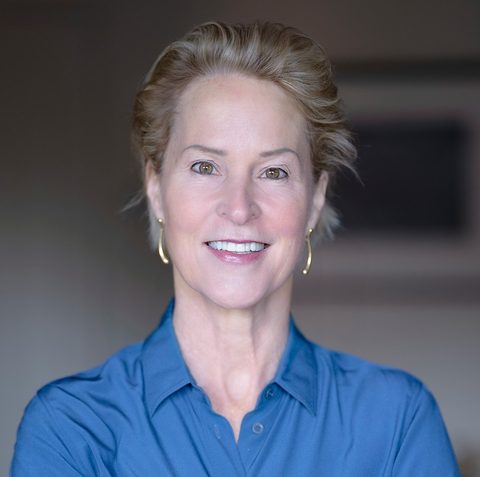 Frances H. ArnoldLinus Pauling Professor of Chemical Engineering, Bioengineering and Biochemistry; Director, Donna and Benjamin M. Rosen Bioengineering Center · Caltech
 Josh AbramsonGoogle DeepMind
 Jue WangResearch Scientist and Co-lead of the Protein Design Team · Google DeepMind
 Pushmeet KohliVP of Research · Google DeepMind
 Zachary WuStaff Research Scientist · Google DeepMind
 Thariq ShihiparNov 25 · Anthropic → OpenAI
 Ruochen WangNov 24
 Ayush JaiswalNov 24 · Joined Epochal
 Daniel D. JohnsonNov 24 · Transluce → Thinking Machines
 Deepak SampathNov 24 · Ultragenyx → Peptone
 Guodong ZhangNov 24 · xAI → Epochal
 Sarah SchwettmannNov 24 · Transluce → Thinking Machines
 Yuke ZhuNov 24 · UT Austin → Princeton University
 Zihang DaiNov 24 · xAI → Epochal
