Research
GNoME expands the computed landscape of stable materials
Evidence 2/5: ComputedContestedNature ↗Google DeepMind


Research
Evidence 2/5: ComputedContestedNature ↗Google DeepMind
DeepMind reports 2.2 million candidate crystal structures, including 380,000 added to a set judged most stable.
Materials screening reaches industrial scale while sharpening debate over what should count as a discovered material.
Anthony Cheetham and Ram Seshadri (UC Santa Barbara) examined a random sample of the predictions in Chemistry of Materials in 2024 and found "scant evidence" of compounds that are at once new, credible and useful. Many predictions put similar ions on separate sites, an order that the high temperatures of real synthesis would scramble.
The fragile word is not model but discovery: computational novelty and experimentally meaningful novelty are not the same claim.
Happened November 29, 2023Added September 12, 2026Updated November 2, 2026Edited by Dekun Sun
The result exists in software: a benchmark score, prediction, proof, generated candidate or simulated outcome. A benchmark that scores models belongs here even when its tasks are built from real measurements: ranking models on existing data is computing, not checking. So is a new benchmark or dataset released with models' scores on it, and a speed or accuracy measured by running software on ordinary computers: running code is computing.
Who evaluated it External: Evaluated, executed or reviewed by another party.
 Google DeepMind
Ten public directions, from a 9-billion-variant prediction database to closed-loop synthesis on a real CVD reactor. The London materials lab is being built; drug design sits in Isomorphic Labs.
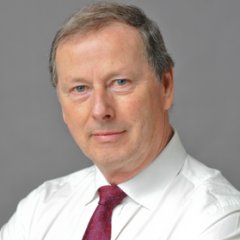 Anthony CheethamProfessor Emeritus and Research Professor, Materials Research Laboratory and Materials · University of California, Santa Barbara (Materials Research Laboratory and Materials Department)
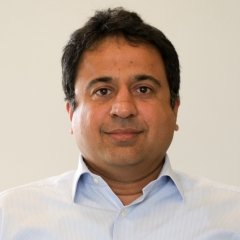 Ram SeshadriFred and Linda R. Wudl Professor in Materials Science; Distinguished Professor, Chemistry; Director, Materials Research Laboratory · University of California, Santa Barbara
 Thariq ShihiparNov 25 · Anthropic → OpenAI
 Ruochen WangNov 24
 Ayush JaiswalNov 24 · Joined Epochal
 Daniel D. JohnsonNov 24 · Transluce → Thinking Machines
 Deepak SampathNov 24 · Ultragenyx → Peptone
 Guodong ZhangNov 24 · xAI → Epochal
 Sarah SchwettmannNov 24 · Transluce → Thinking Machines
 Yuke ZhuNov 24 · UT Austin → Princeton University
 Zihang DaiNov 24 · xAI → Epochal