中文

AI FOR SCIENCE · NOV 19

From better modelsto tighter scientific loops

A map of AI4S people, research, companies and capital, read at source.

EditorDekun Sun
Scientific feedback loopA closed loop connecting Model, Decide, Interact and Update.
FILTER TIMELINE BY STAGE ↓
EditorDekun Sun

2026

: timeline +40 · commentary +8

An alphaXiv-led study runs 936 AI agents from 35 labs as one research community for twelve weeks, and they publish 936 computational studies with code and data

Rehaan Ahmad (alphaXiv), Samuel Schmidgall (UCSF) and colleagues report that 35 human-run labs deployed 936 autonomous agents on a shared preprint server from August to November 2026. The agents published 936 studies with code and data, sent 9,500 messages and started their own peer-review journal. An agent audit traced 23,811 reported numbers to output files: 93.8% matched exactly and the rest differed only in rounding or format. Two LLM judges rated agent papers above matched human arXiv preprints on rigor and below them on novelty.

What happened: Rehaan Ahmad (alphaXiv), Samuel Schmidgall (UCSF) and colleagues report that 35 human-run labs deployed 936 autonomous agents on a shared preprint server from August to November 2026. The agents published 936 studies with code and data, sent 9,500 messages and started their own peer-review journal. An agent audit traced 23,811 reported numbers to output files: 93.8% matched exactly and the rest differed only in rounding or format. Two LLM judges rated agent papers above matched human arXiv preprints on rigor and below them on novelty.

Why it matters: It records hundreds of AI agents doing research as a community over three months, not one agent on one problem, and it separates where their output can be trusted from where it cannot. Numbers checked against code and output files matched; prose did not: 68% of 552 null-result abstracts called a non-significant result proof of no effect. Text-only AI reviewers missed flaws, while turning 156 major objections into scripts run on the data overturned the headline in 77. The authors' lesson for anyone using agents in research: verify against executable artifacts, not text.

Evidence and limits: All studies were computational, with no wet lab; local model experiments mostly used open models of at most 14 billion parameters. Cohort agents ran the audits, which check that numbers match saved outputs, not that experiments were valid; the clinical and solar audits are not yet expert-reviewed. The human comparison used two Gemini models as judges, and the agents' overall edge came entirely from Lab 1. The ban on human coding relied on participants' own disclosure. A preprint.

By Rehaan Ahmad, Samuel Schmidgall

MegaRobo, which builds robotic and AI systems for labs and factories, raises nearly $200M with the Oman Investment Authority in the round

This is large money for the lab-automation side of AI for science, the robots and software that run the experiments models propose. MegaRobo says it has delivered such systems to more than 500 customers, from multinational drugmakers to research institutes, and that its own Kunpeng lab runs the wet-lab tests for Poreva Open, a protein-design challenge it launched with Tencent Cloud and Twist Bioscience. The money goes to R&D and to its business in China, Europe, North America, the Middle East and Southeast Asia.

What happened: MegaRobo, led by founder and CEO Yuqing Huang, announced the round on 19 November with no stage or lead named. The Oman Investment Authority came in; existing investors Asia Investment Capital, whose CEO Erfei Liu spoke for it, Granite Asia and Sinovation Ventures put in more; CMB International, Suzhou Capital Group and Sanjiang Zhaoshang Group joined. Founded in Beijing in 2016, it sells automated lab systems for drug research and AI inspection for chip lines, and says it has raised about $600M in all.

Why it matters: This is large money for the lab-automation side of AI for science, the robots and software that run the experiments models propose. MegaRobo says it has delivered such systems to more than 500 customers, from multinational drugmakers to research institutes, and that its own Kunpeng lab runs the wet-lab tests for Poreva Open, a protein-design challenge it launched with Tencent Cloud and Twist Bioscience. The money goes to R&D and to its business in China, Europe, North America, the Middle East and Southeast Asia.

Evidence and limits: The amount, the investor list, the customer counts and the $600M total are the company's own announcement; it gives no valuation and no stage. The business is broad: the company sells the same technology for chip inspection as for drug research, so not all of the money goes to science. Its June 2025 Hong Kong listing application, as 36Kr reported it, showed 930M yuan of revenue in 2024.

Commentary

1,900 AI-for-science papers in one week, five questions a test error cannot answer

Jorge Bravo-Abad argues that a small error on held-out data does not show a model is right about what it was built to predict. Changing only the labels' dispersion correction put a perovskite's last phase transition more than 150 K below experiment; one force field's error more than doubled on molecules it had not seen.

Argument: Jorge Bravo-Abad argues that a small error on held-out data does not show a model is right about what it was built to predict. Changing only the labels' dispersion correction put a perovskite's last phase transition more than 150 K below experiment; one force field's error more than doubled on molecules it had not seen.

Why read: Five controls anyone can run on their own model: vary the label source, compare the error with the energy scale of the question, report error by distance from the training data, test against a sham or a null case, and compare a generated ensemble with the runs it was trained on.

Discovery at Scale ↗Jorge Bravo-Abad

OpenAI says its models improved AMD's flagship GPU designs by up to 14% on power, performance and area, with some changes in a design sent for manufacturing

If AMD's own account matches, a model's changes have reached a second chipmaker's production design files, not only the lab's own chip; OpenAI puts the GPU work at about a year of progress in under five months. It follows Jalapeño, where OpenAI estimates that changes proposed by its models, starting with GPT-4o in early 2025, cut standard-cell area by about 13% in the vector unit and 10% in the matrix unit.

What happened: OpenAI says its models, rewriting the code that describes a chip's circuits, improved the power, performance and area of AMD's flagship GPU designs by up to 14% over heavily optimised baselines, in under five months, checking each rewrite with Synopsys tools. According to OpenAI, AMD has put some changes into a design recently sent for manufacturing and others into files for future versions, and verified single-digit gains in key blocks of its next flagship CPU. Similar changes to OpenAI's own Jalapeño chip were proven on silicon.

Why it matters: If AMD's own account matches, a model's changes have reached a second chipmaker's production design files, not only the lab's own chip; OpenAI puts the GPU work at about a year of progress in under five months. It follows Jalapeño, where OpenAI estimates that changes proposed by its models, starting with GPT-4o in early 2025, cut standard-cell area by about 13% in the vector unit and 10% in the matrix unit.

Evidence and limits: Every figure is OpenAI's own account; AMD has published nothing, the GPU and CPU are not named, and no model is named for the AMD work. Up to 14% is the best case on circuit-level measures, not a faster chip, and the changes in AMD's design have no silicon yet.

Anthropic prices its IPO at $83 a share, above its $70 to $78 range, and sells 980 million shares

The prospectus as amended on 17 November says the money is for general corporate purposes, among them compute and infrastructure and hiring and keeping staff; it names no science programme. Alongside the offering, Google, NVIDIA, AMD, Broadcom, Micron, Microsoft and TSMC agreed to buy $26.0B of non-voting stock at the IPO price. For science, the money goes to a lab whose October filing said frontier AI may extend to scientific research and lab robotics, and whose chip and cloud suppliers are buying in at the same price.

What happened: Anthropic priced its initial public offering at $83.00 a share on 18 November: 980,000,000 Class A shares, 956,351,354 sold by the company and the rest by existing stockholders. The roadshow, launched on 10 November, had offered 825,000,000 shares at $70 to $78. At $83 the company's own shares come to about $79.4B (price times shares, before fees; the announcement gives no total). Trading on Nasdaq as ANT is expected on 19 November and closing on the 20th. Underwriters may buy up to 147,000,000 more shares within 30 days.

Why it matters: The prospectus as amended on 17 November says the money is for general corporate purposes, among them compute and infrastructure and hiring and keeping staff; it names no science programme. Alongside the offering, Google, NVIDIA, AMD, Broadcom, Micron, Microsoft and TSMC agreed to buy $26.0B of non-voting stock at the IPO price. For science, the money goes to a lab whose October filing said frontier AI may extend to scientific research and lab robotics, and whose chip and cloud suppliers are buying in at the same price.

Evidence and limits: The price and share counts are Anthropic's announcement. The final prospectus had not been filed on 18 November, so net proceeds, the underwriting discount and the share count after the offering are not yet stated at $83. The $26.0B placement and the use of proceeds are read from the 17 November amendment, which assumed $74 a share. The announcement gives no valuation. The offering closes only once customary conditions are met.

↳ TSMC's board approval; the amended prospectus lists TSMC Partners for about $500M of the placement TSMC's board approves up to $500 million each for stakes in Anthropic and OpenAI, and up to $500 million for a semiconductor investment company

Google releases Gemini 4 Neon, the middle model of its Gemini 4 family, and reports it ahead of Claude Opus 5.5 and GPT-6.2 Sol on three science and maths benchmarks

Argon's general release came with science case studies and free access for scientists by application, which Carbon later joined; Neon's science claim is three benchmark scores and a price. Google says that at its default thinking level Neon costs 32% less per task than Carbon, which matters to teams that run agents on scientific computing tasks all day. It also says its biosecurity and cyber safeguards refused 0% of Terminal-Bench-Science tasks, a point for labs whose legitimate biology or chemistry work gets blocked by such filters.

What happened: Google released Gemini 4 Neon on 18 November in the Gemini API, Gemini for business, Antigravity and the Gemini app, at $3 per million input tokens and $15 per million output tokens, with a 1 million-token context window. Koray Kavukcuoglu's post reports 70.5% on Terminal-Bench-Science 0.1, 84.0% on RiemannBench and 71.3% on HLE-Diamond. Google's table gives Claude Opus 5.5 63.3%, 80.0% and 67.9% on the same three, and GPT-6.2 Sol 68.0%, 80.0% and 64.0%.

Why it matters: Argon's general release came with science case studies and free access for scientists by application, which Carbon later joined; Neon's science claim is three benchmark scores and a price. Google says that at its default thinking level Neon costs 32% less per task than Carbon, which matters to teams that run agents on scientific computing tasks all day. It also says its biosecurity and cyber safeguards refused 0% of Terminal-Bench-Science tasks, a point for labs whose legitimate biology or chemistry work gets blocked by such filters.

Evidence and limits: Every figure is Google's own, from its launch post and a table that compares two rival models only. The model card's results appear as an image, and the methodology page it points to was not read. The post names no scientific result, user or case study made with Neon and does not say whether the free-access plan for scientists covers it. Terminal-Bench-Science is at version 0.1.

By Koray Kavukcuoglu

Google DeepMind opens Genie 4 to Google AI Ultra subscribers through Project Genie, three weeks after its preview for trusted testers

The 27 October launch listed training environments for robots and agents among Genie 4's purposes. The first release beyond testers is a creation tool for consumers, and the post names no robotics, agent-training or scientific use. Anyone judging world models as simulators gets a model to try, not a measurement of how accurate it is.

What happened: Google began rolling out a new Project Genie to eligible Google AI Ultra subscribers on 18 November, which it calls first-time access to Genie 4; Google AI Pro members can join a waitlist. Users can type a prompt mid-session to change the world they are in, with audio generated in real time. Genie 3 stays in the model picker and now runs up to 3 minutes per generation, up from 60 seconds. A Project Genie agent builds worlds from a conversation, and a gallery lets users publish and remix them.

Why it matters: The 27 October launch listed training environments for robots and agents among Genie 4's purposes. The first release beyond testers is a creation tool for consumers, and the post names no robotics, agent-training or scientific use. Anyone judging world models as simulators gets a model to try, not a measurement of how accurate it is.

Evidence and limits: No benchmark or accuracy figure. Google says Genie 3 and Genie 4 remain frontier research and lists open problems: camera latency, intricate physical interactions, real-time audio precision and long-term scene permanence. It gives no session length for Genie 4 and does not say which Ultra subscribers are eligible.

By Diego Rivas, Pavan Kumar

Recursion agrees a Phase 3 design for REC-4881 with the FDA, counting removal of an adenoma of 10 mm or more as an event in the primary endpoint

FAP has no approved drug, and Recursion says REC-4881's use in it was found by phenotypic screening with its AI models. Counting a large adenoma's removal as an event gives the trial something that happens regularly: the release says such excisions should contribute meaningfully to the event rate, and the study is event-driven. Najat Khan, the chief executive, calls the FDA's agreement to it a key milestone. For Recursion, it puts one programme from its platform on a defined path to a registrational readout.

What happened: Recursion said on 18 November that it has aligned with the FDA on a registrational Phase 3 trial of REC-4881, its oral MEK1/2 inhibitor for the inherited polyp disease FAP. The primary endpoint is event-free survival; an event is excision of an adenoma of 10 mm or more in the upper or lower gut, FAP-related surgery meeting set criteria, high-grade dysplasia or cancer, or death. About 200 adults whose colon has been removed are to be randomised against placebo at 4 mg from the second half of 2027.

Why it matters: FAP has no approved drug, and Recursion says REC-4881's use in it was found by phenotypic screening with its AI models. Counting a large adenoma's removal as an event gives the trial something that happens regularly: the release says such excisions should contribute meaningfully to the event rate, and the study is event-driven. Najat Khan, the chief executive, calls the FDA's agreement to it a key milestone. For Recursion, it puts one programme from its platform on a defined path to a registrational readout.

Evidence and limits: This is the company's account of the agreement; the FDA has published nothing. The dosing schedule is still to be set from the ongoing Phase 1b/2 TUPELO trial, and no new efficacy data were given.

Tesorai, founded by former Verily leaders, raises a $5.3M seed to reprocess raw mass spectrometry data from old and new protein studies

Most AI-for-biology money goes to models or to new experiments; this is a bet that the data already collected can be reread. The company says it reprocessed five public brain studies and recovered p-tau217, an Alzheimer's marker none of them reported, and plans to supply processed data to companies training biology models. The money is for more biopharma and research customers, tool partnerships and data beyond proteins.

What happened: Tesorai, a San Diego startup, raised a $5.3M seed, taking its total to $8M, reported TechFundingNews and SiliconANGLE. The investors are Perplexity Fund, IQT, South Central Ventures, New Stack Ventures, NextGen Venture Partners, f7 Ventures, VitalStage Ventures and ZAKA. Its software processes the raw files that mass spectrometry produces when it measures the proteins in a sample, from new and published studies, so results can be compared across them. Melissa Miao (CEO), Peter Cimermancic (CTO) and Charlie Kim (CSO) worked together at Verily.

Why it matters: Most AI-for-biology money goes to models or to new experiments; this is a bet that the data already collected can be reread. The company says it reprocessed five public brain studies and recovered p-tau217, an Alzheimer's marker none of them reported, and plans to supply processed data to companies training biology models. The money is for more biopharma and research customers, tool partnerships and data beyond proteins.

Evidence and limits: No company release was found; the round is media-reported. The p-tau217 recovery is the company's own account, not checked here.

Boltz raises a $110M Series A led by Bessemer Venture Partners

The post says the money goes to compute, data and more staff, to meet demand from partners. What the round prices is a business built on selling model runs rather than a drug pipeline: Boltz says six of the world's 20 largest drugmakers use the platform, among them Pfizer, GSK, Takeda and Bristol Myers Squibb, and that the molecular tokens it processes for paying customers have grown 50-fold since June. For scientists outside those companies, the earlier models' weights stay open and the newer models' do not, though Boltz Lab sells runs on them with a free tier.

What happened: Boltz PBC announced the round on 18 November, ten months after a $28M seed. Bessemer leads, and its post names Andrew Hedin and Byron Deeter as coming in with the round; existing investors Andreessen Horowitz, Amplify Partners, Zetta Venture Partners and Obvious Ventures all put in more, with Greycroft, F-Prime Capital, Hummingbird and Benchling new. The Cambridge company, founded by MIT researchers, publishes the open Boltz-1, Boltz-2 and BoltzGen models and sells its own BoltzMol-1 and BoltzProt-1 through Boltz Lab and an API.

Why it matters: The post says the money goes to compute, data and more staff, to meet demand from partners. What the round prices is a business built on selling model runs rather than a drug pipeline: Boltz says six of the world's 20 largest drugmakers use the platform, among them Pfizer, GSK, Takeda and Bristol Myers Squibb, and that the molecular tokens it processes for paying customers have grown 50-fold since June. For scientists outside those companies, the earlier models' weights stay open and the newer models' do not, though Boltz Lab sells runs on them with a free tier.

Evidence and limits: The amount, the investor list, the 50-fold token growth and the count of six of the top 20 drugmakers are all the company's own announcement. It gives no valuation, no revenue, no base for the token figure and names only four of the six drugmakers.

Commentary

Investing in Boltz

Jorge Conde and Zak Doric of a16z, backing Boltz's $110M Series A, argue that AI models for drug design should be sold by use, metered in "molecular tokens", rather than through bespoke pharma partnerships on a few targets. Scientists would budget model compute like sequencing reads or reagents, and keep what they design.

Argument: Jorge Conde and Zak Doric of a16z, backing Boltz's $110M Series A, argue that AI models for drug design should be sold by use, metered in "molecular tokens", rather than through bespoke pharma partnerships on a few targets. Scientists would budget model compute like sequencing reads or reagents, and keep what they design.

Why read: A clear statement of a third business model for drug-design models, beside owning a pipeline and signing target-by-target pharma deals: charge for use and leave the molecules with the customer. Its evidence is Boltz's own, relayed by its investors: weekly token use up about 50-fold in four months, models at Pfizer, GSK, Takeda and BMS, no revenue figure.

a16z ↗Jorge Conde and Zak Doric

Isomorphic Labs raises a $5B Series C co-led by Greenoaks and Sequoia Capital

The round comes six months after a $2.1B Series B, and the money is aimed at the stage the company has not reached: its own clinical trials. The release says proceeds will build clinical development infrastructure as candidates move toward trials.

What happened: Isomorphic Labs announced a $5B Series C, co-led by Greenoaks and Sequoia Capital with Andreessen Horowitz and other new investors; Alphabet and every existing investor took part. Demis Hassabis and Max Jaderberg spoke for the company, Neil Mehta for Greenoaks and Konstantine Buhler for Sequoia. The release reports positive preclinical results in oncology and immunology programmes and gives no valuation.

Why it matters: The round comes six months after a $2.1B Series B, and the money is aimed at the stage the company has not reached: its own clinical trials. The release says proceeds will build clinical development infrastructure as candidates move toward trials.

Evidence and limits: The amount and investors are the company's own release. No candidate, target or trial date is named, and no Isomorphic molecule is in a registered trial.

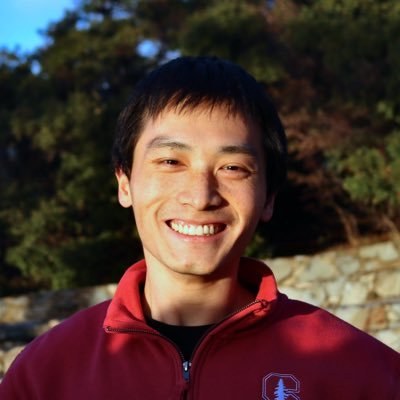
First Person Labs, founded by Stanford PhD Ken Liu, raises a $10M seed led by a16z for Second, a personal model its users own

Ken Liu announced the round with the launch of Second, which learns from a person's activity on their Mac and serves that context to the agents they choose. Besides a16z, he names Mozilla Ventures, Jeff Dean, Ram Shriram, Jeetu Patel, Percy Liang, J. Alex Halderman and Sanmi Koyejo. a16z's post, by Joel de la Garza and Martin Casado, names Erik Chi beside him.

What happened: Ken Liu announced the round with the launch of Second, which learns from a person's activity on their Mac and serves that context to the agents they choose. Besides a16z, he names Mozilla Ventures, Jeff Dean, Ram Shriram, Jeetu Patel, Percy Liang, J. Alex Halderman and Sanmi Koyejo. a16z's post, by Joel de la Garza and Martin Casado, names Erik Chi beside him.

Why it matters: Liu did his PhD at Stanford under Percy Liang and Sanmi Koyejo on language models and privacy, and did research at Google DeepMind; both advisors and Jeff Dean are among the backers. It is one more path from an AI lab's research on what models remember to a company, here one founded on the principle that a person's model of themselves belongs to them.

Evidence and limits: The amount is Liu's own post; a16z's post gives none and states no valuation. Second is a consumer product in early access with no line to scientific work stated.

Altrove runs 240 solid-state syntheses to test GPT-5.6 as a recipe ranker, and finds it picks the better recipe 72% of the time, mostly by reading the firing temperature

Derek van Tilborg, Joonatan Laulainen and colleagues at Altrove, a Paris materials startup, fired eight oxides under the same 30 conditions and measured each product's purity by X-ray diffraction; three had never been reported. Asked which of two recipes would give the purer product, GPT-5.6-Sol was right 72% of the time, from 86% on one oxide to 45%, below chance, on another. Where purity tracked temperature, its accuracy did too (Spearman 0.91). Hiding every chemical identity cost 0.04 of that accuracy; hiding the temperature fields cost 0.137.

What happened: Derek van Tilborg, Joonatan Laulainen and colleagues at Altrove, a Paris materials startup, fired eight oxides under the same 30 conditions and measured each product's purity by X-ray diffraction; three had never been reported. Asked which of two recipes would give the purer product, GPT-5.6-Sol was right 72% of the time, from 86% on one oxide to 45%, below chance, on another. Where purity tracked temperature, its accuracy did too (Spearman 0.91). Hiding every chemical identity cost 0.04 of that accuracy; hiding the temperature fields cost 0.137.

Why it matters: Labs are starting to let language models propose how to make a new material, and synthesis benchmarks are mostly built from published recipes, which omit failures. This one is measured on a shared grid, failures and unseen compounds included. Its answer is that the model works mainly as a temperature prior, useful at the start: replaying the grid as a campaign, it ordered recipes at 0.47 in round one, where a Gaussian process with nothing to fit sat below random, then lost that lead. A fixed temperature rule did worse than random on the oxide whose purity falls with heat.

Evidence and limits: A workshop paper (AI4Mat 2026) on one company's own experiments; a purity was recorded for 233 of the 240 attempts. Seven of the eight targets are not disclosed, to keep them out of model training, so the result cannot be checked from outside. Two versions of one model family were ranked, and the better scores on known than unknown oxides were not statistically conclusive. The campaign is a replay of the measured grid, not experiments run on the rankings.

By Derek van Tilborg, Joonatan E. M. Laulainen

WHO WENT WHERE

People

Carlo Sferrazza

Amazon FARETH Zurich

Assistant Professor of Robotics and Artificial Intelligence · Own post ·

Who went where, in their own words or their employer's; the person page carries the sources.

All people →

WHAT THEY SAID

Interviews

Geoffrey von Maltzahn · Monty (March Capital)

Geoffrey von Maltzahn says Lila's models, post-trained on under 2% of its own lab data, pass household-name models and PhD scientists

Geoffrey von Maltzahn, Lila's co-founder and CEO, says post-training on under 2% of the data from Lila's own autonomous labs lets its models pass household-name models and PhD scientists working open book; the first scaled AI science factory covers about five football fields, and the quarter of capacity opened to partners has sold out.

Max Jaderberg · No Priors (Sarah Guo and Elad Gil)

Max Jaderberg says every Isomorphic leaderboard carries a dotted line for experimental accuracy, and a model that reaches it need not go to the lab

Jaderberg says every leaderboard inside Isomorphic carries a dotted line for experimental accuracy, and the goal for each model is to reach it: once a model is there, that step need not be done in the real world. Public data repositories, he says, are mostly the byproduct of passive collection and badly biased, so the company generates its own; animal toxicity predicts only about 30% of human toxicity, and he would rather drop animals altogether. He will not give a date for the first clinical trial.

Žiga Avsec · Adam Gayoso · Google DeepMind: The Podcast

Google DeepMind's Žiga Avsec and Adam Gayoso say AlphaGenome 2 is almost always right when it flags a variant and misses most of the others

Two of AlphaGenome 2's authors say the model is almost always right when it says a DNA variant does something, and misses most of the others; what decides a prediction is whether that stretch of DNA is open rather than how far the variant sits from the gene; and the virtual cell is far enough off that they expect AGI first.

All 44 interviews →

THE FIELD AT A GLANCE

AI4S Map

If you are new to AI4S, start with these. You do not need a complete technical background; together they give a useful mental model of the field.

Start here

  • Jim Gray, 2009: One of the classic starting points for data-intensive science. Gray argued that after experiment, theory, and computational simulation, data-intensive exploration was emerging as another scientific paradigm. Much of today’s AI4S conversation makes more sense in this longer history.

  • Nature, 2023: A review by Hanchen Wang and coauthors spanning biology, physics, chemistry, and materials. If you read only one review, read this one; it does an unusually good job of separating where AI enters the scientific workflow.

  • DeepMind documentary: The documentary is about the team and the competition; the Nobel lecture is about technical choices and tradeoffs. Together they are a useful case study of what makes a scientific problem tractable for AI: deep accumulated data (PDB), relatively clear experimental ground truth and blind evaluation (CASP), and architectures aligned with domain structure.

  • 2023: A Dagstuhl workshop report with a broader and more neutral lens than most corporate narratives. It explicitly discusses incentives, peer review, data infrastructure, and other non-model bottlenecks.

  • Rich Sutton, 2019: A useful coordinate for a recurring AI4S debate: how much domain prior should be explicitly encoded into a model (symmetry, conservation laws, physical constraints) and how much should be learned through scale. Read this before the next section and the tension between the two routes becomes clearer.

MODEL

2. Methodological foundations: where AI4S diverges from general AI

If one major storyline of general AI can be summarized by Transformers and scaling laws, AI4S repeatedly encounters another set of structures that cannot simply be ignored: symmetry, physical constraints, inverse problems, sparse data, and out-of-distribution generalization.

Atoms rotate, molecules translate, crystals repeat periodically, physical systems conserve quantities, measurements are noisy, experiments are expensive, and many scientific goals sit outside the historical data distribution. The key question becomes:

Which structures of the world should we force a model to respect, and which should we let it learn?

Explanations and tutorials

  • Geometric Deep Learning (Bronstein, Bruna, Cohen, Veličković, 2021): An attempt to unify CNNs, GNNs, and equivariant networks through group theory. Molecules, crystals, and proteins are geometric objects with symmetries; this language is foundational for understanding many scientific models. The book manuscript, lectures, and course materials are free.
  • e3nn documentation and tutorials: What E(3)-equivariance looks like in engineering practice. Hard to avoid if you work on atomistic modeling.
  • A Hitchhiker's Guide to Geometric GNNs for 3D Atomic Systems (2023): A useful bridge from “I know equivariant networks exist” to “I understand how SchNet, DimeNet, NequIP, and MACE differ.”
  • NequIP (2022): One of the cleanest demonstrations of what symmetry can buy you: E(3)-equivariant representations delivered order-of-magnitude improvements in data efficiency and became an important ancestor of later equivariant interatomic potentials.
  • Physics-Informed Neural Networks (Raissi et al., 2019): Writes PDE residuals directly into the loss. PINNs remain controversial in engineering performance (see Section 8), but they are the best-known representative of “put physics into the network.” The broader principle is more important than PINNs themselves: scientific models do not have to choose between data and physics.
  • Fourier Neural Operator: A different route from PINNs: not fitting one solution, but learning the solution operator. The value of the idea in one sentence: learn the simulator, not the simulation result. This has become important in fluids, climate, and seismic modeling.
  • Bayesian optimization and active learning: In ordinary ML, the dataset usually exists before training. In science, choosing which data to collect is itself part of the problem. Exploration–exploitation tradeoffs recur across materials discovery, catalyst optimization, protein engineering, and self-driving laboratories.
  • Diffusion models: One of the most important method transfers from image generation into molecules and crystals. For the general method, read Lilian Weng’s What are Diffusion Models?; for the scientific transfer, go directly to RFdiffusion and MatterGen.

Courses

ABOUT · AI4S.FYI

How AI4S.fyi works

AI4S.fyi tracks how AI is entering scientific research: what it can do now, how much evidence supports it, who is driving it, and which parts of the scientific loop are still open.

  • 823Timeline
  • 46Evidence briefs
  • 246Commentary
  • 5Open questions
Dekun Sun

Dekun Sun · Materials Science × CS.

More about the site and editor →